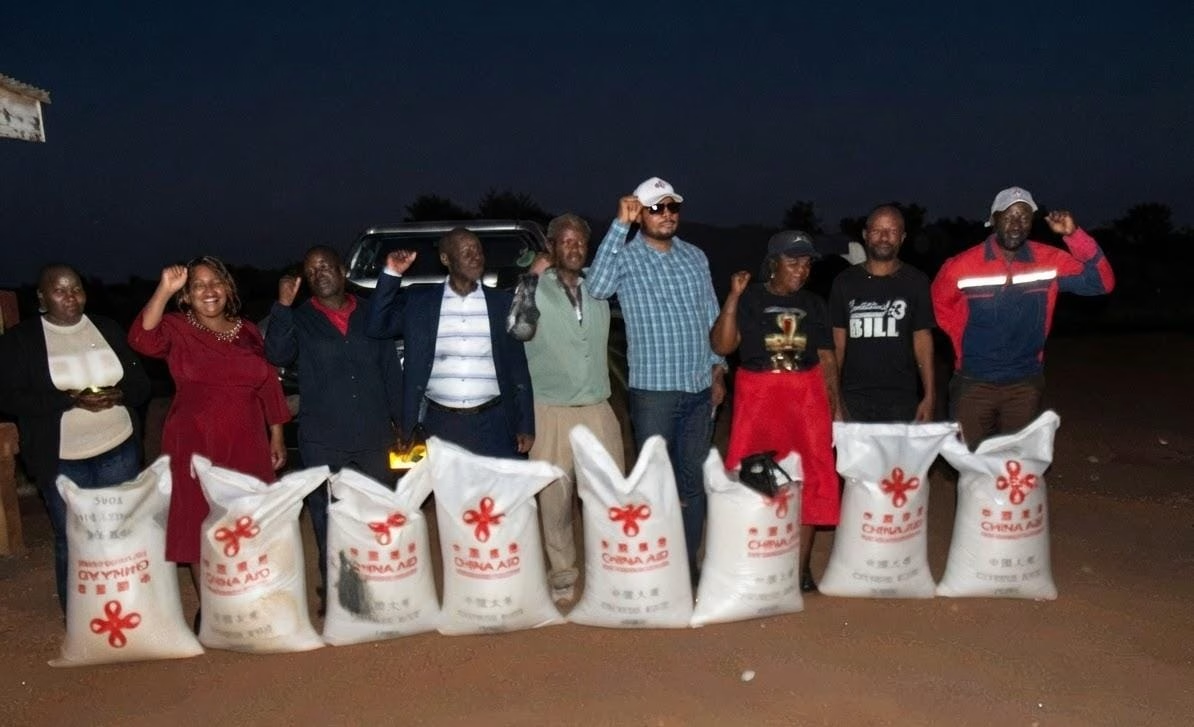
DOTITO, MT DARWIN EAST — A 500kg donation of rice by Mt Darwin East Member of Parliament Hon. Dzidzai Butau to men and women who participated in the advocacy and community engagement process around Constitutional Amendment Bill Number 3 (CAB3) has opened a wider conversation about the relationship between political participation, grassroots recognition and constituency development.
While the donation provides immediate assistance to beneficiary households, its significance extends beyond the food handover itself. It represents an attempt to recognise the people who operated at community level during one of the country’s most significant constitutional processes of 2026, taking information from the national political arena into communities across Mt Darwin East.
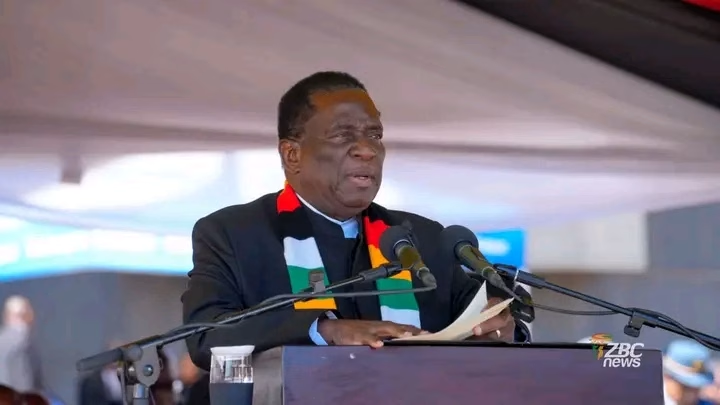
CAB3 was ultimately passed by Parliament and signed into law by President Emmerson Dambudzo Mnangagwa, bringing the formal legislative process to an end. But legislation does not begin and end inside Parliament. For constitutional reform to acquire meaning among citizens, there has to be a communication bridge between institutions of government and communities, particularly in rural constituencies where residents may not have direct access to parliamentary debates or detailed legal discussions.
It was within this space that the beneficiaries of Hon. Butau’s donation were active. According to the constituency, the men and women moved across communities engaging residents, explaining the proposed constitutional changes and participating in advocacy activities around CAB3. Their work represented the grassroots layer of a national political process.
The rice donation can therefore be viewed as a form of political and community recognition. People who invested their time in community engagement are being acknowledged after the conclusion of the process, while simultaneously receiving material assistance that has an immediate household benefit.
That dimension is particularly significant in an environment where food security remains an important concern for many households. Rice is not simply a symbolic gift. It is a basic food commodity that can reduce household expenditure and provide direct relief to beneficiaries.
For constituency politics, however, the more interesting issue is what happens after the CAB3 process.
Political participation at grassroots level is often highly visible during major campaigns, elections and national programmes, but maintaining those networks after the immediate political objective has been achieved presents a different challenge. The effectiveness of constituency leadership increasingly depends on whether those structures can evolve from campaign-oriented engagement into continuous community development and problem-solving.
In this respect, the Dotito handover could become more significant than the quantity of rice involved. It reinforces relationships between a legislator and the community members who participate in constituency activities, while creating an opportunity to transform those relationships into sustained engagement around development.
The same community networks that helped communicate CAB3 can potentially be used to identify local challenges, communicate government programmes, gather feedback from residents and strengthen participation in constituency development initiatives.
This is where the distinction between political mobilisation and community engagement becomes important. Mobilisation may generate participation around a particular political objective, but sustainable constituency politics requires continued interaction with communities after that objective has been achieved.
For Hon. Butau, recognising the CAB3 advocates also sends a message that grassroots participation is valued. For the beneficiaries, the donation provides practical assistance. For Mt Darwin East, the broader opportunity is to ensure that the community structures activated during the constitutional process remain connected to development programmes and the everyday concerns of residents.
The gesture therefore offers a useful snapshot of how national politics eventually translates into local realities. Constitutional reform may be debated in Parliament and enacted at national level, but its political meaning is ultimately shaped in communities, where citizens receive information, form opinions and engage with their representatives.
The 500kg rice donation may provide immediate relief to the beneficiaries, but its lasting significance will depend on whether the relationships strengthened through the CAB3 process can be channelled into a deeper model of constituency engagement, one that combines recognition, communication and practical development.
In that sense, the Dotito handover is not merely about rice. It is about the continuing relationship between political participation and community development, and how grassroots structures built around a national political process can be sustained long after the legislation itself has passed into law.