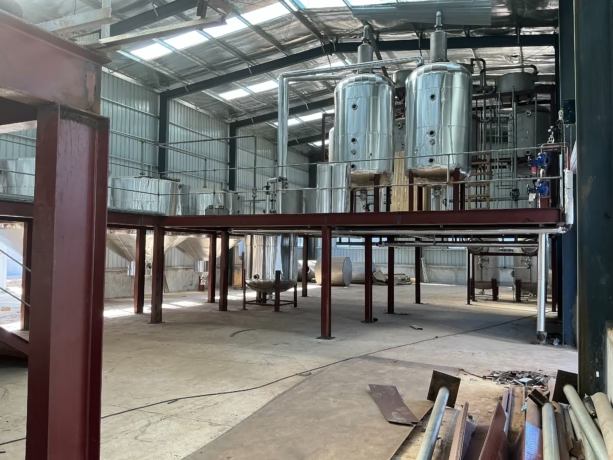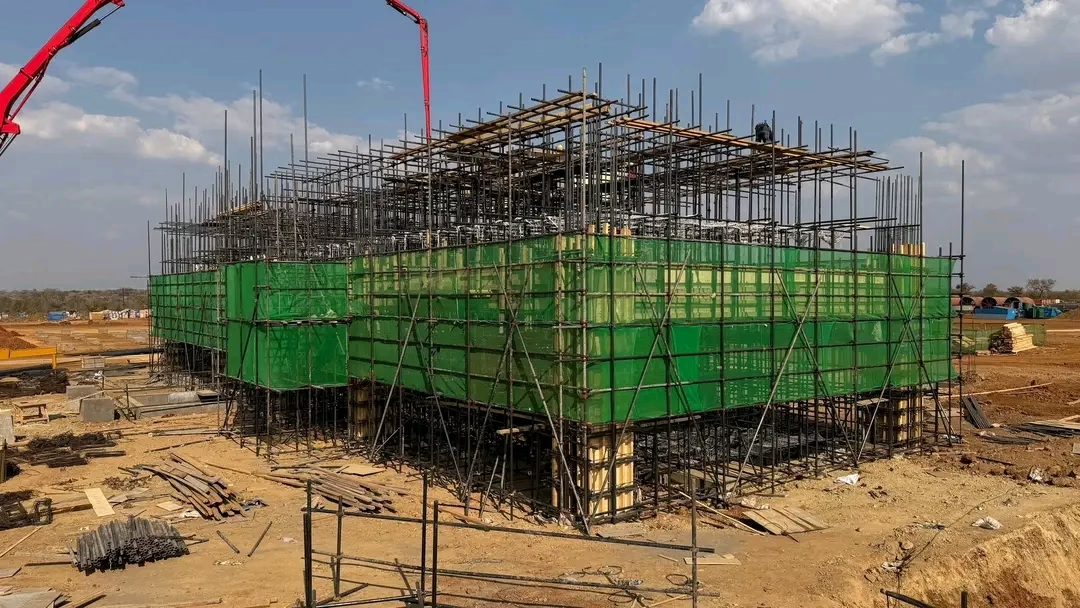
The construction of a US$70 million cement plant in Chegutu by Chinese investor Shuntai Investment Private Limited is progressing steadily, with production scheduled to begin early next year. Already at the halfway stage, the facility is not only altering Chegutu’s physical landscape but also reshaping the socio-economic prospects of local communities and Zimbabwe’s cement industry at large.
Zimbabwe’s demand for cement has been on a steady rise, driven by infrastructure projects, housing development, and the government’s rural industrialisation drive. Current national capacity struggles to keep up, often resulting in shortages and price spikes. The Chegutu plant, with its projected output of 800 000 tonnes per year, is therefore more than an isolated business venture, it is a strategic intervention in closing the demand-supply gap and stabilising the construction sector.

Rainbow Hotels — Experience Luxury Across Zimbabwe
Rainbow Hotels continues to redefine hospitality standards in Zimbabwe, offering world-class accommodation, fine dining, and modern conference facilities in Harare, Bulawayo, and Victoria Falls.
Whether for business or leisure, Rainbow Hotels delivers unmatched comfort, exceptional service, and a truly premium guest experience tailored to modern travellers.
Book NowYet beyond the economics, the project’s human impact is already visible. For 24-year-old Rutendo Chafesuka, operating heavy machinery on site is a breakthrough in women’s empowerment. “I am a shining example of women’s empowerment at this facility. I operate several machines, and I believe this investment is going to be a game-changer once fully operational,” she said. Her story represents a shift not only in industry but in cultural attitudes towards women in technical fields.
Employment creation has been another immediate dividend. Supervisor Anderson Mwedzi, who oversees 65 workers, described the facility as a source of dignity and livelihood: “This speaks to real and tangible employment, and we sincerely hope that the completion of this facility will contribute to the fulfillment of Vision 2030.” For others, such as employee George Chahwanda, the plant represents social renewal. “This company is taking the youths off the streets, which is key in the fight against drug and substance abuse,” he noted.
The government’s push for a conducive business environment has underpinned such investments, a point underscored by worker Tawanda Mudeche: “We want to thank our government for creating a conducive business environment that pushes for rural industrialisation.” With at least 200 people already employed in building the plant, master control room, warehouses, and housing units, the investment is anchoring a ripple effect of skills transfer and community development.
Shuntai Investment’s general manager, Mr Zhou Bin, confirmed through an interpreter that the project is on track for completion by December. “We are now at 50 percent of construction, and we are confident that cement production will commence early next year. We expect to produce at least 800 000 tonnes of cement annually once operational,” he said.
The Chegutu project sits within a broader wave of Chinese-backed industrial ventures in Zimbabwe. In Hurungwe’s Magunje area, WhiZim International is developing a US$1 billion cement plant expected to employ over 2 000 people. Collectively, these investments demonstrate how foreign direct investment, when strategically aligned, can drive local empowerment, skills development, and industrial growth.
Analytically, the plants represent a dual opportunity for Zimbabwe. First, they strengthen self-sufficiency by reducing reliance on cement imports, insulating the economy from external shocks. Second, they directly support the country’s Vision 2030 agenda by anchoring rural economies in industrial activity rather than subsistence farming. As global cement producers look to emerging markets, Zimbabwe’s policy framework and strategic partnerships appear to be positioning the country as a serious player in regional construction supply chains.
For Chegutu’s residents, however, the narrative is less abstract. It is about livelihoods, inclusion, and dignity. Each brick laid on the site not only builds a plant but also cements the hope that industrialisation can be people-centred, providing jobs for the youth, empowering women, and strengthening communities.