By Aldridge Dzvene
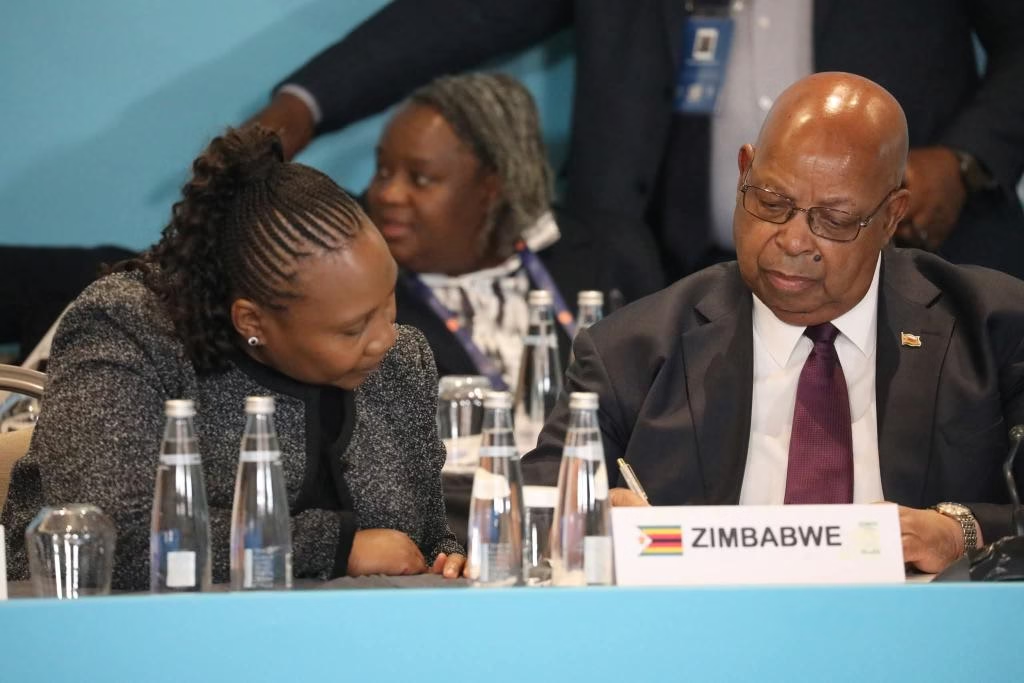
Deliberations at the Inter-Parliamentary Union Assembly gathered momentum on Tuesday, 14 April 2026, as African parliamentary delegations convened under structured regional platforms to refine positions on key agenda items, signalling the growing strategic coordination of the continent within global parliamentary diplomacy.
Proceedings began with the Southern African Development Community Parliamentary Forum caucus meeting, followed by the broader Africa Geo-Political Group session, bringing together parliaments from across the continent to align perspectives ahead of plenary engagements.
The SADC Group meeting was chaired by Jacob Mudenda, who stepped in to lead proceedings in the absence of the substantive Chair of the SADC Parliamentary Forum, Justin Tokely Randrianasoloniaiko Siteny Thierry. Widely regarded as the “Dean of Speakers,” Speaker Mudenda’s stewardship underscored Zimbabwe’s growing influence within regional parliamentary processes.
Analytically, these pre-assembly caucus meetings are not procedural formalities, but critical consensus-building platforms where regional blocs negotiate unified positions before entering the global parliamentary arena. For African delegations, cohesion at this stage enhances bargaining power, particularly on agenda-setting issues such as the adoption of an Emergency Item.
Central to the discussions was the need to agree on priority issues that reflect Africa’s immediate geopolitical and developmental concerns. The Emergency Item mechanism within the IPU framework allows member states to introduce urgent global matters for debate, making it a strategic tool for shaping international parliamentary discourse.
The dual-layer engagement, first at SADC level and then at the continental level, reflects a tiered diplomatic approach. SADC, as a sub-regional bloc, consolidates Southern African interests, which are then integrated into the broader African position. This structured alignment ensures that regional priorities are not diluted, but rather amplified within the continental framework.
From a governance perspective, the meetings also highlight the increasing sophistication of African parliamentary diplomacy. There is a clear shift from fragmented participation toward coordinated engagement, where African legislatures are actively seeking to influence global governance conversations on issues such as development financing, peace and security, climate change and economic equity.
Speaker Mudenda’s role in chairing the SADC caucus further illustrates Zimbabwe’s active participation in shaping regional consensus. His leadership at such a platform reinforces the country’s diplomatic posture within multilateral parliamentary systems, while contributing to the articulation of unified African positions.
As the Assembly progresses, the outcomes of these preliminary meetings are expected to significantly shape Africa’s contribution to the global parliamentary agenda. The ability to reach consensus on key issues, particularly the Emergency Item, will determine the extent to which African priorities are elevated within the broader IPU deliberations.
In essence, the engagements reflect a continent increasingly aware of the power of collective voice, moving beyond participation to strategic influence in international parliamentary affairs.