By Aldridge Dzvene
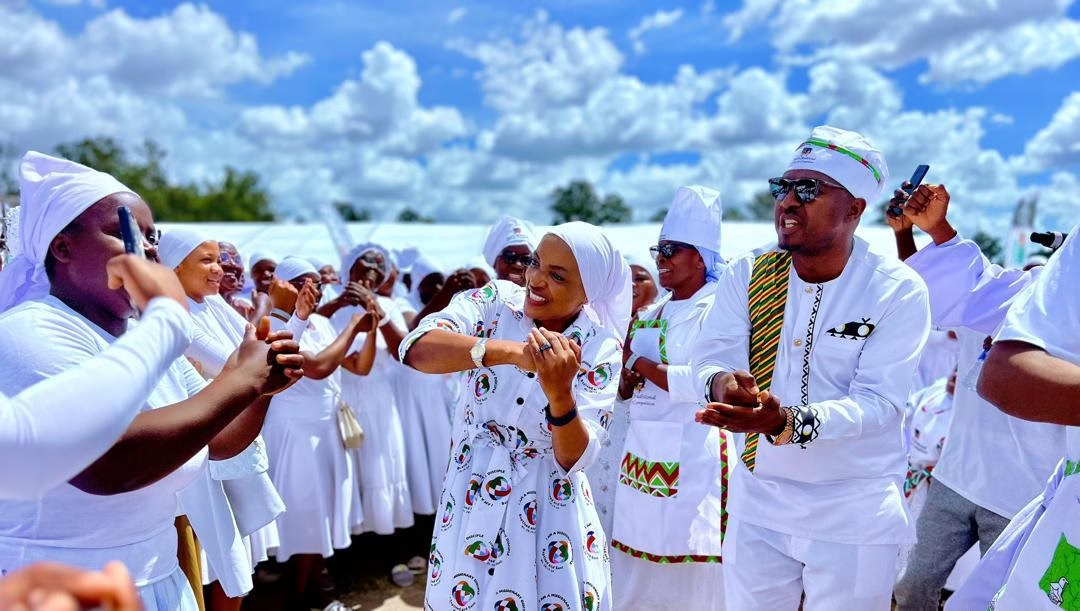
A powerful intersection of faith, culture and economic opportunity unfolded at Zimbabwe Grounds in Highfields, as the Johanne Masowe eChishanu Amai Traditional Cookout Competition drew thousands of congregants, highlighting a growing shift toward community-driven tourism anchored on heritage and gastronomy.
The event, held under the theme Moto weChitendero, Chikafu Chetsika Dzedu, showcased how religious gatherings are increasingly becoming platforms for cultural expression and economic participation, reinforcing Zimbabwe’s broader Heritage-Based Tourism model.
Representing the Patron of Tourism and Hospitality Industry, Her Excellency the First Lady Dr Auxillia Mnangagwa, the Minister of Tourism and Hospitality Industry, Barbara Rwodzi, delivered a keynote address to a crowd exceeding 10,000 congregants. Her remarks placed gastronomy at the centre of Zimbabwe’s cultural preservation and economic empowerment strategy.
She applauded the First Lady’s growing global recognition as the “Queen of Gastronomy,” crediting her leadership for driving a national movement that is revitalising Zimbabwean cuisine, strengthening household nutrition, and integrating grassroots communities into the mainstream economy. This initiative, she noted, aligns closely with the development philosophy of His Excellency, Emmerson Dambudzo Mnangagwa, particularly under the Vision 2030 framework.
Beyond celebration, the event reflected a deliberate policy direction, where gastronomy is no longer viewed merely as cultural heritage, but as a strategic economic asset. Minister Rwodzi highlighted Zimbabwe’s rising global tourism profile, referencing international recognition, including being ranked among must-visit destinations, as validation of the country’s evolving tourism model anchored on culture, nature and community participation.
A key insight from the gathering was the positioning of gastronomy as a bridge between religious life and tourism development. By encouraging congregants to commercialise their culinary skills through structured activities such as canteens at church gatherings, the initiative opens new pathways for income generation while strengthening the domestic tourism value chain.
The competition itself reflected Zimbabwe’s rich culinary diversity. A total of 40 contestants, drawn from community members, youth and persons with disabilities, presented traditional dishes such as sadza rezviyo, road runner chicken, madora, zvinyenze and magaka eminzwa. These offerings not only celebrated identity, but also demonstrated the scalability of indigenous cuisine within both local and international tourism markets.
From a broader perspective, the Highfields event signals an emerging model of inclusive tourism development, one that integrates informal sectors, religious communities and local knowledge systems into the national economic framework. It illustrates how grassroots participation can be harnessed to drive sustainable growth, job creation and cultural preservation simultaneously.
The progression of winners to the national finals scheduled for 25 May 2026 in Midlands Province further institutionalises the initiative, transforming it from a community event into a structured national programme with long-term economic implications.
In essence, the gathering at Zimbabwe Grounds was more than a cookout competition, it was a reflection of a country redefining tourism through its people, its culture and its everyday lived experiences, positioning Zimbabwe as a destination where heritage is not only preserved, but actively monetised and celebrated on a global stage.