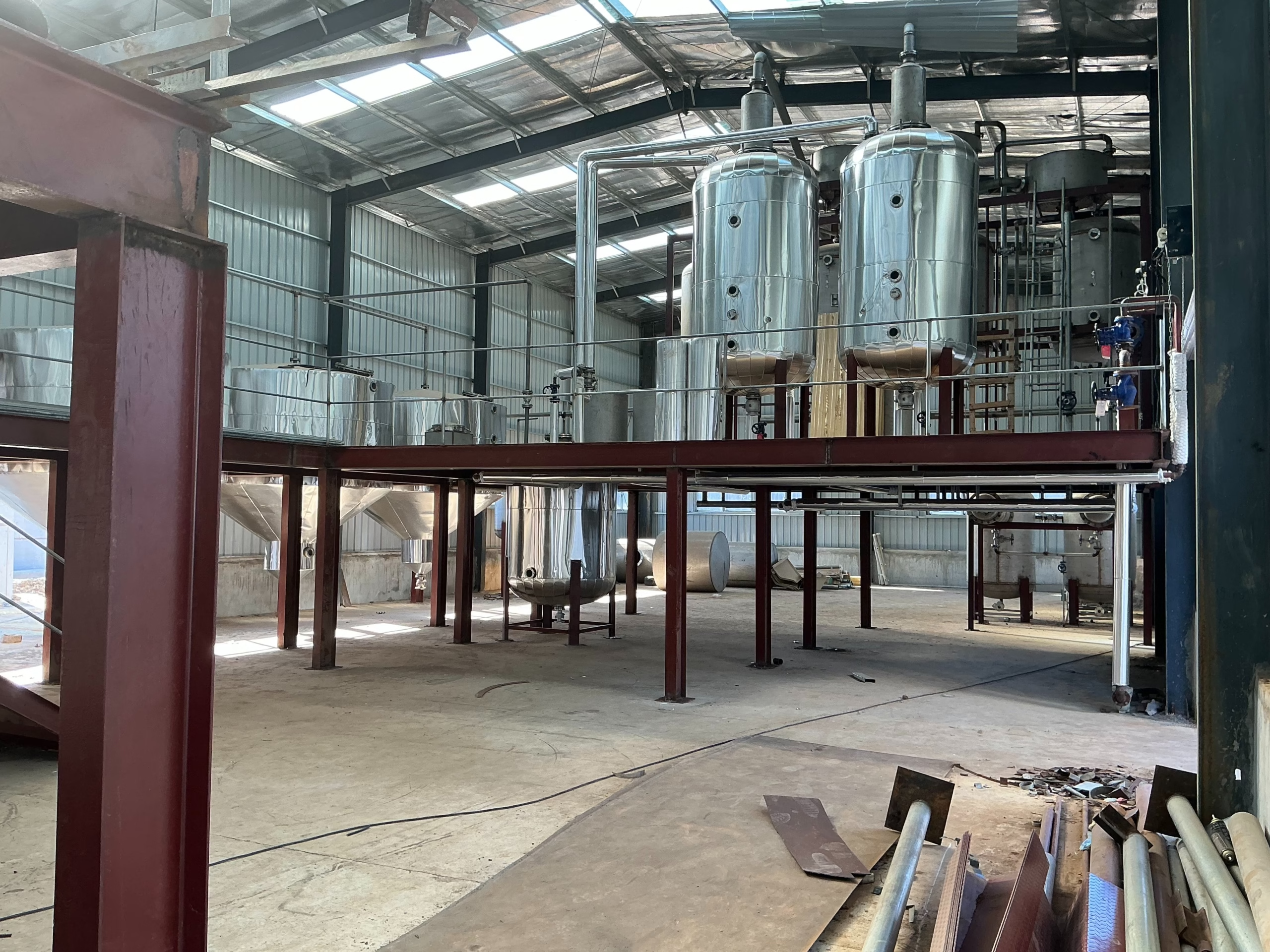
The near completion of the Komo Pvt Ltd pine resin processing plant in Manicaland marks a significant shift in Zimbabwe’s industrialisation agenda, with the US$5 million investment now 90 percent complete and commissioning expected within the year.
Beyond construction progress, the project is emerging as a strategic pillar in the country’s value addition drive, with the plant expected to employ over 3,000 locals across production, supply chains and pine tapping activities. This positions the initiative not only as an industrial facility, but as a major rural employment engine with far-reaching socio-economic impact.
At its core, the Komo plant represents a transition from raw material exportation to beneficiation. Pine resin, once an underutilised forestry resource, will now be processed into high-value industrial inputs such as rosin and turpentine, which are essential in the manufacture of tyres, ink, paint, adhesives, glue, electronics, as well as medical and food-related products.
This wide industrial application places the plant within a broader manufacturing ecosystem, linking forestry to multiple downstream sectors. In doing so, it strengthens Zimbabwe’s prospects for import substitution while opening pathways for export growth in niche industrial markets.
From a continental perspective, the project carries additional weight. Upon completion, the Komo facility is set to become the fifth resin processing plant in Africa, positioning Zimbabwe within a relatively small but strategic industrial segment. This enhances the country’s standing in specialised manufacturing and underscores growing investor confidence in Zimbabwe’s industrial potential.
The development also aligns with the Government’s broader industrialisation thrust under Vision 2030, which emphasises rural industrial growth, job creation and the localisation of production value chains. By anchoring industrial activity within Manicaland, the project contributes to balanced regional development while unlocking economic opportunities in previously under-industrialised areas.
Importantly, the plant reflects a model of development that integrates natural resources, community participation and industrial investment. It demonstrates how targeted infrastructure can convert local endowments into sustainable economic drivers, particularly in provinces with strong forestry potential.
As Zimbabwe accelerates its push toward becoming an upper-middle-income economy, projects such as the Komo resin plant signal a deliberate move toward productive sector expansion, where industry, rather than raw exports, becomes the backbone of economic growth.
In this context, the nearing completion of the Komo plant is more than a milestone, it is a statement of intent, that Zimbabwe’s industrial future is increasingly being built from within its own resources, communities and strategic investments.
#Industrialisation