By Aldridge Dzvene
ZIMBABWE is seeking to unlock Russian financing to accelerate industrial development, expand exports and attract investment into productive sectors, with His Excellency Dr Emmerson Dambudzo Mnangagwa proposing a joint technical working group involving Russian bank PSB Bank and key Zimbabwean economic institutions to turn bilateral agreements into bankable projects.
The proposal places access to capital at the centre of Zimbabwe’s economic engagement with Russia, shifting attention from diplomatic commitments towards the practical mechanisms required to finance production, strengthen trade and create opportunities for domestic businesses. The central question is whether the current engagements can produce financing arrangements with clear terms, identifiable projects and measurable economic returns.
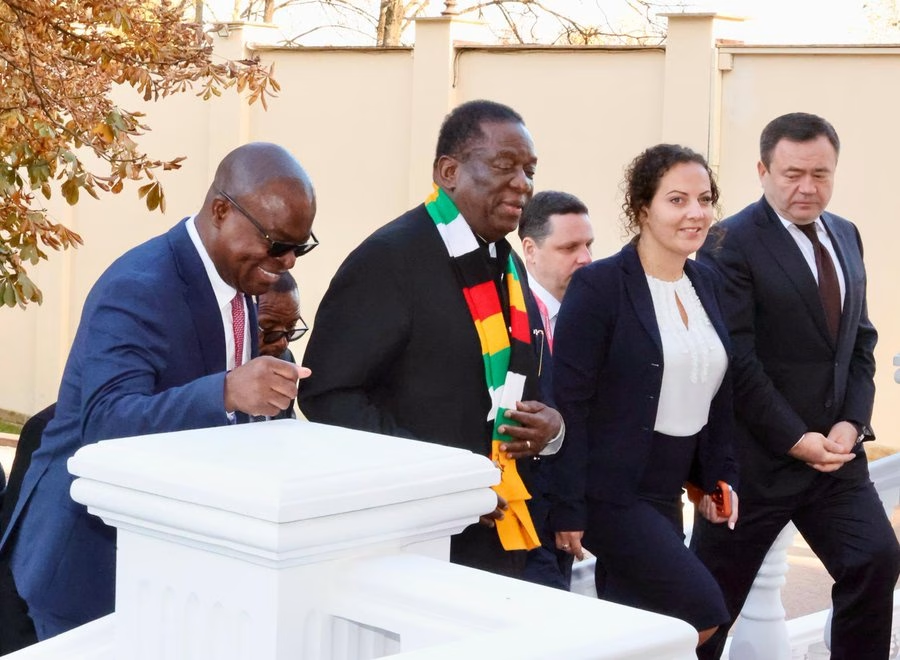
During engagements in Russia ahead of the Third Russia–Africa Summit and Economic Forum, His Excellency Dr Emmerson Dambudzo Mnangagwa proposed involving PSB Bank, the Ministry of Finance, the Ministry of Economic Development and Investment Promotion, and the Reserve Bank of Zimbabwe in a technical process to identify priority projects, financing mechanisms and implementation timelines.
Zimbabwe and Russia also signed a cooperation agreement involving the Autonomous Non-Profit Organisation for the Development of International Cooperation, known as Eurasia, in a further step towards strengthening institutional engagement between the two countries. The President witnessed the signing, while the proposed banking initiative offers a potential framework for advancing investment and trade finance opportunities. No publicly confirmed loan amount or disbursement schedule has been established in the reporting available as of 28 October 2026.
The economic significance of the engagement lies in its potential to connect financing with production. For Zimbabwe, industrial expansion requires more than investment announcements. Manufacturers need capital to acquire machinery, processors need equipment and reliable supplies, farmers need working capital, and exporters require financing to fulfil orders and access international markets. A structured partnership between financial institutions and economic policymakers could help identify where Russian capital and expertise can support these requirements.
Trade finance is particularly important because access to a market does not automatically translate into commercial activity. Businesses must be able to finance production, meet quality standards, arrange logistics and receive payment reliably. If the proposed cooperation delivers affordable and commercially viable financing, Zimbabwean companies could gain greater capacity to pursue export contracts and expand production. However, the benefits will depend on the actual terms of the facilities, the eligibility criteria and the projects ultimately approved.
The proposed working group therefore represents an important area to watch, but its practical significance will depend on what follows. Identifying bankable projects, conducting credible assessments, agreeing on financing conditions and assigning implementation responsibilities will be essential to moving from institutional discussions to investment on the ground.
Zimbabwe’s existing trade with Russia provides a measurable basis for assessing the opportunity. Figures reported by the Zimbabwe Broadcasting Corporation, citing ZIMTRADE, show that Zimbabwe exported goods worth US$22.2 million to Russia during the first eight months of 2026, compared with imports valued at US$15.2 million. The reported US$7 million trade surplus provides an opening for deeper commercial engagement, although sustained growth will require larger export volumes, a wider product range and dependable market access.
Tobacco, peas, nuts, blueberries and coffee have been identified as products with potential in the Russian market. The next stage is to establish how producers can increase supply, meet destination-market requirements and deliver consistently at competitive prices. Investment in agro-processing, packaging, cold storage and transport could help Zimbabwe capture more value domestically rather than relying exclusively on the export of raw or minimally processed commodities.
This is where financing and industrial policy intersect. Capital directed towards processing and manufacturing can support value addition, create demand for local suppliers and expand employment opportunities. Yet these outcomes cannot be assumed simply because financing discussions have taken place. They require viable business models, appropriate infrastructure, commercially sustainable projects and clear mechanisms for measuring results.
The Russia–Africa Summit also provides a wider regional dimension to Zimbabwe’s economic diplomacy. With Zimbabwe holding the chairmanship of the Common Market for Eastern and Southern Africa, His Excellency Dr Emmerson Dambudzo Mnangagwa has an opportunity to position the country as a potential platform for investment serving regional value chains. COMESA’s 21-member market offers a broader commercial context for businesses considering investments in manufacturing, agricultural processing and logistics.
For Russian investors, the prospect of serving regional markets could broaden the commercial case for investing in Zimbabwe. For Zimbabwean businesses, stronger links with Russian companies could offer opportunities to access technology, financing and new buyers. Converting these possibilities into actual investment will depend on predictable regulation, competitive operating conditions, reliable infrastructure and clearly defined market-access arrangements.
Payment systems are another consideration. His Excellency Dr Emmerson Dambudzo Mnangagwa has raised the importance of exploring payment and settlement arrangements through the Reserve Bank of Zimbabwe and within the country’s regulatory framework, alongside wider discussions about linking national payment systems through BRICS cooperation.
Reliable settlement mechanisms matter because payment delays, transaction costs and currency risks can affect the viability of cross-border trade. Alternative arrangements could expand the options available to businesses in Zimbabwe and Russia, but their value will depend on operational reliability, regulatory compliance, participating institutions and the costs faced by traders. Discussions about potential mechanisms should not be confused with confirmation that a new system is already operational.
Human-capital development offers another avenue for cooperation. Government reporting indicates that more than 1,000 Zimbabweans are studying at Russian universities, including in science, medicine and technology-related fields. Further cooperation could help connect specialist training with Zimbabwe’s industrial, scientific and public-service requirements.
The long-term economic return from such partnerships will depend on whether expertise gained abroad can be applied locally. Engineering, research, healthcare, technology and industrial production all require skilled personnel, but sustained benefits also depend on institutions and businesses capable of absorbing those skills. Stronger links between universities, industry and research institutions could therefore complement the financing and investment agenda.
The broader challenge is coordination. Trade finance, export promotion, technical training and investment cannot operate as isolated initiatives if the objective is to expand productive capacity. They must be connected to identifiable economic priorities, with financing directed towards projects capable of producing measurable commercial and developmental returns.
For Zimbabwe, the most meaningful indicators of progress will be the value of investment actually deployed, the number of projects reaching implementation, the growth of exports, the expansion of local processing and the employment generated. Public reporting on financing terms, project timelines and implementation milestones would help establish whether the bilateral engagement is producing results beyond diplomatic announcements.
The Russian initiative has opened a channel for pursuing those outcomes, but its ultimate value will be determined by execution. The task ahead is to convert the emerging cooperation framework into commercially viable projects that strengthen Zimbabwe’s productive base, widen export opportunities and generate tangible economic benefits.
As the Russia–Africa Summit proceeds, the measure of success for Zimbabwe will be whether the engagement moves capital towards production and transforms bilateral goodwill into investment, industrial capacity and sustainable trade growth.