By Aldridge Dzvene
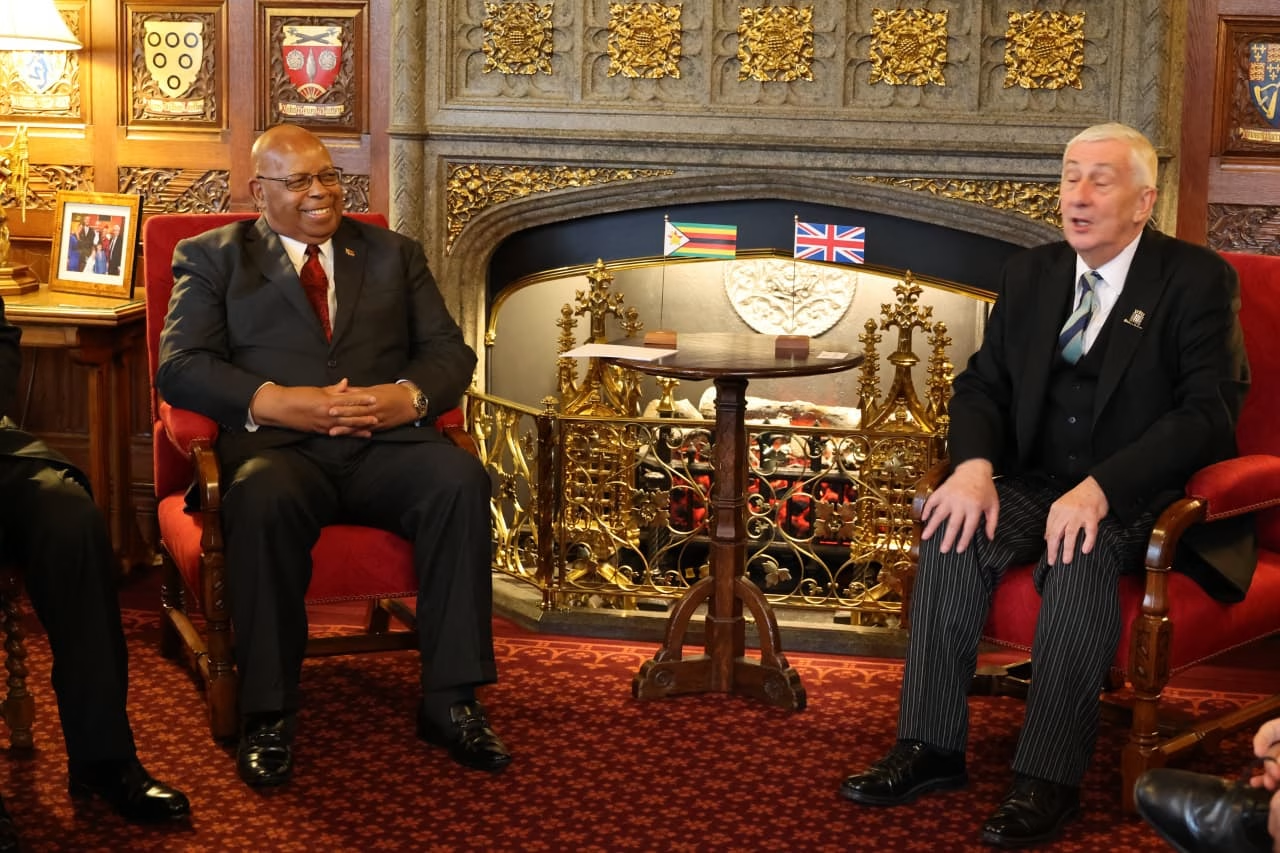
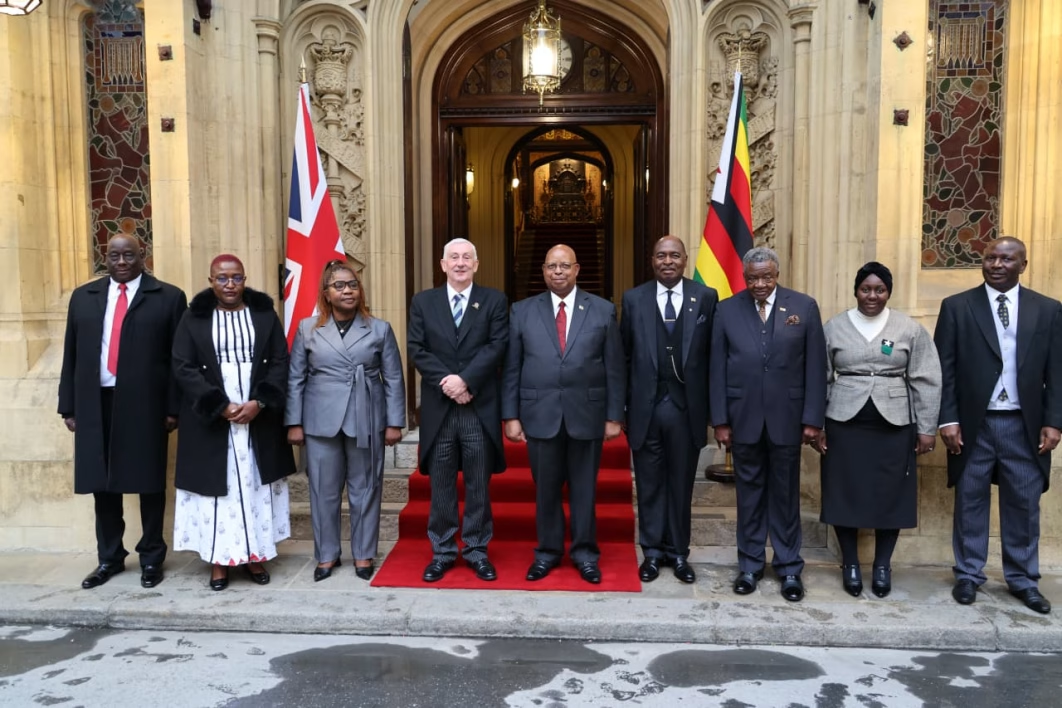
LONDON, United Kingdom — Zimbabwe’s efforts to strengthen international relations have gained a significant parliamentary opening following Speaker of Parliament Advocate Jacob Francis Nzwidamilimo Mudenda’s historic engagement with the United Kingdom’s House of Commons, bringing renewed attention to the country’s Commonwealth aspirations, sovereign equality and opportunities for deeper institutional cooperation.
The formal acknowledgement of Advocate Mudenda by his British counterpart, Sir Lindsay Hoyle, during a live session of Prime Minister’s Questions, together with the reported commitment to support Zimbabwe’s bid to rejoin the Commonwealth, marks an important moment in the rebuilding of parliamentary relations between Harare and London.
More consequentially, the visit has created an opportunity to advance Zimbabwe’s engagement with British institutions through dialogue on constitutional development, parliamentary accountability, artificial intelligence and international cooperation, broadening the relationship beyond the political differences that have shaped it over the past two decades.
The significance of this engagement lies in the growing space for direct institutional dialogue between the two countries. It reflects the importance of maintaining channels through which historical disagreements can be addressed, common interests identified and future cooperation pursued without either country surrendering its sovereignty or national priorities.
At the heart of Advocate Mudenda’s engagement is the principle that parliamentary diplomacy should complement executive diplomacy, providing another avenue through which Zimbabwe can advance its international relations and development interests.
The distinction is important. Relations between countries are not rebuilt through individual meetings alone, but through sustained institutional contact, mutual understanding and practical cooperation. The London visit has opened opportunities in these areas, with the responsibility now resting on both sides to translate the engagement into lasting outcomes.
One of the most significant developments was Sir Lindsay’s reported expression of support for Zimbabwe’s aspiration to rejoin the Commonwealth, following discussions on the country’s application and the wider value of membership.
Zimbabwe formally applied to rejoin the organisation in 2018, following its withdrawal in 2003. The latest parliamentary engagement introduces an additional channel through which the country’s aspirations can be discussed, particularly given the historical and institutional connections between Zimbabwe and Britain.
Sir Lindsay’s support is an important parliamentary signal, although it does not amount to a formal decision on readmission. That process remains subject to the Commonwealth’s established procedures and the consideration of its member states.
Nevertheless, the significance of the engagement extends beyond the immediate question of membership. It creates room for renewed dialogue between institutions that have historically been connected, while allowing both countries to consider areas of cooperation relevant to their contemporary interests.
For Zimbabwe, the Commonwealth represents a potential platform for political dialogue, educational cooperation, professional exchanges and engagement on shared development priorities. Its practical value would depend on how effectively the country uses such opportunities to advance national interests and establish mutually beneficial partnerships.
The discussions with the Commonwealth Parliamentary Association further broadened this prospect. Advocate Mudenda expressed Parliament’s desire to rejoin the association and proposed a phased approach beginning with special observer status before progressing towards full membership.
The proposal offers a potential route towards restoring parliamentary links while wider membership questions are considered. The association provides opportunities for legislators to exchange experience, examine parliamentary procedures and strengthen institutional capacity through comparative learning.
Such cooperation could be particularly useful in committee oversight, legislative research, public participation and the development of parliamentary practices suited to changing social and technological conditions.
The broader diplomatic significance is that Zimbabwe’s engagement is taking place through multiple institutional channels, creating opportunities to strengthen relations beyond formal exchanges between governments. Parliamentary cooperation cannot replace executive decisions, but it can help sustain dialogue, develop trust and identify areas where practical collaboration is possible.
Advocate Mudenda’s intervention on the evolution of democracy placed this engagement within a wider debate about political development, sovereignty and the historical experiences of nations.
During a luncheon in his honour, he argued that European countries should give African states room to chart their own pathways in the evolution of democracy, pointing to Britain’s long constitutional history as evidence that political institutions develop over time.
His reference to Magna Carta, issued in 1215, draws attention to the historical evolution of British constitutional government. The document emerged from a political confrontation between King John and rebellious barons and acquired broader constitutional significance through subsequent centuries of legal and parliamentary development.
Britain’s present parliamentary system did not emerge fully formed in the thirteenth century. It developed through successive struggles over royal authority, representation, the powers of Parliament and the relationship between the state and its citizens.
The wider point is that political institutions are shaped by national histories and changing social conditions. Constitutional development is a continuing process, influenced by legal traditions, political participation, institutional capacity and the demands of society.
For Zimbabwe, this discussion connects to the importance of sovereign ownership of national development and the responsibility of domestic institutions to respond to the country’s own circumstances. International engagement can provide valuable comparative experience, but the adoption of institutional practices must take account of the constitutional and political environment in which they will operate.
Sovereignty, however, does not eliminate the importance of accountability. Countries can defend their independence while engaging constructively on governance, the rule of law, human rights and the performance of public institutions. Indeed, these issues remain relevant to the Commonwealth’s membership framework and to the wider international relationships Zimbabwe seeks to strengthen.
The significance of Advocate Mudenda’s argument is therefore found in the opportunity it creates for a more substantive exchange about political development, rather than an assumption that one country’s historical experience should provide a universal template for all others.
His attendance at Prime Minister’s Questions also provided an opportunity for the Zimbabwean delegation to observe the operation of the British parliamentary system, including the interaction between the Prime Minister, opposition leaders and other Members of Parliament.
The session demonstrated how parliamentary questioning can provide a public forum for challenging executive decisions and examining national and international policy. Its broadcast visibility also illustrates how parliamentary proceedings can contribute to public understanding of political debate.
For Zimbabwe, the value of such exposure lies in the opportunity to examine comparative approaches to parliamentary scrutiny, legislative procedure and public communication. Different constitutional systems require different institutional arrangements, but exchanges of experience can help identify practices that may strengthen parliamentary effectiveness within the Zimbabwean context.
The visit also brought technological cooperation into focus through Advocate Mudenda’s meeting with Sarah Davies, Assistant Clerk and Managing Director of the House of Commons Chamber and Participation Team.
Discussions reportedly covered the use of artificial intelligence in parliamentary processes, the coordination of institutional data and the risks associated with misinformation, disinformation, impartiality and cybersecurity.
This dimension of the visit is particularly relevant to the future of legislative institutions. As the volume of public information grows, Parliament requires effective systems for managing records, processing committee evidence, retrieving legislative information and communicating with citizens.
Artificial intelligence could assist with document classification, transcription, translation, research and the organisation of parliamentary records. Properly governed systems could improve administrative efficiency and make information more accessible to legislators, researchers and the public.
However, technology alone cannot guarantee institutional effectiveness. AI-generated information can contain errors, reproduce bias or omit important context. Its use in parliamentary work must therefore be accompanied by human oversight, data protection, cybersecurity and clear accountability for decisions.
According to Parliament’s account of the visit, Advocate Mudenda outlined Zimbabwe’s Artificial Intelligence Strategy, launched by His Excellency Dr Emmerson Dambudzo Mnangagwa, President and First Secretary of ZANU PF, on 3 March 2026. He also highlighted Parliament’s Committee of the Future, which is tasked with developing a long-term vision for the application of AI across parliamentary processes.
The reported ambition to develop a 50-year parliamentary vision places technology within a longer-term institutional development agenda. The challenge is to translate that ambition into practical systems, skills and safeguards capable of supporting the legislature’s representative, legislative and oversight responsibilities.
The proposed coordination of data across the three arms of the State could improve information-sharing and decision-making if developed within an appropriate legal framework. Such arrangements would require defined access rights, secure information systems and respect for the constitutional independence of the executive, legislature and judiciary.
Cooperation with the House of Commons could provide opportunities to exchange technical knowledge, examine AI governance frameworks and learn from the practical challenges of introducing digital technologies into parliamentary work.
This is an area in which international engagement can produce benefits beyond diplomacy itself, particularly where technical cooperation contributes to stronger public institutions and more accessible information.
The economic dimension of the visit remains relevant, but it should be understood as part of this wider effort to establish a more constructive and productive bilateral relationship.
During his meeting with Sir Lindsay, Advocate Mudenda expressed concern that existing trade between Zimbabwe and the United Kingdom did not reflect the potential of the economic relationship. The two Speakers discussed business-to-business links, trade and investment exchanges, and parliamentary scrutiny of barriers affecting bilateral economic cooperation.
The discussion provides an opportunity to connect improved political contact with commercial interests in areas such as agriculture, manufacturing, mining, mineral beneficiation, infrastructure and technology. These are potential areas for further engagement, rather than guaranteed investment outcomes.
For Zimbabwe, the objective should be to ensure that international relationships support productive capacity, value addition, skills development and access to markets. For British businesses, sustained engagement can provide opportunities to assess viable projects and establish partnerships based on commercial interests.
The role of Parliament is to help create space for constructive dialogue, examine policies affecting bilateral relations and encourage institutional cooperation. Actual investment will depend on commercially viable opportunities, financing, market conditions and the ability of businesses to manage risk.
The invitation extended by Advocate Mudenda for Sir Lindsay to visit Zimbabwe, which the British Speaker reportedly accepted subject to feasibility arrangements, could provide another opportunity to sustain the relationship and identify practical areas for cooperation.
The visit also acknowledged the historical connections between the two countries. Advocate Mudenda conveyed condolences to the people of Wales on the 60th anniversary of the Aberfan disaster, in which 144 people, including 116 children, died after a colliery spoil tip collapsed onto Pantglas Junior School and nearby homes in 1966.
During the delegation’s tour of the Palace of Westminster, the historical relationship between the legislatures was also illustrated by two gold-gilt inkstands donated to the House of Commons in 1950 by the then Southern Rhodesia as part of contributions towards rebuilding the chamber after the Second World War.
These connections provide historical context, but the future of the relationship will be shaped by the interests and decisions of the two independent countries. The opportunity before Harare and London is to use established connections to pursue cooperation that reflects contemporary national priorities.
Ultimately, Advocate Mudenda’s London visit has opened several avenues for continued engagement, from Commonwealth and parliamentary relations to technological cooperation and bilateral economic dialogue. Each requires sustained follow-through, clear institutional responsibilities and measurable outcomes.
For Zimbabwe, the central opportunity is to turn renewed parliamentary contact into a durable framework for international cooperation, while continuing to articulate its national interests and constitutional priorities.
The historic acknowledgement in the House of Commons provides a visible marker of the engagement, but the enduring significance of the visit will be determined by what follows: stronger institutional relationships, continued dialogue on Commonwealth aspirations, practical exchanges in technology and parliamentary development, and cooperation that delivers tangible benefits to both countries.