By Aldridge Dzvene
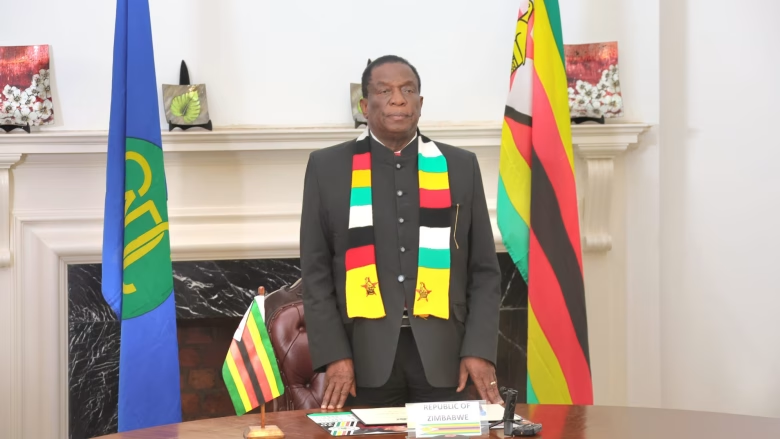
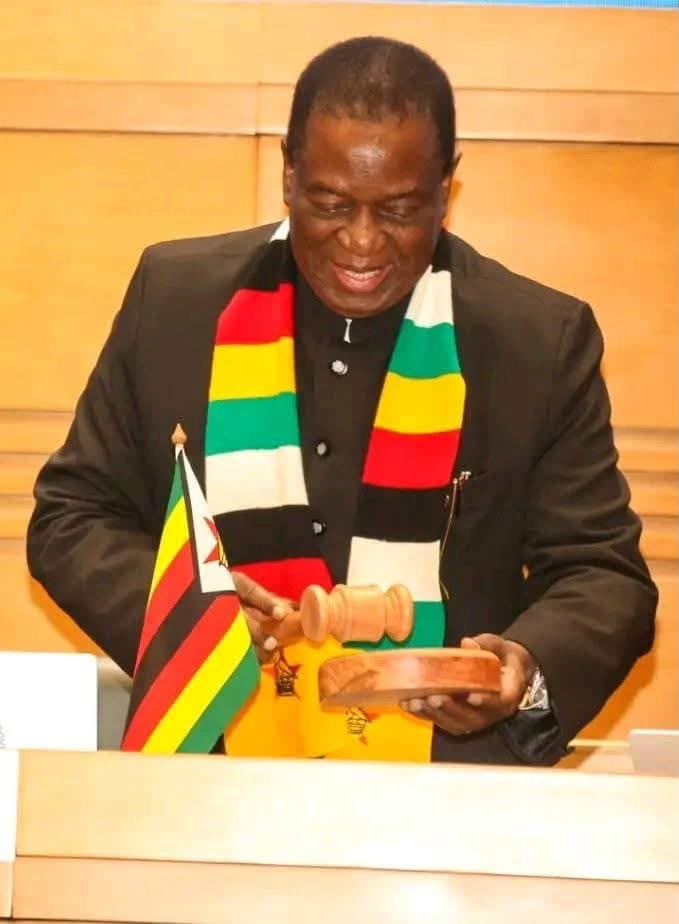
HARARE – When His Excellency Dr Emmerson Dambudzo Mnangagwa, President and First Secretary of ZANU PF, assumed the chairmanship of the Common Market for Eastern and Southern Africa (COMESA), Zimbabwe inherited more than a regional leadership position. It assumed responsibility for advancing an economic integration agenda whose success will depend on whether Africa can convert its financial resources, natural wealth and collective market into productive industries, competitive businesses and sustainable livelihoods.
The transition from Kenya’s leadership to Zimbabwe’s 2026 to 2027 chairmanship comes at a defining moment for the regional bloc. Under the theme, “One Market, One Future: Advancing Inclusive Industrialisation, Investment and Regional Integration in COMESA”, the 25th COMESA Heads of State and Government Summit in Harare placed the relationship between regional cooperation and economic transformation at the centre of the continent’s development conversation.
Yet the most important question confronting Zimbabwe’s chairmanship is not whether African countries recognise the benefits of integration. It is whether they can overcome the structural obstacles that continue to prevent their economies from translating shared resources, financial capacity and expanding markets into industrial growth.
The outgoing COMESA Authority Chairperson, President William Ruto of Kenya, brought one of these obstacles into sharp focus through his remarks on African financial sovereignty, arguing that the continent cannot expect the world to trust its institutions if Africans themselves do not demonstrate confidence in them.
His reference to more than US$4 trillion in African domestic financial assets highlighted a fundamental contradiction in the continent’s development financing model. While African economies continue to require substantial investment in infrastructure, manufacturing, energy, transport and productive enterprises, considerable financial resources remain outside the institutions and investment channels that could support these priorities.
The implication for COMESA is significant. Regional integration cannot be sustained by trade agreements and diplomatic commitments alone. It also requires the capacity to mobilise African capital, strengthen regional financial institutions and direct investment towards enterprises and infrastructure capable of expanding production across national borders.
President Ruto’s argument, therefore, offers an important starting point for assessing the responsibilities now facing Zimbabwe. The challenge is not simply to attract more external investment, but to improve the continent’s ability to finance its own development while remaining open to mutually beneficial international partnerships.
Institutions such as the African Export-Import Bank, the Trade and Development Bank, the African Trade Insurance Agency, ZEP-RE and Africa Re were highlighted in his remarks as examples of African financial and risk-management institutions that have supported trade, insured commercial risks and financed economic activity.
The strategic question is how COMESA member states can make more effective use of such institutions, including through stronger cooperation, appropriate investment arrangements and financial instruments that support viable regional projects.
For Zimbabwe, which has made value addition and beneficiation central to its development ambitions, the opportunity is to help connect this financing agenda to productive investment. Capital becomes transformative when it finances factories, supports processing industries, improves logistics, expands energy generation and enables businesses to move beyond small domestic markets into regional supply chains.
This is where the new chairmanship’s emphasis on industrialisation becomes particularly consequential.
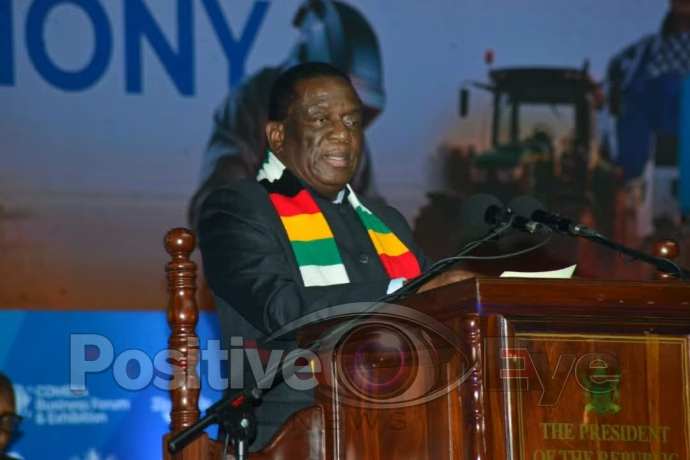
In his acceptance speech, His Excellency Dr Emmerson Dambudzo Mnangagwa, President and First Secretary of ZANU PF, committed Zimbabwe to working with member states to accelerate value addition and beneficiation, promote inclusive industrialisation and expand participation in regional value chains.
These priorities reflect a recognition that Africa’s resource endowment must generate more than revenue from the extraction and export of raw commodities. The lasting development benefits emerge when natural resources are processed, industrial capabilities are built around them and the resulting economic activity creates employment, technical expertise and opportunities for domestic enterprises.
Zimbabwe’s experience with mineral beneficiation provides a policy direction that can inform regional cooperation. However, the wider COMESA challenge is to translate this principle into commercially viable production networks in which countries complement one another rather than compete solely as exporters of similar unprocessed commodities.
A mineral-producing economy, for example, can benefit from regional partnerships that connect extraction to processing, manufacturing, transport, engineering and associated services. Agricultural economies can similarly develop cross-border value chains linking farmers, processors, packaging industries, cold-chain facilities, logistics operators and export markets.
Such arrangements would allow member states to participate at different stages of production while widening the economic benefits of regional trade.
The success of this approach will depend on more than political declarations. Industries require reliable energy, accessible finance, consistent product standards, efficient transport systems and predictable regulations. Businesses also need confidence that goods manufactured in one member state can reach consumers in another without unnecessary administrative delays or arbitrary barriers.
Zimbabwe’s chairmanship must therefore treat regional integration as an economic operating system rather than a diplomatic aspiration.
The scale of the opportunity is already visible in COMESA’s trade performance. In his acceptance speech, President Mnangagwa noted that intra-COMESA exports had increased from approximately US$2 billion when the Free Trade Area was established in 2000 to more than US$14 billion in 2025.
That growth demonstrates the value of regional cooperation, but it also raises a more demanding question about the market’s unrealised potential. If trade has expanded substantially over the past quarter-century, the next phase must focus on improving the range, value and industrial content of goods traded within the region.
The objective should be to create a market in which African producers can source inputs regionally, manufacture competitively, benefit from economies of scale and distribute finished products across borders.
For Zimbabwean businesses, this could widen opportunities in food processing, fertiliser production, pharmaceuticals, construction materials, engineering, textiles and other manufacturing sectors where regional demand can support larger production volumes.
For smaller economies, deeper integration can provide access to markets that would be difficult to serve profitably in isolation. For larger industrial centres, it can create opportunities to develop specialised production, attract investment and build regional supply networks.
However, the existence of a common market does not automatically guarantee these outcomes. Persistent non-tariff barriers, infrastructure deficiencies, differences in national regulations and inconsistent border procedures can continue to make regional commerce expensive and unpredictable.
President Mnangagwa identified these obstacles in his acceptance speech, calling for simplified border procedures, wider use of digital trade systems, improved productivity, stronger quality standards and action to address transport bottlenecks.
These are practical issues that will determine whether the chairmanship produces meaningful economic results.
A regional market is only as effective as the systems that allow businesses to use it. If a manufacturer faces excessive delays moving goods across borders, if small traders cannot afford the costs of compliance or if inconsistent standards prevent products from reaching neighbouring markets, the promise of integration remains constrained.
Digitalisation can help address some of these difficulties through electronic documentation, more efficient customs procedures and better coordination among border authorities. Yet technology must be accompanied by compatible regulations, institutional capacity and the willingness of member states to implement agreed systems.
Infrastructure connectivity is equally important. Roads, railways, energy networks and digital infrastructure determine whether the region’s productive capacity can be connected to its consumers. Their development requires long-term financing arrangements that are affordable, predictable and aligned with commercially and economically viable projects.
President Mnangagwa consequently called for innovative development financing models capable of reducing exposure to high borrowing costs and heavy debt obligations, while urging financial institutions and development partners to support priority infrastructure and productive investments.
This connects Zimbabwe’s new leadership directly to the financing challenge raised by its Kenyan predecessor. Mobilising African capital, improving the use of regional development institutions and creating an environment in which private investment can support industrial expansion are interconnected components of the same agenda.
The other defining test is whether the benefits of integration can extend beyond large corporations and established exporters.
In his acceptance speech, President Mnangagwa specifically identified small traders, persons with disabilities, rural communities, women processing food and young graduates starting digital businesses among those who must benefit from COMESA’s development agenda.
This emphasis is economically important because inclusive growth is not merely a social objective. Small and medium-sized enterprises can strengthen regional supply chains, supply larger manufacturers, develop new products and create employment in communities that might otherwise remain disconnected from industrial expansion.
Women-led enterprises and youth-owned businesses, however, frequently face financing constraints, limited access to information and difficulties meeting the requirements of formal export markets. Regional integration will have limited reach if these businesses cannot participate in the opportunities it creates.
A more inclusive COMESA economy would connect smaller producers to established buyers, improve access to finance and business development services, simplify cross-border procedures and expand access to digital platforms that make regional commerce more accessible.
It would also require education and skills development systems that prepare young people for the productive economy, including manufacturing, agricultural technology, logistics, digital services and other industries with potential for regional expansion.
The private sector’s contribution to the summit process provides another foundation for implementation. The 19th COMESA Business Forum and Exhibition, held in Harare ahead of the Heads of State and Government Summit, brought together business leaders, policymakers, investors and entrepreneurs to discuss opportunities for cooperation and investment. The resulting regional business declaration emphasised value addition, stronger supply chains, digital trade and greater participation by smaller enterprises.
The challenge now is to ensure that private-sector proposals inform practical decisions, investment partnerships and measurable programmes rather than remain confined to conference proceedings.
For Zimbabwe, chairing COMESA creates an opportunity to demonstrate how its national development priorities can contribute to a wider regional economic agenda. Its emphasis on mineral beneficiation, agricultural modernisation, industrial development and investment can be advanced through partnerships that link domestic production to demand and productive capacity elsewhere in the region.
At the same time, the chairmanship requires a regional perspective. Zimbabwe’s success cannot be measured solely by the volume of investment attracted into its own economy or the growth of its exports. A credible regional leadership approach must also contribute to reducing barriers faced by neighbouring economies, strengthening shared institutions and expanding opportunities for businesses throughout COMESA.
President Mnangagwa’s commitment to multilateralism, dialogue and mutually beneficial cooperation provides a diplomatic framework for this responsibility. His declaration that Zimbabwe is a friend to all and an enemy of none underscores the importance of maintaining constructive partnerships while respecting the sovereign equality of member states.
But the ultimate measure of that approach will be economic. Regional cooperation must deliver outcomes that businesses can experience, investors can assess and citizens can see in their livelihoods.
The launch of the COMESA Medium-Term Strategic Plan for 2026 to 2030 provides a framework against which the region’s ambitions can be pursued. Zimbabwe’s chairmanship will be judged by its contribution to translating that framework into stronger production, more efficient trade, increased investment and wider participation in regional markets.
The stakes extend beyond the immediate tenure of the COMESA Authority Chairperson. They concern whether African economies can use integration to strengthen their bargaining power, retain more value from their natural resources and build productive systems capable of generating sustained prosperity.
The outgoing Kenyan President’s call for greater confidence in African financial institutions and President Mnangagwa’s emphasis on beneficiation and inclusive industrialisation converge on a common proposition: Africa must become more effective at financing, producing and trading the goods and services that underpin its own development.
For Zimbabwe, the chairmanship is therefore both an opportunity and a responsibility. It offers a platform to advance regional priorities, but it also places the country at the centre of an implementation challenge that no single member state can resolve alone.
The promise of “One Market, One Future” will ultimately depend on whether governments can move beyond fragmented national approaches towards coordinated production, reliable infrastructure, accessible finance and rules that allow enterprises to compete across borders.
When that happens, regional integration will become more than an institutional achievement. It will be reflected in factories operating at greater capacity, farmers reaching wider markets, small businesses expanding across borders, young people finding productive opportunities and communities benefiting from the value created by Africa’s own resources.
Zimbabwe has assumed the chairmanship. The task now is to help turn the region’s collective economic potential into measurable development outcomes, ensuring that the promise of one market translates into a more productive and prosperous future for the people of COMESA.