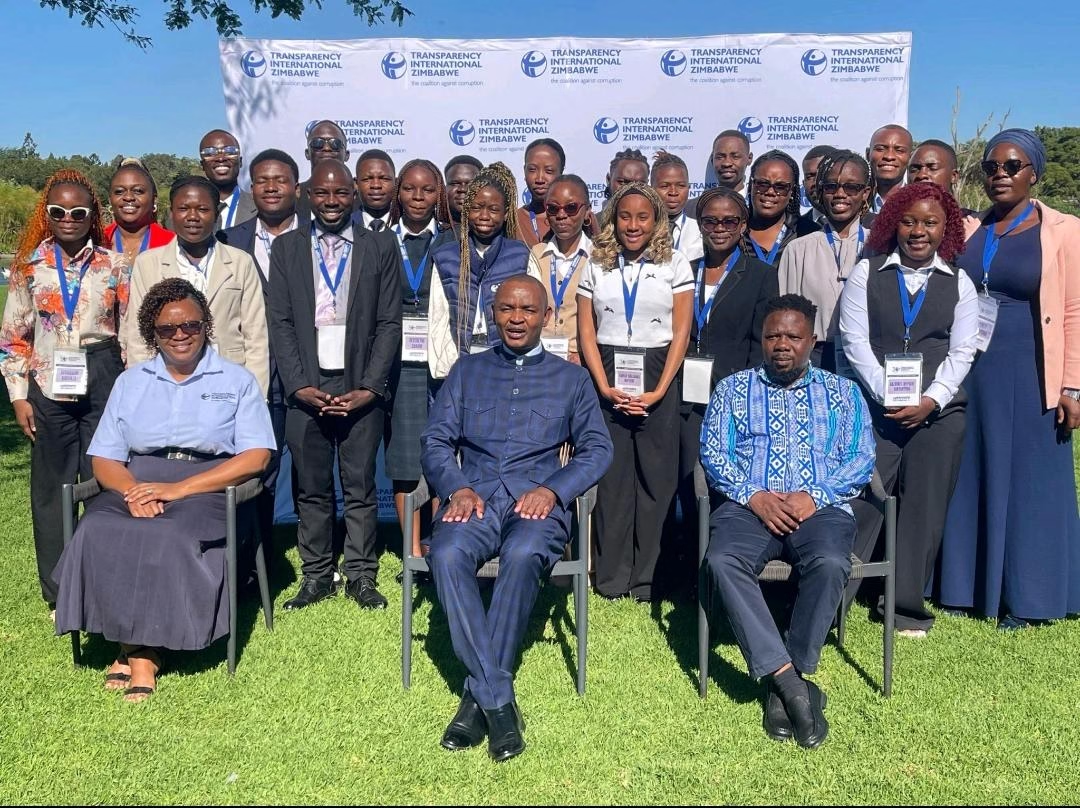
Young Zimbabweans have been urged to take a leading role in tackling corruption, as 25 participants graduated from a national anti corruption training programme in the capital.
The graduates, drawn from across the country, completed the 2026 School of Integrity run by Transparency International Zimbabwe, after being selected from more than 260 applicants.
Organisers say the programme, now in its fifth year, is designed to equip young professionals with the skills to promote accountability and ethical leadership in public and private institutions.
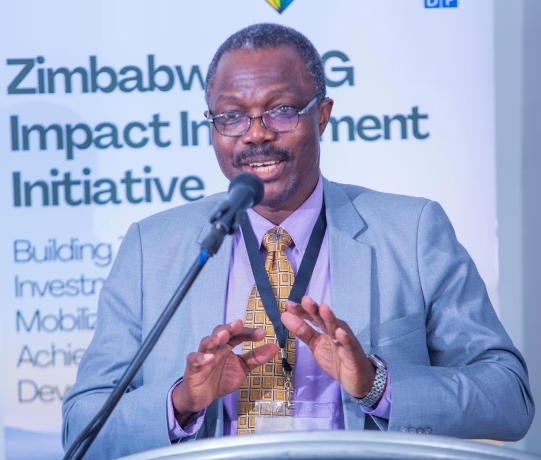
Speaking at the ceremony, the organisation’s board chairperson Isheanesu Chirisa said corruption remained deeply embedded in everyday systems, warning against its growing normalisation.
“Corruption is not abstract. It is deeply personal. It steals opportunity, dignity and futures,” she said.
Zimbabwe scored 21 out of 100 on the latest Corruption Perceptions Index compiled by Transparency International, reflecting what speakers described as persistent governance challenges.
The guest of honour, Rex Shana, said corruption cases were often difficult to investigate and prosecute because they typically involve willing participants and concealed evidence.
“Corruption is rarely obvious. It is often sophisticated, adaptive and opportunistic,” he said, adding that stronger institutions and technical expertise were needed to combat it effectively.
He also highlighted the role of international cooperation, citing global and regional frameworks such as the United Nations Convention Against Corruption in addressing cross-border financial crimes.
The Ambassador of Sweden to Zimbabwe said corruption continued to undermine development, diverting resources from essential services such as healthcare, education and infrastructure.
He said anti corruption efforts were central to achieving global development targets under the United Nations Sustainable Development Goals, particularly those related to building accountable institutions.
The programme’s organisers say more than 120 young people have now graduated from the School of Integrity since its launch, with many going on to promote transparency initiatives in their communities and workplaces.
Graduates were urged to actively participate in governance processes, including monitoring public spending, engaging in policy discussions and holding leaders to account.
“You are leaders of today,” the Swedish envoy told participants. “Your role is not limited to waiting for formal positions of power.”
The School of Integrity forms part of wider efforts by civil society and international partners to strengthen accountability systems in Zimbabwe amid ongoing concerns about corruption and public sector governance.
Zimbabwe’s anti-corruption and governance reforms are also framed within the National Development Strategy 2 (NDS2), which identifies good governance, transparency and accountability as key pillars for achieving economic growth and sustainable development.
The strategy emphasises strengthening institutions, improving public sector efficiency and tackling corruption as critical enablers for national progress.