Harare, Zimbabwe’s ongoing rehabilitation of the National Sports Stadium is increasingly emerging as more than an infrastructure restoration exercise; it is becoming a strategic national project positioned at the intersection of sports development, economic transformation, national image-building, and international re-engagement.
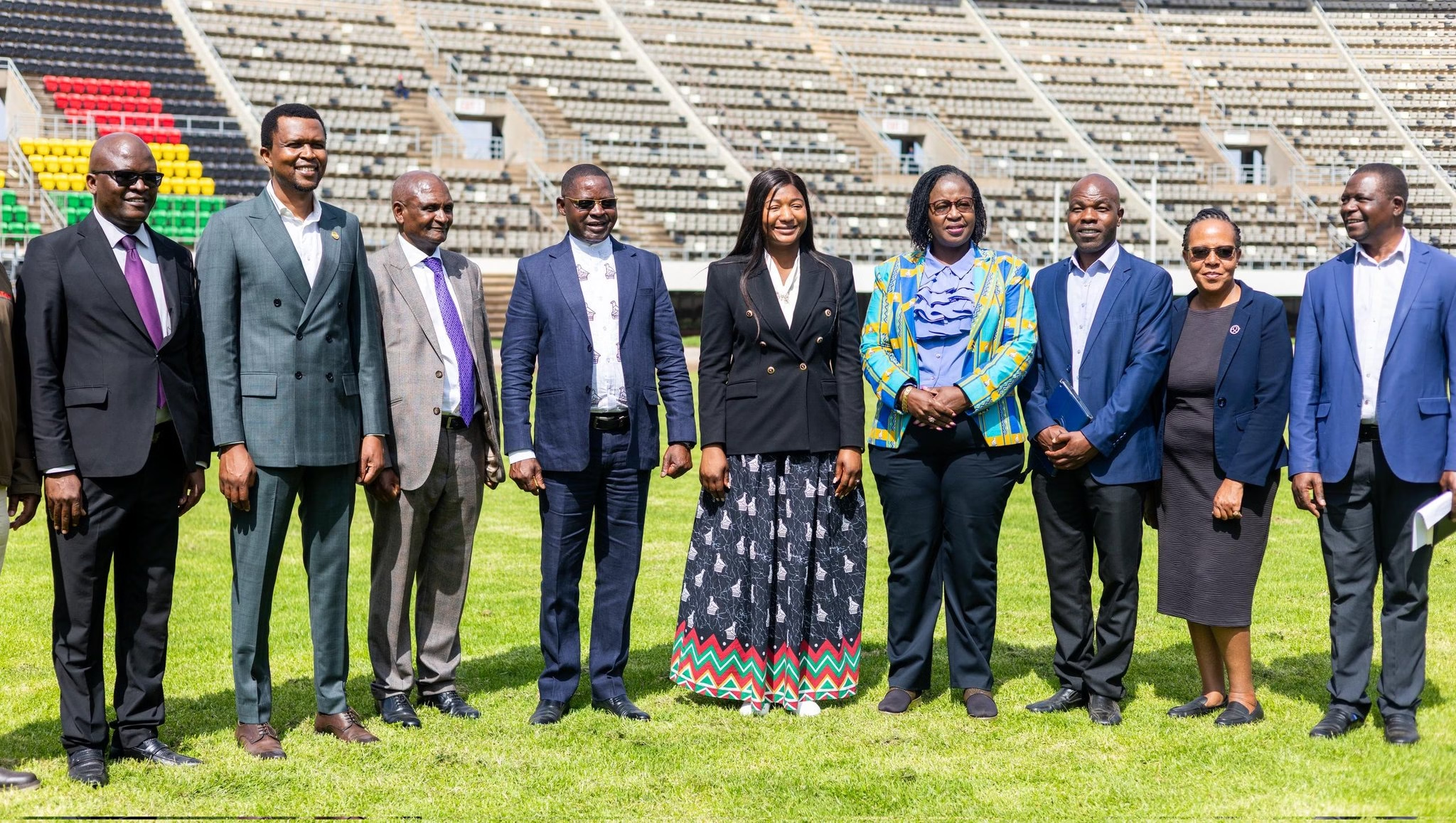
The latest milestone, marked by the official handover of installed bucket seats and all-weather turf by Sakunda Holdings under the Public-Private Partnership arrangement, signals accelerating momentum in the government’s broader efforts to restore the country’s sporting facilities to international standards.
A total of 44 000 bucket seats have now been installed as part of the rehabilitation programme, reinforcing Zimbabwe’s ambition to reposition itself as a competitive regional sporting destination capable of hosting international events and attracting continental football activity once again.
Speaking during the handover ceremony, Anselem Sanyatwe commended Sakunda Holdings and all contractors involved in the project, acknowledging the importance of collaborative national efforts in modernising critical sports infrastructure.
Analytically, the rehabilitation of the National Sports Stadium carries implications that extend far beyond football alone. Modern sports infrastructure increasingly serves as an economic and diplomatic asset, influencing tourism, investment confidence, youth development, and national branding. Countries across Africa are increasingly leveraging sport as an instrument for soft diplomacy, economic stimulation, and social cohesion, and Zimbabwe appears determined not to be left behind in this continental shift.
For several years, Zimbabwe’s inability to host international matches due to infrastructure deficiencies negatively affected not only local football morale but also economic opportunities associated with sports tourism, hospitality, broadcasting, and commercial sponsorship. The ongoing renovations therefore represent an attempt to reverse that trajectory while restoring confidence within regional and continental football structures.
The involvement of Sakunda Holdings under a Public Private Partnership model also reflects a growing policy direction where Government and private sector actors increasingly collaborate in funding strategic national projects. In many developing economies, fiscal limitations often constrain large scale infrastructure development, making private sector participation essential in accelerating national modernisation programmes.
The National Sports Stadium project therefore, illustrates how infrastructure rehabilitation is gradually evolving into a shared national responsibility involving Government institutions, corporate players, and technical stakeholders.
From a developmental perspective, the stadium rehabilitation aligns closely with Vision 2030 and the National Development Strategy 2, both of which emphasize infrastructure modernisation, youth empowerment, and international competitiveness. Sporting infrastructure has become increasingly tied to broader socio economic outcomes, particularly in urban regeneration, employment creation, and youth engagement.
The installation of modern bucket seats and all-weather turf is not merely cosmetic; it represents the upgrading of Zimbabwe’s sporting standards to align with evolving global expectations around safety, spectator experience, and professional sports administration.
Beyond football, upgraded facilities create opportunities for concerts, conferences, tourism activity, and other commercial events capable of generating economic activity and stimulating local industries connected to transport, accommodation, catering, and entertainment.
Importantly, the rehabilitation programme also carries psychological and symbolic significance. Stadiums often function as national spaces of identity, unity, and collective aspiration. Their condition reflects broader national confidence and institutional capability. Restoring the National Sports Stadium, therefore, becomes part of rebuilding Zimbabwe’s sporting pride and restoring public belief in the country’s capacity to deliver large-scale projects successfully.
The broader regional context also adds significance to the development. Southern Africa is witnessing increasing competition among nations seeking to host major sporting tournaments and continental events. Modern facilities are now essential not only for compliance purposes but also for positioning countries within Africa’s growing sports economy. Zimbabwe’s infrastructure drive signals an intention to reclaim its place within that competitive regional landscape.
As work continues at the National Sports Stadium, the project increasingly stands as a reflection of Zimbabwe’s wider developmental aspirations, where sport is no longer viewed solely as recreation but as a strategic pillar for economic growth, youth empowerment, international engagement, and national transformation.