The Zimbabwe International Trade Fair continues to assert itself as a strategic platform for investment mobilisation, policy signalling and institutional visibility, with this year’s edition placing strong emphasis on the role of public sector agencies in driving economic transformation.
At the centre of this narrative was the Ministry of Finance, Economic Development and Investment Promotion, whose exhibition presence reflected a coordinated effort to position Treasury-linked institutions as enablers of growth, stability and investor confidence under the broader National Development Strategy 2 framework.
Leading the engagement, Mthuli Ncube toured key stands under the Ministry’s portfolio, providing both a symbolic and practical assessment of how these institutions are aligning operations with national economic priorities. His visit underscored a deliberate shift from policy articulation to institutional delivery, where agencies are expected to translate macroeconomic goals into tangible outcomes.
The first stop at Zimbabwe Revenue Authority highlighted the critical role of revenue mobilisation and trade facilitation in sustaining economic growth. ZIMRA’s presentation pointed to ongoing reforms in customs administration and border management, areas that remain central to improving Zimbabwe’s ease of doing business. Efficient clearance systems and enhanced compliance mechanisms are particularly important in reducing transaction costs for businesses and improving the country’s competitiveness in regional trade.
From a business analytics perspective, ZIMRA’s digitisation and systems integration efforts signal a broader transition toward data-driven governance. By streamlining tax administration and customs processes, the Authority is not only strengthening fiscal capacity but also enabling a more predictable operating environment for both domestic and foreign investors.
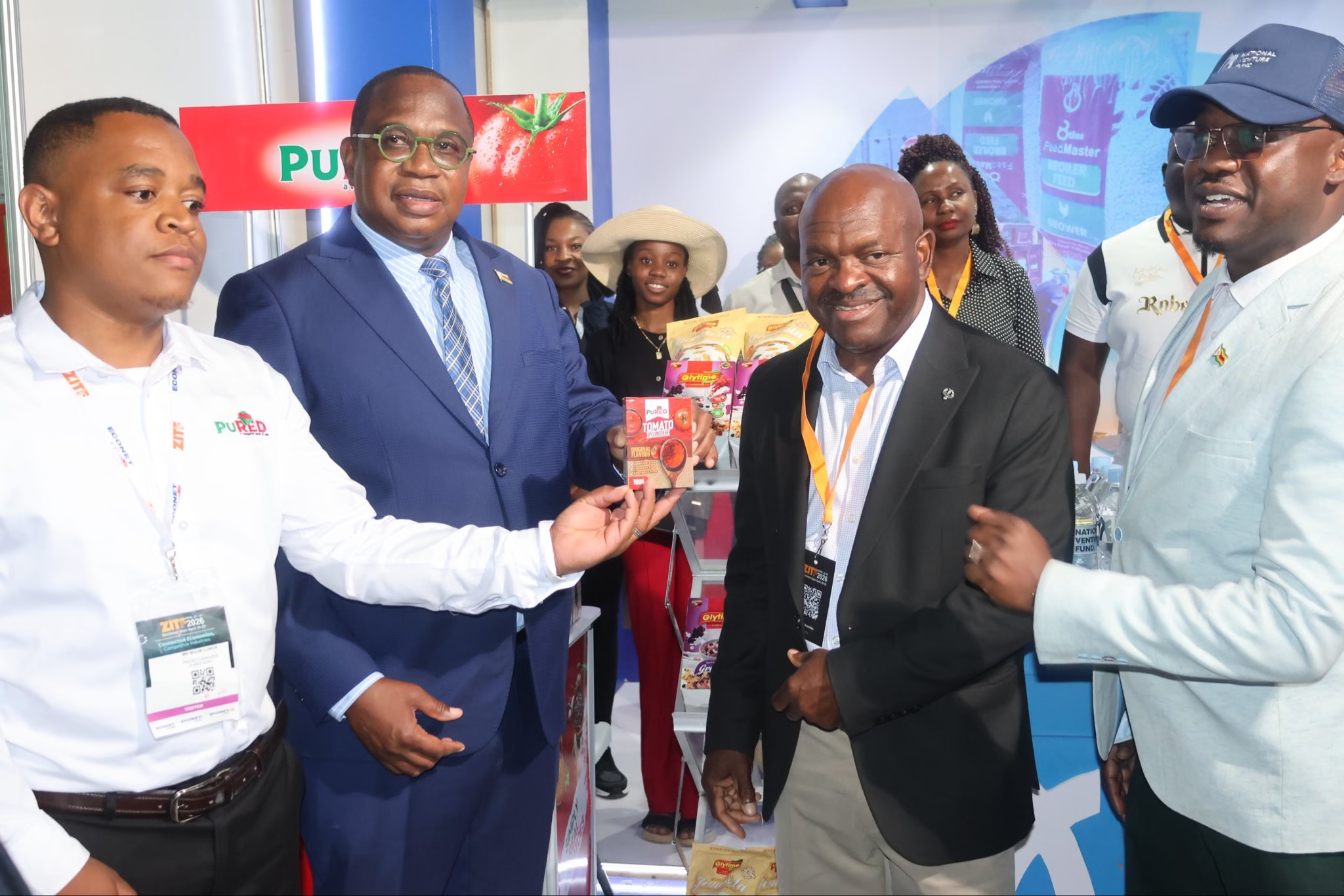
The Minister’s engagement with the National Venture Capital Company of Zimbabwe introduced a forward-looking dimension centred on innovation financing and enterprise development. NVCCZ’s focus on equity funding, incubation and acceleration of start-ups reflects an emerging policy direction that prioritises value addition, industrialisation and youth participation in the economy.
Showcased projects, including agro-processing initiatives such as tomato value addition, illustrate how targeted capital deployment can unlock productivity in traditionally undercapitalised sectors. This aligns with broader economic diversification goals, where small and medium enterprises are increasingly seen as engines of growth, employment creation and export development.
The presence of venture capital mechanisms within the public sector framework also signals an attempt to bridge financing gaps that have historically constrained early-stage businesses. By de-risking innovation and supporting scalable enterprises, NVCCZ is positioning itself as a catalyst for a more dynamic and competitive private sector.
The final engagement at the Deposit Protection Corporation brought focus to financial sector stability, a foundational pillar for sustainable economic growth. DPC’s mandate to protect depositors and maintain confidence in the banking system plays a critical role in safeguarding savings and ensuring the smooth functioning of financial intermediation.
From an investment standpoint, confidence in the financial system is non-negotiable. DPC’s work in deposit insurance and financial literacy contributes to strengthening trust in banking institutions, which in turn supports capital formation, credit expansion and overall economic resilience.
Its involvement in sponsoring the International Business Conference further reinforces the interconnectedness between financial stability and investment promotion, highlighting the importance of integrated institutional roles within Zimbabwe’s economic ecosystem.
The presence of senior government officials, including Yeukai Simbanegavi, Gloria Magombo and Nick Mangwana, reflected a whole-of-government approach to economic development. This coordinated visibility signals policy coherence, which is often a key consideration for investors assessing risk and opportunity in emerging markets.
In analytical terms, Zimbabwe’s presentation at ZITF 2026 suggests a maturing institutional framework where revenue collection, innovation financing and financial sector protection are being positioned as interconnected drivers of growth. The exhibition moves beyond symbolic participation, instead projecting a structured economic narrative anchored on efficiency, inclusivity and resilience.
As ZITF continues to evolve, its significance increasingly lies not just in showcasing products and services, but in shaping the country’s investment story. The challenge going forward will be ensuring that institutional commitments presented at the fair translate into measurable improvements in business conditions, investment inflows and economic performance.
In that regard, the real impact of this year’s exhibition will ultimately be judged not on display, but on delivery.