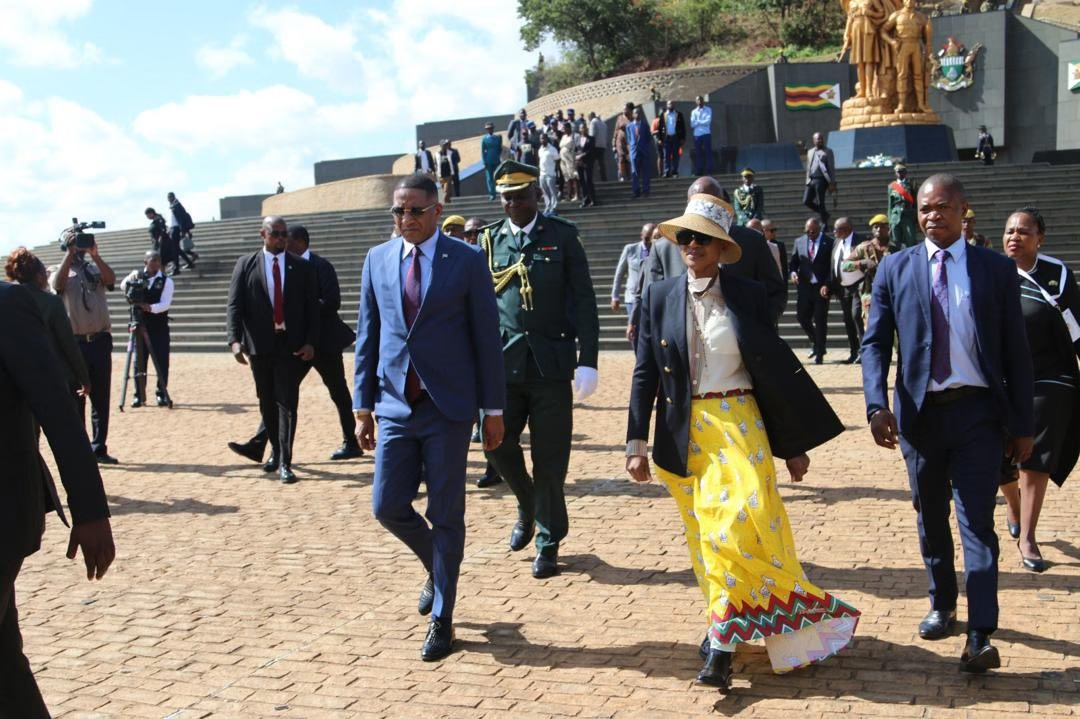
Zimbabwe today presented a layered and strategic tourism narrative, blending historical remembrance with forward-looking innovation, as Botswana President, His Excellency Advocate Duma Boko, toured key national sites alongside the Minister of Tourism and Hospitality Industry, Honourable Barbara Rwodzi.
The visit began at the National Heroes Acre, where President Boko laid a wreath at the Tomb of the Unknown Soldier, reinforcing the role of memorial tourism as both a cultural and diplomatic tool. Such sites are increasingly becoming anchors for identity-based tourism, offering not just historical reflection, but also positioning Zimbabwe within the broader narrative of African liberation and solidarity.
Proceedings then shifted to the Museum of African Liberation, where a ground-breaking ceremony was conducted on land availed by His Excellency the President of the Republic of Zimbabwe, Cde. Dr. Emmerson Mnangagwa. The museum project represents more than infrastructure development, it is a strategic investment in ideological tourism, designed to attract continental and diaspora interest while reinforcing Zimbabwe’s historical diplomatic capital.
The delegation’s final stop at the Geo Pomona Waste Management site introduced a different dimension of tourism, one rooted in innovation and sustainability. The integration of recreational facilities and The Sprout Restaurant within a waste management ecosystem signals a shift toward experiential and green tourism models, where infrastructure traditionally viewed as industrial is reimagined as part of the visitor economy.
Analytically, the sequencing of these visits was not incidental. It reflects a deliberate positioning of Zimbabwe’s tourism sector along three strategic pillars, heritage, ideology, and innovation. By linking liberation history with modern infrastructure and sustainability, Zimbabwe is crafting a tourism narrative that goes beyond leisure, into education, diplomacy, and economic transformation.
This approach aligns with broader national development frameworks, where tourism is increasingly seen as a driver of value creation, investment attraction, and global branding. The inclusion of sites like Geo Pomona demonstrates an attempt to diversify tourism products, moving away from traditional reliance on natural attractions toward a more integrated and resilient tourism economy.
Furthermore, the involvement of a regional Head of State underscores tourism’s growing role as a soft power instrument. Such high-level engagements elevate visibility, strengthen bilateral relations, and position Zimbabwe as a destination of continental relevance.
In essence, the day’s engagements illustrated a country redefining its tourism architecture, one that connects its past to its future, its heritage to its innovation, and its national story to a broader African narrative.