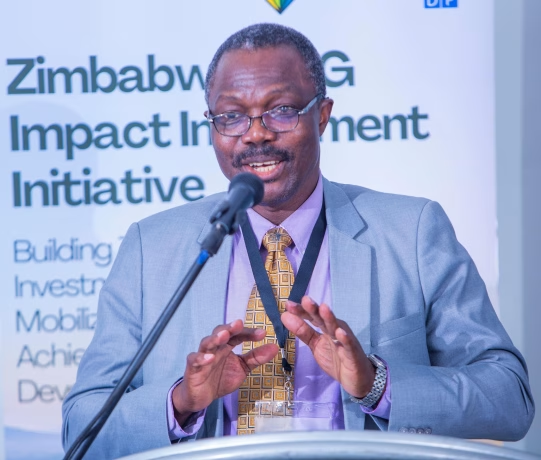
Zimbabwe’s re-engagement process with international financial institutions has entered a more decisive phase following high-level discussions with the World Bank Group Executive Director for Africa Group 1, Zarau Wendeline Kibwe, as Government intensifies efforts to unlock arrears clearance and restore access to concessional financing.
The meeting forms part of a broader diplomatic and financial strategy anchored on Zimbabwe’s Debt Resolution Framework, which has been gathering momentum since early January 2026. At the centre of this strategy is the pursuit of an advocacy partner within the World Bank system, alongside a champion to facilitate bridging finance, a critical instrument required to clear outstanding arrears and re-open access to long-term development funding.
Analytically, Zimbabwe’s approach reflects a structured sequencing model, where macroeconomic stabilisation precedes financial re-engagement. Progress under the Staff-Monitored Programme has been instrumental in this regard, providing a credibility signal to international lenders through demonstrated fiscal discipline, inflation control and improved reserve management.
Mr Kibwe acknowledged these reforms, indicating ongoing engagements with key stakeholders within the World Bank to ensure Zimbabwe’s case receives due consideration. His role, within the Africa Group 1 constituency, is strategically important, as it bridges member countries with the Bank’s decision-making structures, effectively positioning Zimbabwe’s case within internal advocacy channels.
Beyond arrears clearance, the discussions revealed a broader development dimension centred on regional integration. The World Bank’s forthcoming Regional Integration Strategy is expected to incorporate Zimbabwe into strategic trade corridors, a move that could significantly enhance the country’s connectivity to regional and global markets. Such integration is critical in reducing trade costs, improving logistics efficiency and stimulating export-led growth.
Equally significant is the potential for Zimbabwe to benefit from a special dispensation under the International Development Association (IDA-22). As the World Bank’s concessional financing window, IDA provides interest-free loans and grants aimed at poverty reduction and infrastructure development in low-income countries. Access to this facility would mark a major turning point, allowing Zimbabwe to finance social and economic programmes at significantly lower cost.
From a policy perspective, the convergence of arrears clearance, bridging finance and concessional funding access represents a comprehensive pathway toward economic normalisation. It signals a transition from isolation to reintegration, where Zimbabwe can progressively tap into global capital flows to support development priorities.
However, the success of this strategy hinges on sustained reform momentum and continued diplomatic engagement. The World Bank’s support, while critical, is contingent upon confidence in policy consistency, governance frameworks and the country’s ability to manage future debt sustainably.
In this context, the meeting with Mr Kibwe is more than a routine engagement, it is part of a carefully calibrated effort to reposition Zimbabwe within the global financial architecture. It reflects a country actively negotiating its return to international capital markets, while aligning domestic reforms with global expectations.
As engagements continue, the trajectory of Zimbabwe’s debt resolution process will not only determine access to funding, but also shape the broader outlook for economic recovery, investment inflows and long-term growth.