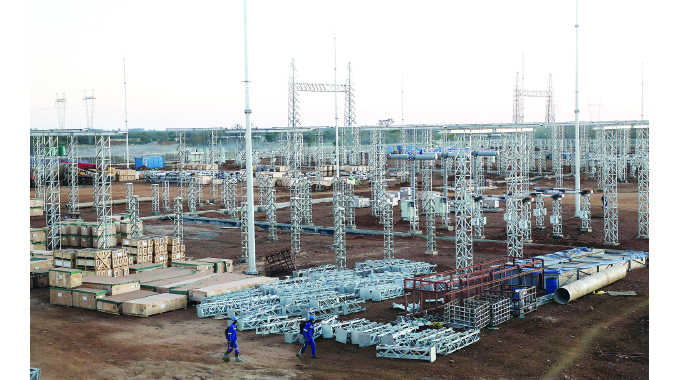
A roadmap to electricity self-sufficiency, which includes the restructuring of Zesa, decommissioning and re-purposing of small thermal power stations to contain technical and non-technical losses of energy, has been adopted by Cabinet.
The roadmap will ensure that Zimbabwe will not import power by 2025 as the Second Republic accelerates the drive to attain an upper-middle class economy by 2030, anchored by the National Development Strategy.
Information, Publicity and Broadcasting Services Minister, Dr Jenfan Muswere, said this yesterday during a post-Cabinet briefing in Harare.
He said Cabinet considered and approved the roadmap to electricity self-sufficiency as presented by Energy and Power Development Minister Edgar Moyo.
“Cabinet wishes to inform the nation that the current local generation capacity is 1 280 megawatts against the current average local demand of about 1 850MW, leaving a deficit of about 400MW. To cover the deficit, the country is currently importing power in the range of 200-500MW,” he said.
“Regarding measures to resolve the operational challenges, the Government will restructure the power utility company (ZESA), decommission and re-purpose the small thermal power stations, contain technical and non-technical losses and implement various power saving initiatives.
“In the medium to long-term, the Government will embrace private sector-led coal mining initiatives and new technologies such as green hydrogen, floating solar panels, battery energy storage systems and funding some of the renewable energy projects dotted around the country in order to increase domestic generation of electricity.”
Responding to questions from journalists, Dr Muswere said Zimbabwe generates energy from three sources namely hydro, thermal and solar, and there are several power projects that are underway.
“The first step was to accelerate the completion of these projects and expansion work to ensure energy security. You might be aware that we now have a Renewable Energy Policy that was launched by President Mnangagwa,” he said.
He said in order to ensure reduction in energy costs, Cabinet took a decision to decommission the small thermal power stations namely Harare, Munyati and Bulawayo, which have been going without generating even a single megawatt of electricity in a week or even two.
Yesterday, the small thermals were not producing anything while Independent Power Producers were feeding 38MW into the national grid.
“At the same time, the rehabilitation of Hwange Units 1 to 6 is ongoing after the President commissioned Units 7 and 8. At the same time, the restructuring of Zesa as an organisation is also another factor to ensure organisational efficiency,” said Dr Muswere.
One of the factors causing the electricity deficit is economic growth, which has resulted in a rise in energy consumption as the manufacturing, mining and agriculture sectors, among others, continue to grow.
Finance, Economic Development and Investment Promotion Minister, Professor Mthuli Ncube, said Government projects power self-sufficiency by 2025.
He said Government will also ensure that there were no technical and non-technical losses of energy as they initiate several power saving measures.
“Countries like China experience about 4 percent loss in transmission unlike us who have 20 percent,” he said.
Other issues that will be dealt with include tariffs to reflect cost-build ups and the rebundling of Zesa, among others.
When Zesa was unbundled, five companies were created, namely Zesa Holdings, ZETDC, Zesa Enterprises, Zimbabwe Power Company and PowerTel Communications, and experts say such a structure is expensive to manage as all the managers require huge perks, which may drain resources.
Herald
Positive Eye News