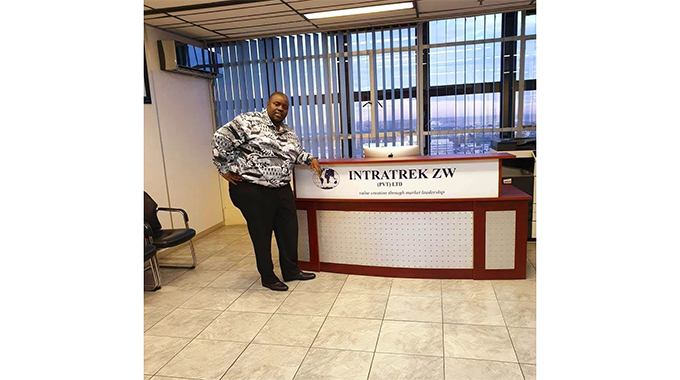
THE contract between Zimbabwe Power Company and Intratrek Zimbabwe (Pvt) Ltd for the US$173 million Gwanda 100MW solar station is binding and ZPC must allow Intratrek to build the station or it must pay the company US$22 million damages, the Supreme Court has ruled as it confirmed a High Court order.
The ruling settled the protracted legal dispute between the parties and created an irrevocable obligation on ZPC to implement the project, consistent with the multiple directives by the Government on this project.
ZPC did not and has not met the conditions required for it to terminate the contract.
The project was awarded to Intratrek by the State Procurement Board (now the Procurement Regulatory Authority of Zimbabwe — PRAZ) after a competitive tender process and has a national project status and a prescribed assets status.
Cabinet already passed a resolution to complement the available power through renewable energy and so the station requires a short period to implement.
After losing its attempt to cancel the contract twice in the High Court against Intratrek, ZPC appealed to the Supreme Court in a bid to reverse the lower court decision, but the final court of appeal upheld the lower court decisions.
A three-judge panel of Justice Lavender Makoni, Justice Joseph Musakwa and Justice George Chiweshe tossed out the ZPC appeal for lack merit and refused to interfere with the judgment by High Court judge Justice Paul Siyabona Musithu, handed down in January this year.
Writing the judgment for the court, Justice Chiweshe noted that despite spirited efforts by ZPC legal counsel Advocate Daniel Tivada, the power company’s case was weak in three cardinal aspects.
First, Intratrek executive director Mr Wicknell Chivayo gave detailed factual evidence in support of his claim.
On the other hand, ZPC project manager Mr Cleopas Fambi, who gave evidence on behalf of ZPC, was at sea as he admitted that he had no useful information regarding the issues before the court.
He referred all material issues to the power company’s chief executive officer who was, surprisingly, not called to give evidence. This left Mr Chivayo’s evidence uncontroverted.
Secondly, the lower court made a finding of credibility in favour of Mr Chivayo and rejected any evidence to the contrary.
Thirdly, the lower court made findings of fact in favour of Mr Chivayo and Justice Chiweshe said the appeals court was satisfied that the High Court properly held that the contract between the parties was valid and extant and that same was properly amended by the addendum to it which extended the period within which the conditions precedent should be fulfilled.
“It correctly found that its purported termination by ZPC was of no legal force or effect as such termination did not meet the requirements of the termination clause of the contract,” said Justice Chiweshe.
Justice Chiweshe also noted that the lower court exercised its discretion judiciously in ordering specific performance of the contract, having found that Mr Chivayo was willing and able to source funding for the project.
“In any event, no meaningful evidence was presented by the witness led by the appellant,” he said.
The court also threw out ZPC’s counter claim of US$3m in damages, saying its sole witness was unable to lead satisfactory evidence with regards the counter claim and the lower court correctly found that the counter claim had not been proved and proceeded to dismiss it.
Intratrek sought a declaration that the procurement contract for engineering, procurement and construction of the 100MW Gwanda Solar Project (ZPC 304/2015) as amended is valid and binding between the parties.
Consequent to the declaration, Intratrek applied for a decree of specific performance, in the alternative damages for breach of contract in the sum of US$22 million.
In his judgment, Justice Musithu criticised ZPC for frustrating its contractor, which won the project after an open tender having gone through a fair and thorough process sanctioned by the then State Procurement Board.
The parties had signed the contract agreement subsequent to a successful tender bid for the engineering, procurement and construction of the 100MW Gwanda Solar Power Station Project, which Intratrek Zimbabwe was awarded as the lowest compliant bidder to specification out of six bidders at a cost of US$173 million.
After the tender award by SPB, Cabinet subsequently approved the project for implementation in phases starting with 10MW and then the balance of 90MW, but still ZPC allegedly ignored all ministerial directives from its principal shareholder the Government.
This was despite the fact that Zimbabwe was and continues to face crippling power shortages due to critically low water levels in Lake Kariba, a 1 050MW hydropower plant and the country’s largest source of electricity.
Even the Ministry of Finance, Economic Development and Investment Promotion has taken a keen interest in the matter after awarding the Gwanda solar project national project status back in 2016, as noted by Justice Musithu’s judgment.
The ministry also wrote a letter of intent in March 2016 for the issue of a sovereign guarantee for the project noting it would “reduce the electricity deficit and contribute towards socio-economic development of our (then) country as enshrined in our economic blueprint (Zim-Asset).
Further, the judge rebuked ZPC over its intransigence regarding funding overtures by Intratreks technical partner CHiNT Electric, which indicated “our drive to expedite all outstanding issues under this contract is compelled and complemented by His Excellency, your President of the Republic of Zimbabwe Cde ED Mnangagwa’s recent visit to the People’s Republic of China and clarion call to accelerate the progress of the project.”
The Chinese firm also expressed its readiness to process the advance payment guarantees required by Zesa so it would release the funding required to finance pre-commencement works for the Gwanda project.
In June 2019 another High Court judge, Justice Tawanda Chitapi, ruled that ZPC had in fact breached terms of the contract and frustrated the project when it instigated the arrest of Intratrek managing director Mr Chivayo, on trumped up charges of fraud, which resulted in the doctrine of fictional performance coming into play.
He rebuked ZPC over its approach to finding common ground with Intratrek Zimbabwe to resolve the impasse, saying the power company’s refusal to sit down with Chivayo to resolve the issue was a clear indication that the power company’s move was driven by “selfish, self-serving and ulterior reasons”.
“The respondent (ZPC), with due respect as evidenced by its depositions, is appealing the judgment for selfish, self-serving and ulterior reasons,” he said. “It is no wonder that the proposed grounds of appeal have no prospects of success. The motive for appealing is improper. It is disgraceful that national projects are stalled by contracting parties having merry dances in the courts instead of dancing in boardrooms and at the project sites and seeing the projects coming to fruition.”
At that time, Chivayo had approached the court seeking an order to compel ZPC to come to the table and discuss how the Gwanda solar project should proceed with a view to resolving the country’s power crisis.
ZPC had terminated the contract on the grounds that Intratrek had failed to fulfil the conditions prior to the implementation and enforcement of the contract, which were supposed to be satisfied within 24 months. Notably, though, the parties had signed an addendum to the agreement on October 23, which stated new provisions to the contractual agreement between the parties. But Zesa still proceeded to purportedly terminate the contract on the basis of the original agreement.
The lower court found that ZPC was culpable for causing delays in the completion of the conditions precedent after causing the arrest of Intratrek managing director Wicknell Chivayo.
According to the joint report done by ZPC and Intratrek, all pre-commencement works equivalent to the advance payment of US$5 million dollars were completed and ZPC owes Intratrek US$693 000 dollars with work valued at US$1,191 million dollars not paid for and yet to be executed
Herald