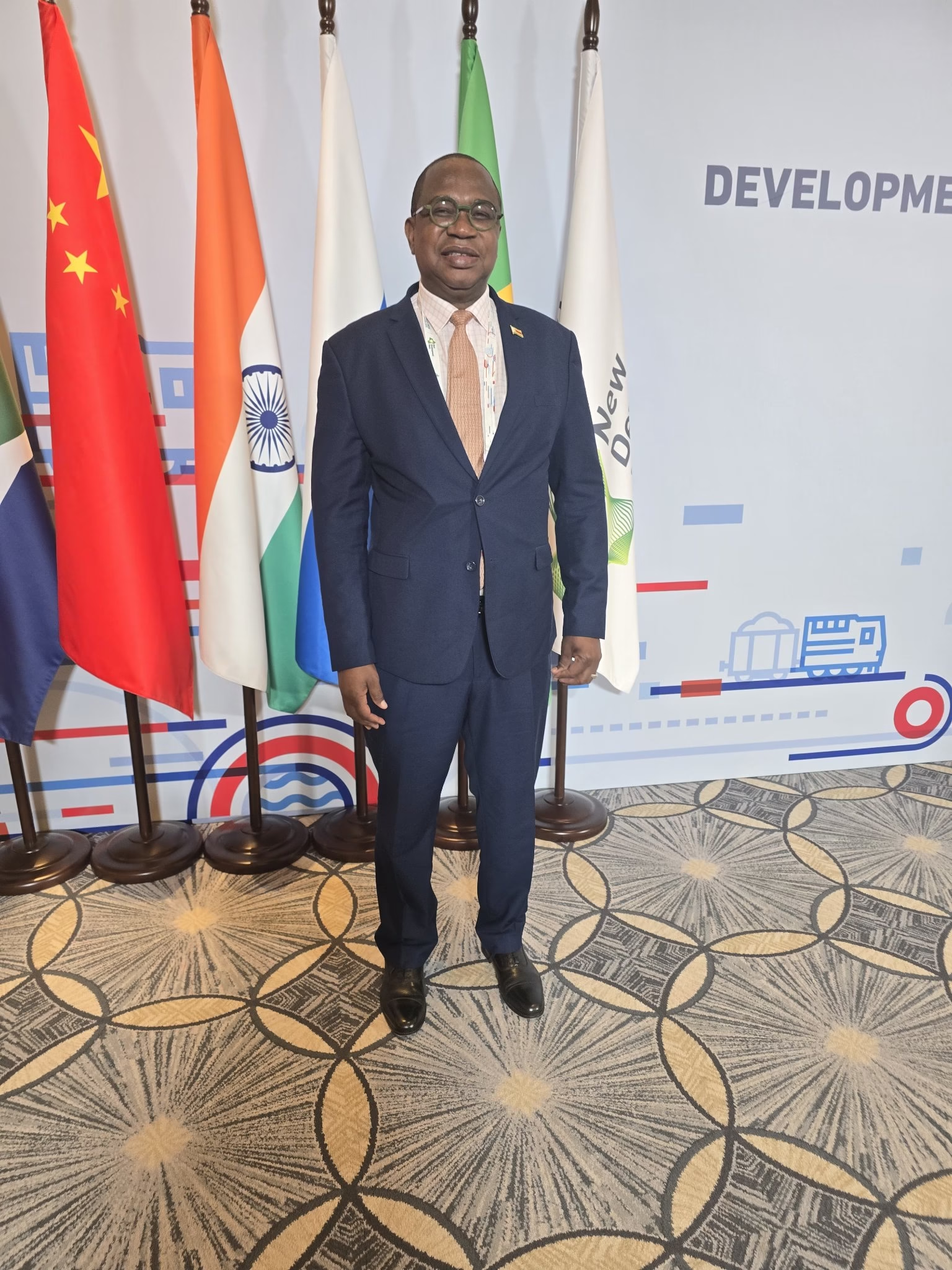
Zimbabwe’s formal entry into negotiations for membership of the New Development Bank marks a potentially significant shift in the country’s international economic positioning, as Government intensifies efforts to secure alternative development financing and strengthen integration with emerging global economic blocs.
In a statement issued on May 15, Mthuli Ncube confirmed that the Board of Directors of the New Development Bank had authorised the commencement of formal negotiations on Zimbabwe’s accession process following official communication from NDB President Dilma Rousseff.
The development represents more than a technical financial process. It reflects Zimbabwe’s broader re engagement strategy aimed at repositioning the country within evolving global economic and geopolitical structures increasingly influenced by BRICS aligned institutions.
Government views the move as a sign of growing international confidence in Zimbabwe’s economic reform trajectory, macroeconomic stabilisation efforts, and private sector driven investment framework. The timing is particularly significant as Harare continues to pursue economic restructuring under National Development Strategy 2 and the Vision 2030 agenda.
The New Development Bank, established by BRICS nations as an alternative development financing institution, has increasingly emerged as part of a wider global shift toward multipolar financial systems. For Zimbabwe, potential membership offers strategic access to long term infrastructure and development financing outside traditional Western dominated financial institutions.
According to Treasury, membership would strengthen Zimbabwe’s ability to finance critical sectors including infrastructure modernisation, energy development, industrialisation, digital transformation, climate resilience, and value chain expansion.
These sectors remain central to Zimbabwe’s economic transformation ambitions. Infrastructure deficits, energy constraints, and limited access to affordable long term capital have historically slowed industrial productivity and investment growth. Access to development finance through the NDB could therefore provide an important financing channel for large scale national projects.
Beyond financing, the negotiations also carry geopolitical significance. Zimbabwe’s engagement with the BRICS linked institution reflects a broader foreign policy orientation increasingly focused on South South cooperation, economic diversification, and strategic partnerships with emerging economies.
The move also aligns with growing global discussions around reforming international financial systems, particularly among developing nations seeking greater representation and alternatives to existing multilateral financing frameworks.
Importantly, the statement by Professor Ncube framed the accession process within the language of reform continuity and economic resilience. Government’s emphasis on macroeconomic stability and private sector led growth suggests an attempt to project Zimbabwe as an investment ready economy capable of integrating into evolving international financial networks.
Analytically, the commencement of negotiations does not immediately translate into financing inflows, but it substantially enhances Zimbabwe’s strategic positioning. Membership negotiations themselves signal institutional acceptance into a major development finance platform associated with some of the world’s fastest growing economies.
The development could also improve investor sentiment by reinforcing perceptions of Zimbabwe’s gradual reintegration into influential global financial structures after years of economic isolation and constrained access to international capital markets.
However, the long term significance of the process will ultimately depend on Zimbabwe’s ability to sustain policy consistency, fiscal discipline, and investor confidence. Development financing institutions increasingly place emphasis not only on political alignment, but on governance standards, project viability, and economic sustainability.
Nonetheless, the opening of formal negotiations with the New Development Bank represents an important diplomatic and economic milestone. It signals Zimbabwe’s continued effort to reposition itself within a rapidly changing global order where emerging economies are seeking greater influence over development finance, trade systems, and economic cooperation.
In essence, the development reflects a country attempting to move from financial exclusion toward strategic participation within alternative global economic architectures shaping the future of development financing.