By Aldridge Dzvene
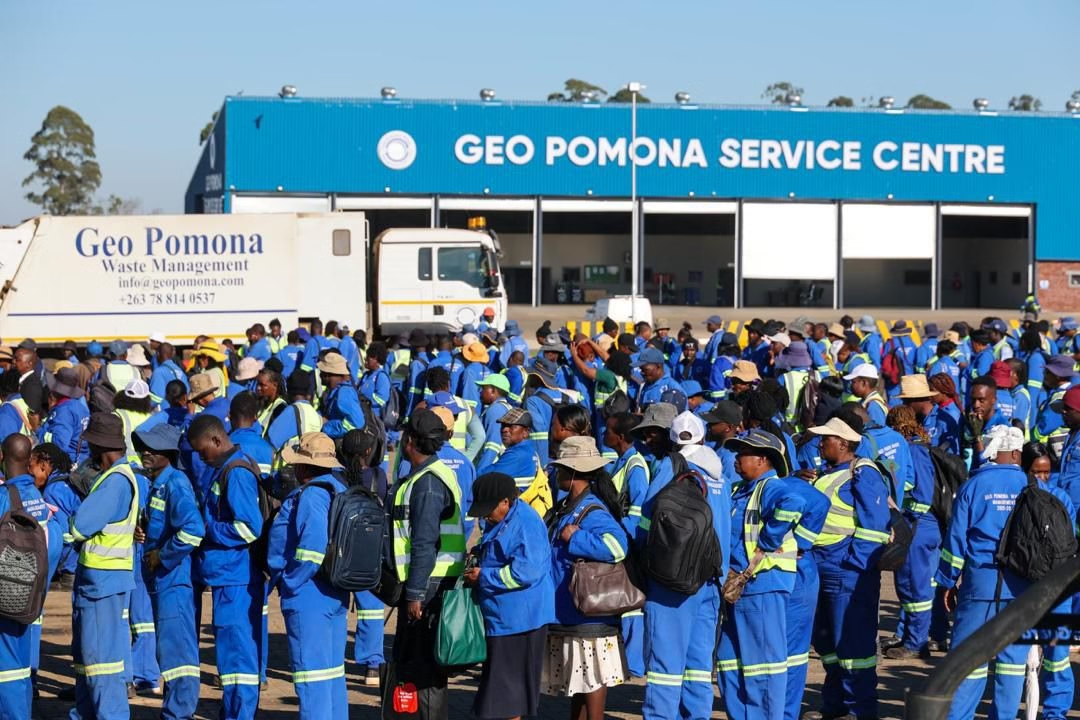
Geo Pomona Waste Management has created more than 1,200 jobs as it scales operations at its flagship waste management and waste to energy project in Harare, reflecting the growing economic significance of environmental infrastructure within Zimbabwe’s industrial transformation agenda.
The employment opportunities span multiple sectors including engineering, accounting, environmental management, logistics, administration, plant operations, and heavy vehicle driving, highlighting how modern waste management is increasingly evolving into a diversified economic ecosystem rather than a purely municipal service.
Importantly, many of the new employees are young Zimbabweans, signalling the gradual emergence of green economy industries as alternative employment generators in a labour market traditionally dominated by agriculture, mining, and informal trade.
The expansion of Geo Pomona reflects a broader structural shift taking place globally, where waste is no longer viewed solely as a disposal challenge, but as a strategic economic resource linked to energy generation, environmental sustainability, and industrial innovation.
At the centre of the company’s operations is the waste to energy model, an approach designed to convert waste materials into usable energy while simultaneously addressing urban waste accumulation challenges. For rapidly urbanising cities such as Harare, this model represents a convergence between environmental management and infrastructure development.
Analytically, the significance of the project extends beyond job creation itself. Zimbabwe’s urban centres continue to face increasing pressure from population growth, waste generation, and strained municipal systems. Investments in modern waste infrastructure therefore carry implications for public health, environmental protection, and long term urban sustainability.
The scale of employment generated by Geo Pomona also illustrates how infrastructure projects linked to climate resilience and environmental management can contribute directly to empowerment and skills development. Technical roles in plant operations, engineering, and environmental systems create pathways for specialised workforce development aligned with emerging global industries.
From an economic perspective, the project demonstrates growing private sector participation in areas traditionally managed by local authorities. This reflects a wider development pattern under Vision 2030 and NDS2, where public private partnerships are increasingly being positioned as mechanisms for accelerating infrastructure delivery and service modernisation.
The company’s continued investment in modern waste management systems also places Zimbabwe within a broader continental movement toward sustainable urbanisation and green industrialisation. As climate related pressures intensify, waste management infrastructure is increasingly becoming part of national conversations around renewable energy, environmental resilience, and sustainable development.
Beyond the statistics, the Geo Pomona project highlights an evolving economic reality, that future employment growth may increasingly emerge from sectors previously viewed as peripheral, including environmental technology, recycling systems, and green infrastructure development.
In essence, the expansion signals more than operational growth for a single company. It reflects the gradual rise of a green economy framework in Zimbabwe, where environmental sustainability, industrial innovation, and youth empowerment are becoming increasingly interconnected.