By Aldridge Dzvene
The familiarisation tour conducted by the Parliamentary Portfolio Committee on Defence, Home Affairs, Security Services and War Veterans Affairs at the Zimbabwe Republic Police Forensic Science Laboratory Centre in Harare reflected more than a routine institutional visit, it revealed the growing centrality of science, technology, and specialised intelligence systems within Zimbabwe’s evolving national security architecture.
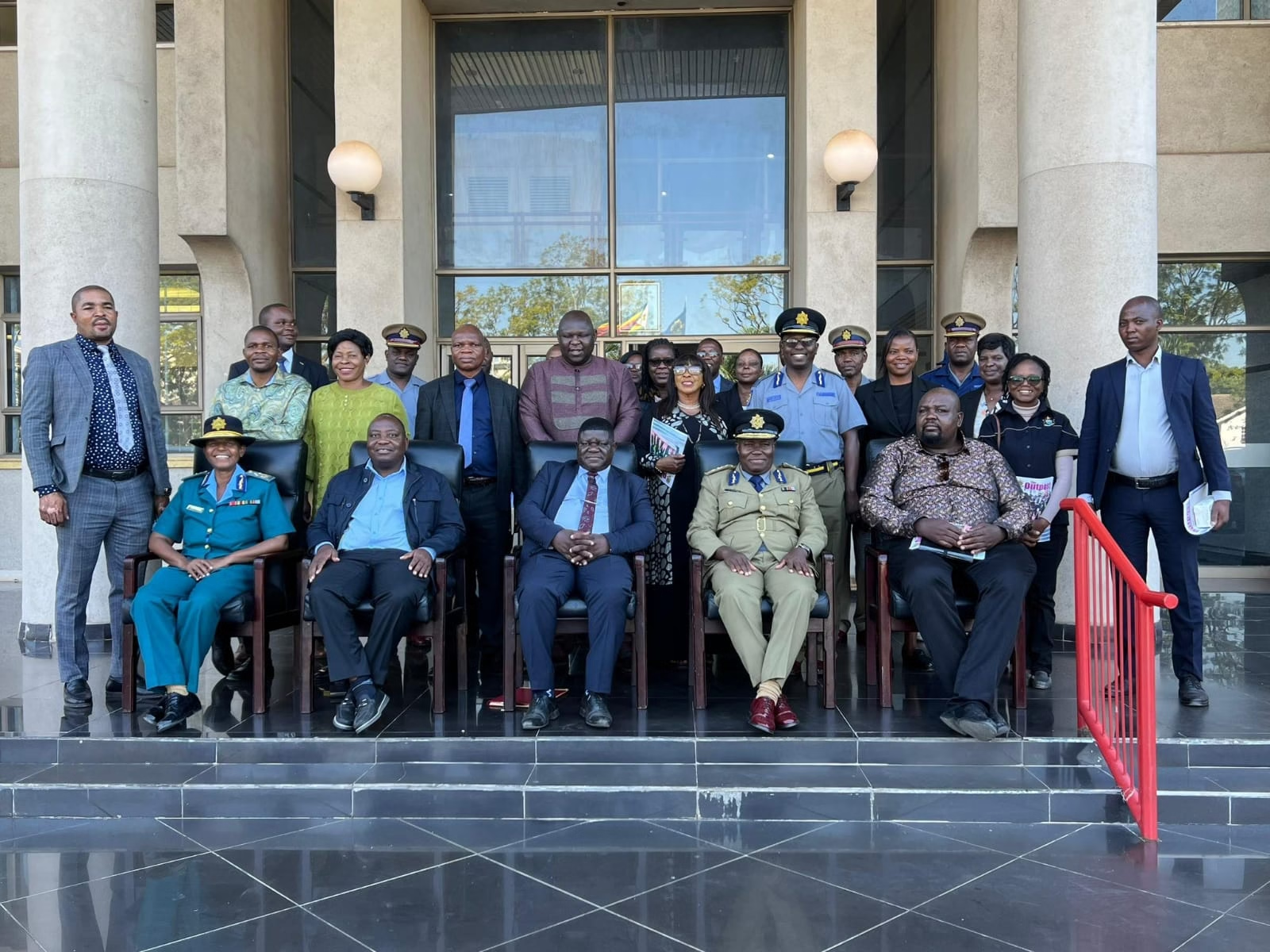
Led by Acting Chairperson, Hon. G. Mashavave, the parliamentary delegation was received by Deputy Commissioner General responsible for Crime and Operations, Learn Ncube, together with senior police officers overseeing specialised technical operations within the ZRP.
The visit exposed legislators to a side of policing that often remains invisible to the public, the highly technical and increasingly sophisticated infrastructure underpinning modern criminal investigations, evidence analysis, and cyber security operations.
By touring divisions such as Criminalistics, Ballistics, the Chemistry Laboratory, the CID DNA Laboratory, and the Questioned Document Examination sections, parliamentarians were given insight into how scientific methodologies are increasingly shaping law enforcement capabilities in Zimbabwe.
The significance of the tour lies in the broader transformation of policing itself. Traditional crime fighting models built primarily around manpower and reactive operations are gradually giving way to intelligence led and technology supported systems where forensic science, digital analysis, and evidence driven investigations play a decisive role.
This transition becomes particularly important in an era where criminal activity is becoming more sophisticated, transnational, and technologically enabled. Cybercrime, document fraud, financial crimes, digital manipulation, and organised criminal networks now require investigative methods far beyond conventional policing.
The visit to the CID Cyber Laboratory highlighted this changing security landscape. As Zimbabwe’s economy and public systems become increasingly digitised, cyber security is emerging as a strategic national concern touching banking systems, telecommunications, government databases, and critical infrastructure.
Parliament’s exposure to these specialised units therefore carries implications beyond institutional appreciation. It potentially strengthens legislative understanding around the need for investment in forensic infrastructure, cyber capabilities, modern training systems, and technological upgrading within security institutions.
The tour of Mkushi Academy, formerly Morris Depot, further reflected ongoing efforts toward institutional modernisation and professional development within the police service. Training academies increasingly function not only as centres of discipline formation, but as strategic hubs for adapting law enforcement personnel to modern security realities.
Importantly, the engagement also reinforced the role of parliamentary oversight within the security sector. Familiarisation visits of this nature create a bridge between policymakers and operational institutions, allowing legislators to better understand the technical complexities, resource requirements, and operational demands facing national security agencies.
Analytically, the visit reflects Zimbabwe’s gradual movement toward securitisation through innovation, where the effectiveness of policing is increasingly linked to scientific capability, digital readiness, and institutional professionalism rather than force projection alone.
The emphasis on highly qualified forensic scientists within the ZRP also points to a deeper institutional evolution. Security services are no longer dependent solely on traditional policing expertise, but are increasingly integrating specialised professionals from scientific, technological, and analytical fields into national security systems.
This aligns with broader state modernisation efforts under National Development Strategy 2, where digitisation, technological advancement, and institutional efficiency are being positioned as critical pillars of governance and public service delivery.
Beyond the operational demonstrations, the parliamentary tour carried an important symbolic message, that national security in the modern era is becoming increasingly knowledge based, technologically driven, and intelligence centred.
In essence, the visit highlighted how Zimbabwe’s law enforcement systems are gradually evolving from conventional policing structures into more specialised institutions capable of responding to complex contemporary security threats in an increasingly digital and interconnected environment.
Picture By Monica Chanda