By Aldridge Dzvene
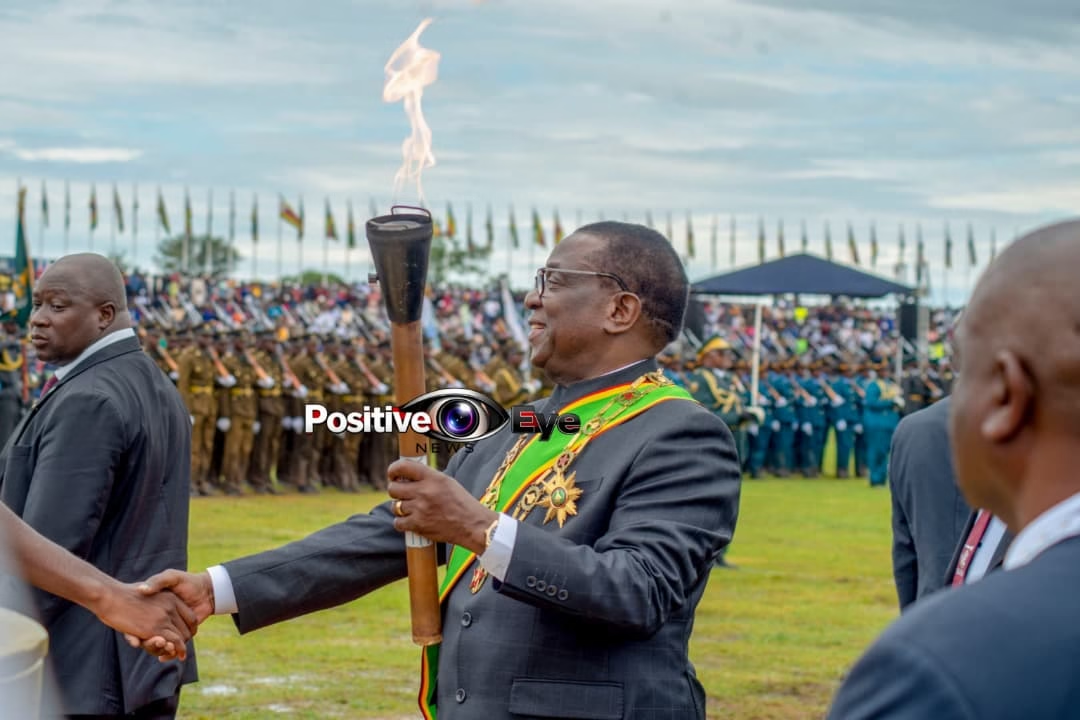
The 46th Independence Anniversary celebrations, held in Maphisa, Matabeleland South Province, offered more than a ceremonial reflection on Zimbabwe’s liberation history, they projected a deeply rooted national ethos centred on unity, sovereignty, and collective responsibility in safeguarding the country’s future. From the tone, structure, and thematic flow of the address by His Excellency, the President of the Republic of Zimbabwe and Commander-in-Chief of the Zimbabwe Defence Forces, Dr. E. D. Mnangagwa, a clear ideological posture emerges, one that subtly reinforces the indivisibility of national development, social cohesion, and the defence of Zimbabwe’s independence.
Without overtly invoking doctrinal terminology, the address consistently anchored Zimbabwe’s trajectory on the principle that the nation’s destiny lies in the hands of its citizens. The repeated assertion that Nyika inovakwa nevene vayo was not merely rhetorical flourish but a deliberate reaffirmation of self-determination, national ownership, and resistance to external influence. This framing positions development not just as an economic imperative, but as a strategic pillar of national resilience.
A careful reading reveals that economic transformation, whether through agriculture, mining, or infrastructure, is presented as a shield of sovereignty. The emphasis on food security, record-breaking agricultural outputs, and the modernisation of grain storage systems points to a doctrine of self-reliance, where the capacity to feed the nation becomes inseparable from the ability to defend it. In this context, the Strategic Grain Reserve transcends its traditional role, symbolising a buffer against both environmental and external vulnerabilities.
Equally, the strong focus on value addition in mining and industrialisation signals a deliberate move to control national resources and reduce dependency. By advocating for beneficiation and local processing, the address advances a framework where economic sovereignty reinforces political independence, ensuring that Zimbabwe’s wealth directly benefits its citizens while limiting external leverage over its strategic sectors.
The speech also reflects an acute awareness of emerging non-traditional threats, particularly in the digital and social domains. The concern raised over the misuse of social media and the dissemination of harmful content underscores a broader commitment to preserving societal values, cultural identity, and public order. Here, the State’s role is framed as protective rather than restrictive, emphasising the safeguarding of citizens, especially the youth, against destabilising influences in an increasingly interconnected world.
Moreover, the recognition of the Zimbabwe Defence Forces and liberation veterans goes beyond ceremonial acknowledgement, it reinforces a continuity between the liberation struggle and contemporary nation-building efforts, embedding a culture of vigilance and preparedness within the national psyche. The message is clear, independence is not a static achievement but a condition that must be actively protected through unity, discipline, and shared purpose.
The ideological thread of inclusivity is also evident in the emphasis on rural development, youth empowerment, and the integration of marginalised communities into mainstream economic activities. Programmes such as the Rural Development 8.0 Model and Village Business Units are portrayed as instruments of both economic upliftment and social stability, reducing inequalities that could otherwise pose internal challenges to national cohesion.
On the international front, the reaffirmation that Zimbabwe is a friend to all and an enemy to none reflects a calibrated diplomatic stance that prioritises peaceful coexistence while maintaining strategic autonomy. This approach balances engagement with global partners against the imperative to protect national interests, further reinforcing the country’s sovereign posture.
Ultimately, the Independence Day address articulates a comprehensive national outlook where unity, development, and vigilance are interwoven into a singular vision. It presents a Zimbabwe that is conscious of its past, confident in its present, and deliberate about its future, a nation where every sector, from agriculture to technology, contributes to a broader architecture of stability and progress.
In its essence, the address reaffirms that the strength of Zimbabwe lies not only in its institutions or resources, but in the collective resolve of its people to build, defend, and sustain their nation.