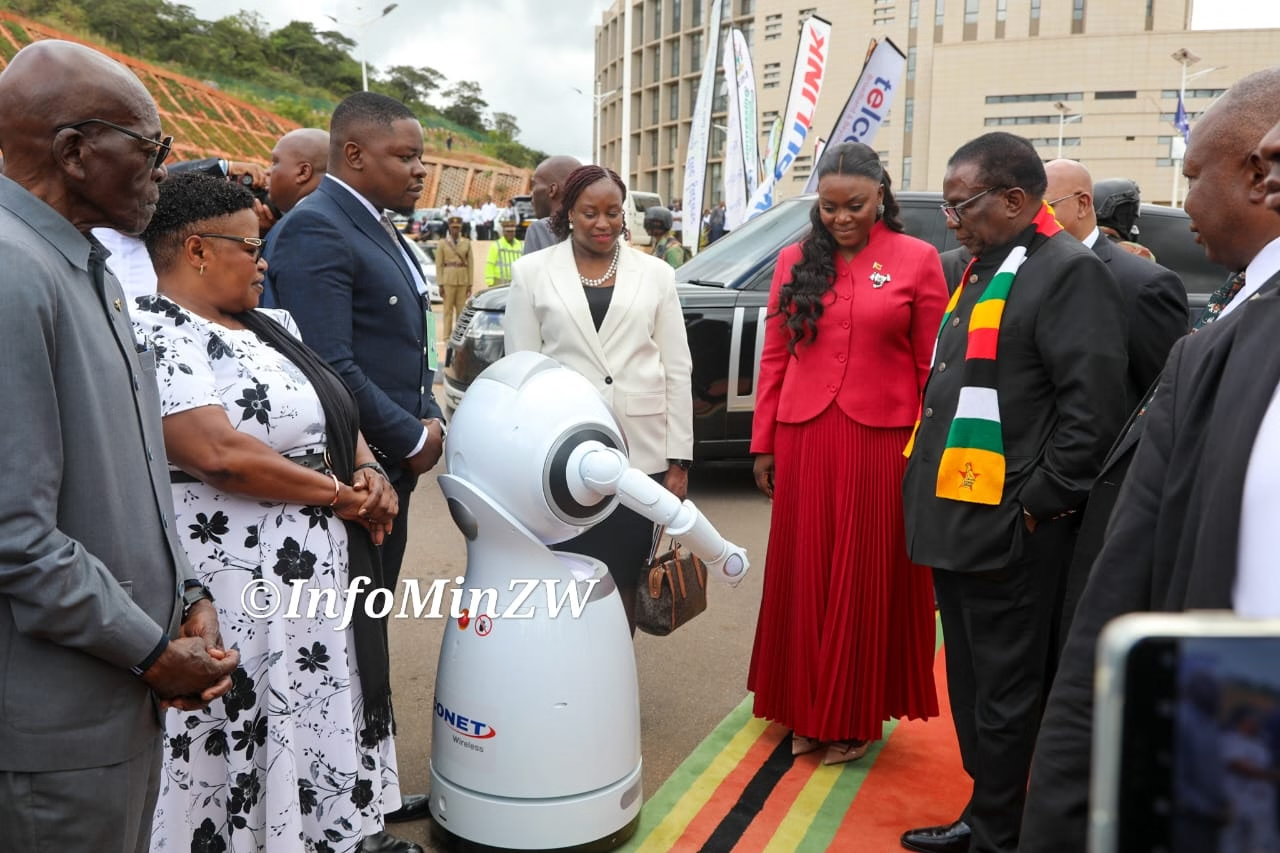
Zimbabwe has taken a decisive step toward embracing the Fourth Industrial Revolution following the launch of the National Artificial Intelligence Strategy for Zimbabwe 2026–2030 at the Parliament of Zimbabwe in Mt Hampden, Harare, Zimbabwe, with the initiative positioning artificial intelligence as a key driver of innovation, economic growth and national development.
The strategy was unveiled by Tatenda A. Mavetera, Minister of ICT, Postal and Courier Services, during an event attended by senior government officials, industry leaders, academics and members of the diplomatic community. The launch was presided over by President Emmerson Mnangagwa, whose administration has prioritised digital transformation as part of Zimbabwe’s broader economic modernisation agenda.
Addressing stakeholders at the launch, Minister Mavetera described the strategy as a defining moment in Zimbabwe’s technological journey, noting that the country is positioning itself to actively participate in the global digital economy. She emphasised that artificial intelligence is not merely a technological trend but a transformative force capable of reshaping economies, industries and societies.
The National Artificial Intelligence Strategy outlines a comprehensive roadmap to guide Zimbabwe’s adoption and development of AI technologies between 2026 and 2030. According to the Minister, the framework is aligned with the national development vision of building a prosperous and technologically advanced economy while ensuring that innovation remains inclusive and accessible to all citizens.
The strategy is built around six foundational pillars designed to support the development of a robust AI ecosystem. These include the development of AI talent and capacity, strengthening digital infrastructure and computational capabilities, promoting the adoption of AI within public services, establishing governance and ethical regulatory frameworks, advancing research and innovation, and fostering strategic international collaboration.
Minister Mavetera noted that building a successful AI ecosystem requires more than technology alone. It demands strong digital infrastructure, effective data governance systems, skilled professionals and supportive regulatory institutions capable of guiding responsible innovation. As such, the strategy also introduces governance structures aimed at ensuring effective implementation and coordination across sectors.
These structures include the establishment of the National Digital Regulatory Committee, the AI Strategy Implementation Office and specialised Technical Working Groups. The aim is to avoid a common challenge faced by many national strategies where ambitious policy launches fail due to unclear institutional responsibilities.
Zimbabwe’s AI strategy also places significant emphasis on inclusion and digital equity. The Minister highlighted that women, youth, rural communities and persons with disabilities must be actively integrated into the country’s digital transformation agenda to ensure that the benefits of emerging technologies are shared widely across society.
To accelerate implementation, the Ministry of ICT announced a series of flagship initiatives scheduled to be rolled out within the first eighteen months of the strategy. Among these is a national AI Grand Challenge competition designed to support innovators and entrepreneurs developing artificial intelligence solutions. The programme will offer winners funding, pilot contracts and opportunities to scale their innovations.
Another key initiative is the creation of a National AI and Data Platform that will provide researchers, developers and institutions with secure access to national datasets and computing resources. The strategy will also introduce the “AI for Every Zimbabwean” campaign, aimed at promoting AI literacy through schools, media platforms and community education programmes delivered in local languages.
Further initiatives include the establishment of a National AI Regulatory Sandbox to allow technology startups to test AI solutions within a controlled regulatory environment, as well as the creation of a National AI Innovation Fund designed to provide financial support and mentorship to emerging technology enterprises.
Minister Mavetera underscored that the success of the strategy will depend on strong partnerships between government, universities, private sector technology companies, civil society organisations and international development partners. Universities are expected to play a central role in research and talent development, while the private sector will drive innovation, technology adoption and job creation.
Zimbabwe’s diaspora community was also identified as a critical contributor to the country’s digital transformation, with professionals abroad expected to support knowledge transfer, skills development and international collaboration.
The launch of the National Artificial Intelligence Strategy reflects the government’s broader ambition to build a digitally driven economy under the Vision 2030 development agenda. Significant progress has already been recorded in expanding digital connectivity, with internet penetration reportedly reaching over 84 percent by the fourth quarter of 2025 and the national fibre optic backbone exceeding 14 000 kilometres.
According to Minister Mavetera, these developments provide a strong foundation for the country’s AI ambitions, enabling Zimbabwe to integrate emerging technologies such as artificial intelligence and satellite based internet connectivity to accelerate digital inclusion.
With the strategy now officially launched, Zimbabwe enters a new phase in its technological development journey. Policymakers believe that by harnessing artificial intelligence responsibly and strategically, the country can unlock new opportunities in sectors such as agriculture, healthcare, education, manufacturing and public administration.
Ultimately, the National Artificial Intelligence Strategy signals Zimbabwe’s intention to position itself not merely as a consumer of digital technologies but as an active innovator within Africa’s rapidly evolving technology landscape. Through sustained investment, strategic partnerships and inclusive digital policies, the country aims to build an AI enabled future that supports economic growth, social development and national competitiveness.