By Aldridge Dzvene
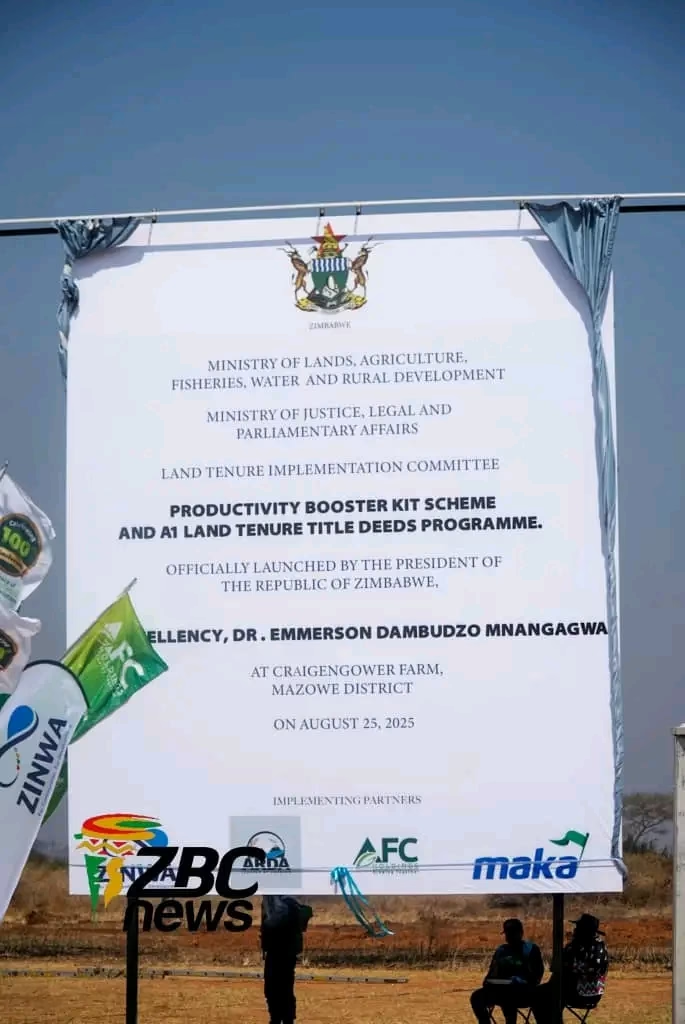
President Mnangagwa has officially launched the Production Booster Kit Programme at Craigengower Farm in Mazowe, marking a significant milestone in Zimbabwe’s agricultural modernization and national development agenda. By handing over 1,000 title deeds under the Presidential Title Deeds Programme and committing US$1.98 billion over ten years to support smallholder farmers, the President has reinforced the integration of secure land tenure with increased productivity, mechanization, and access to financing, establishing a foundation for sustained agricultural growth. The first phase of the programme will benefit 10,000 A1 farmers, enabling irrigation of one to three hectares per farmer, while five commercial banks have pledged additional working capital to support operational expansion.

Rainbow Hotels — Experience Luxury Across Zimbabwe
Rainbow Hotels continues to redefine hospitality standards in Zimbabwe, offering world-class accommodation, fine dining, and modern conference facilities in Harare, Bulawayo, and Victoria Falls.
Whether for business or leisure, Rainbow Hotels delivers unmatched comfort, exceptional service, and a truly premium guest experience tailored to modern travellers.
Book NowPresident Mnangagwa framed the initiative within the broader Vision 2030 objectives, emphasizing that a resilient and productive agriculture sector is central to achieving a prosperous upper-middle-income society. Against the backdrop of climate change and the recent El Niño-induced droughts, the government has prioritized climate-smart agriculture, combining household-level interventions such as the Pfumvudza/Intwasa conservation agriculture model with large-scale irrigation infrastructure. The national area under irrigation has increased from 175,000 hectares in 2019 to 222,000 hectares in 2025, representing a 27 percent expansion, the fastest rate since Independence, and contributing to annual yields of 1.8 million tons of staple crops, meeting domestic food and feed requirements.
The Production Booster Kit Programme is structured to provide comprehensive technical support to farmers, including extension services, mechanization, tillage, irrigation, harvest and post-harvest management, and systematic monitoring through Technical Service Centres in all ten provinces. Once fully operational, the programme is projected to generate over 10 million tons of cereal grains annually, contributing an estimated US$6.14 billion to the agricultural sector GDP and US$1.59 billion in household disposable income, while stimulating rural industrialization and value chain development.
President Mnangagwa highlighted the strategic importance of title deeds, which render land bankable and enable farmers to access affordable financing for mechanization and on-farm infrastructure, thereby linking secure tenure with productivity and economic empowerment. The programme aligns with government efforts to transition Zimbabwe from subsistence agriculture to a commercially oriented sector capable of serving domestic, regional, and international markets. Drawing on engagements at the Tokyo International Conference on African Development (TICAD9), the President emphasized Zimbabwe’s potential to export surplus grain to food-deficient countries, reinforcing the country’s role as a regional food security anchor.
Concluding his address, President Mnangagwa called on farmers, youth, women, and stakeholders to embrace the initiative with unity, discipline, and focus, asserting that collective effort is essential to realize the goals of food sovereignty, economic empowerment, and Vision 2030. The launch of the Production Booster Kit Programme thus represents a pivotal step in Zimbabwe’s agricultural transformation, combining secure land tenure, climate resilience, and modernized production to drive sustainable national development.