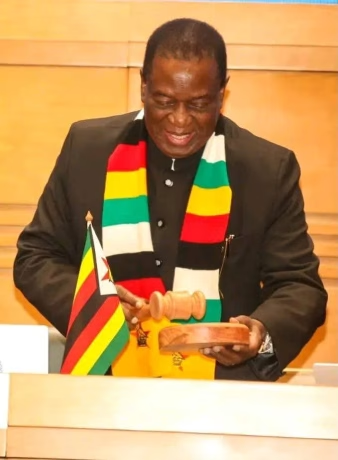
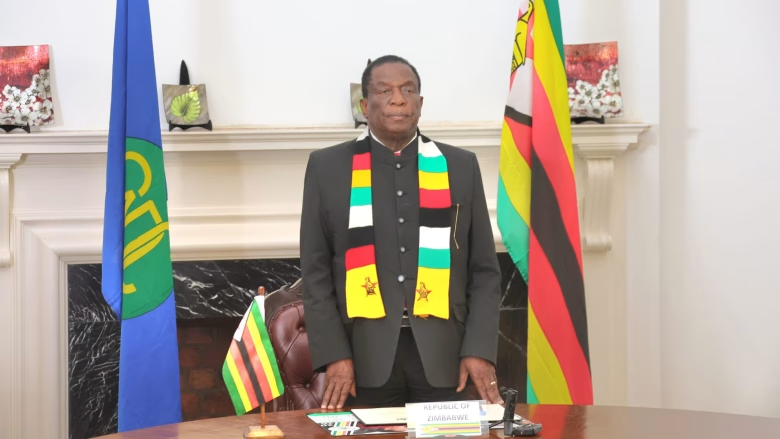
President Emmerson Mnangagwa inaugurated the 7th Annual SADC Industrialization Week at the Harare International Conference Centre (HICC). This pivotal event, a precursor to the SADC Heads of State and Government Summit, stands as the largest platform for public-private engagement, aimed at advancing intra-African trade and investment in the Southern Africa region.
In his keynote address, President Mnangagwa underscored the theme “Promoting Innovation to Unlock Opportunities for Sustainable Economic Growth and Development Towards an Industrialized SADC.” He commended the SADC Secretariat, the Confederation of Zimbabwe Industries (CZI), the SADC Business Council, and the relevant Zimbabwean government ministries for their role in organizing this transformative event.
The President highlighted the urgent need for the region to leverage its vast natural resources and youthful population to move beyond exporting unprocessed goods. He emphasized that a decade ago, Zimbabwe resolved to front-load the SADC Industrialization Agenda, a commitment that now demands accelerated industrial growth through unity and strategic collaboration. This aligns with the African Union’s Agenda 2063, which targets enhanced productivity and industrialization across the continent.
President Mnangagwa stressed that modernization and industrialization are no longer luxuries but necessities for achieving a prosperous future. He drew on the region’s liberation heritage to call for unity and focused effort in leapfrogging industrialization, creating jobs, and increasing value-added production. He underscored the need for greater cross-border cooperation and integration, particularly in agriculture, energy, water, transport, and trade routes. The President emphasized that national development strategies must align with broader regional goals, advocating for a synchronized approach to developing agriculture, agri-businesses, and critical infrastructure.
The President also addressed the importance of scaling up regional value chains and investments in technology, innovation, and research. He urged member states to repurpose institutions and educational systems to bridge technology gaps and meet global trends. In Zimbabwe, this has been manifested through the adoption of the Heritage Based Education 5.0 Policy, focusing on science, technology, and innovation as the foundation of national development. He highlighted the creation of innovation hubs and agro-industrial parks within higher learning institutions, producing new products for local and export markets.
Further, President Mnangagwa challenged the private sector and development partners to support the commercialization of innovative products and prototypes, emphasizing the need for backward and forward linkages to create centers of excellence in science and technology. He called for increased support for African-based entrepreneurship and the development of locally produced technologies and machinery.
The President also acknowledged the challenges faced by the industrial sector, including difficulties in accessing affordable long-term finance exacerbated by illegal economic sanctions. He advocated for innovative financing models, emphasizing the importance of using domestic resources and formalizing the SADC Regional Development Fund. He encouraged the financial services sector to provide responsive financial packages to facilitate the industrialization agenda.
President Mnangagwa reaffirmed the commitment of the Second Republic to fostering a conducive environment for industrial development and regional integration. He highlighted improvements in the ease of doing business, reduced bureaucratic red tape, and increased Foreign Direct Investment. He urged member states to fast-track the ratification of the SADC Protocol on Industry and to work within SADC and other Regional Economic Communities to benefit from the African Continental Free Trade Area.
Concluding his address, President Mnangagwa called for active dialogue, collaboration, and concrete trade deals throughout the Industrialization Week. He expressed readiness to receive observations and recommendations from the forum to accelerate the industrialization drive, urging all stakeholders to remain vigilant and focused on achieving a fully industrialized SADC region.
With these remarks, President Mnangagwa declared the 7th Annual SADC Industrialization Week officially open, emphasizing the collective effort required to realize the vision of a fully industrialized SADC region.