By Aldridge Dzvene
Zimbabwe’s fight against counterfeit agricultural inputs must move beyond protecting commercial seed brands and confront a much bigger national concern: the growing vulnerability of farmers whose investments, livelihoods and food production prospects can be destroyed by fake seed and fertiliser.
The warning emerged at a Fake Seed Awareness Press Conference held in Harare on Thursday, November 26, 2026, where the Zimbabwe Republic Police (ZRP), Seed Co, the Ministry of Agriculture, the Zimbabwe Seed Association and other industry stakeholders called for greater vigilance against counterfeit agricultural inputs.
The scale of the problem is already raising concern. Police spokesperson Commissioner Paul Nyathi revealed that farmers had lost more than US$660,000 to counterfeit seed and fertiliser dealers during the current summer cropping season, highlighting the financial consequences of an illegal trade that threatens to undermine agricultural production.
However, the US$660,000 in reported losses only begins to explain the potential damage. Behind every transaction involving fake agricultural inputs is a farmer who may have committed savings, borrowed money or used scarce resources to prepare land, purchase fertiliser, hire labour and establish a crop.
For such a farmer, discovering that the seed planted is counterfeit may come too late. The land will already have been prepared, fertiliser applied and valuable time invested in a season that cannot simply be repeated.
This is where the counterfeit input problem becomes a food security issue rather than merely a commercial dispute between seed companies and illegal traders.
The farmer carries the greatest risk
Agriculture is an investment whose returns depend on several interconnected factors, including the quality of seed, fertiliser, soil conditions, rainfall, labour and appropriate agronomic practices.
Seed determines the crop’s genetic potential, while fertiliser supplies essential nutrients needed for crop establishment and development. When either input is counterfeit, substandard or unsuitable for the intended crop, the farmer’s production prospects can be compromised.
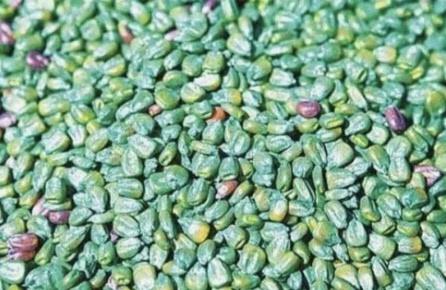
Fake seed may have poor germination, low varietal purity or characteristics that differ from what the packaging promises. Counterfeit fertiliser, meanwhile, may contain incorrect nutrient compositions or fail to meet the quality specifications indicated on its packaging.
The consequences can include poor crop establishment, uneven plant development, reduced yields and, in serious cases, crop failure.
The damage is particularly difficult for smallholder farmers to absorb. Unlike large commercial operations, many communal and small-scale growers have limited financial reserves to recover from a failed season. Their agricultural output supports household consumption, generates income for school fees and healthcare and provides grain that may be stored for several months.
A failed crop therefore extends beyond the field. It can translate into reduced household food supplies, increased dependence on markets and greater financial pressure on families that were expecting their harvest to sustain them.
The danger is also that farmers may initially attribute poor crop performance to rainfall, soil fertility or other production challenges without immediately recognising that the inputs they purchased were counterfeit.
Food security cannot be separated from input quality
Zimbabwe’s agricultural production ambitions are closely linked to the country’s ability to secure reliable access to quality agricultural inputs.
The 2026/27 agricultural season comes at a particularly important time, with climate forecasts pointing to possible rainfall challenges and increasing pressure on household food supplies.
FEWS NET’s October 2026 Food Security Outlook projects worsening food access across several parts of Zimbabwe through May 2027, with below-average rainfall, reduced agricultural incomes and declining household food stocks among the concerns identified.
The outlook also warns that even traditionally surplus-producing areas in the Mashonaland provinces could experience increasing food access pressures as existing stocks decline and the effects of the anticipated El Niño conditions emerge.
This places additional importance on protecting every investment made towards the forthcoming harvest.
The national agricultural strategy cannot achieve its intended outcomes if farmers are purchasing inputs whose quality, authenticity and suitability cannot be guaranteed.
Government’s 2027 National Budget identifies approximately ZiG22 billion in financing requirements for the 2026/27 agricultural season, with ZiG8.4 billion allocated towards the Pfumvudza/Intwasa Programme.
These investments are intended to support domestic agricultural production, climate-smart farming and the mobilisation of grain for the Strategic Grain Reserve.
It would therefore be contradictory to mobilise resources towards agricultural production while allowing counterfeit products to compromise the very foundation of that production.
Pfumvudza/Intwasa, commercial agriculture and household farming all depend on the availability of appropriate, genuine and quality-assured inputs. Protecting the integrity of the agricultural supply chain must consequently be treated as part of the country’s broader food security strategy.
The enforcement question must now take centre stage
Zimbabwe already has legislation governing the production, certification, distribution and marketing of seed through the Seeds Act, Chapter 19:13, administered through the Ministry of Agriculture’s Seed Services Institute.
The institute is responsible for regulatory oversight, seed testing, certification and the licensing of seed sellers. Its official testing laboratory conducts assessments covering purity, germination and moisture content.
The Ministry has intensified inspections of agro-dealer outlets across the country’s ten provinces, targeting cities, towns and business centres during the peak seed-selling period.
Head of the Seed Services Institute, Mr Edmore Mtetwa, said the current inspection programme was aimed at ensuring compliance with regulatory requirements and preventing the circulation of counterfeit products.
However, the question is whether these interventions will translate into sustained market discipline beyond the current agricultural season.
There is a need for a more comprehensive enforcement approach that targets the entire chain, from the manufacture and importation of counterfeit inputs to their distribution and final sale.
Investigations must identify the individuals and businesses financing these operations, the sources of the counterfeit products and the distribution networks through which they reach farmers.
Commissioner Nyathi indicated that police investigations had exposed suspicious operations involving counterfeit maize and sorghum seed, with authorities warning that individuals, companies and organised syndicates would face action.
This is an important distinction. The fight cannot end with the arrest of a shop attendant or the seizure of a few bags of counterfeit seed while the networks supplying the products remain operational.
Authorities should also consider strengthening coordination between the police, Seed Services Institute, local authorities, border enforcement agencies and the relevant fertiliser quality-control institutions.
While seed certification falls under the Seeds Act, counterfeit fertiliser requires equally effective oversight under the applicable fertiliser and agricultural input regulations. Both markets must be monitored to protect farmers from products that fail to meet prescribed standards.
Parliament and the relevant ministries should also assess whether existing penalties provide sufficient deterrence, particularly against repeat offenders and organised commercial operations. Where necessary, legislative amendments should address enforcement gaps and ensure that penalties reflect the economic and agricultural damage caused.
Farmers must not be left alone to police the market
Although farmers have been urged to purchase seed from registered agro-dealers, the responsibility for protecting the agricultural market cannot rest entirely on the buyer.
A farmer purchasing inputs should be able to reasonably trust that a licensed outlet is selling genuine products that meet the required standards.
This requires stronger monitoring of agro-dealers, accessible verification systems and transparent information about authorised distributors.
Seed companies also have a responsibility to strengthen packaging security, authentication systems and product traceability. Farmers should be able to verify products through accessible channels before making payments, rather than discovering irregularities after planting.
The Zimbabwe Seed Association has urged farmers to check product labels, company logos, packaging and authentication features such as QR codes and scratch cards.
Such measures are useful, but they must be supported by a regulatory system capable of responding quickly when suspicious products are identified.
Authorities should also establish accessible reporting mechanisms, ensure that reported cases are investigated and provide feedback to affected farmers. Where fraud is established, the possibility of appropriate restitution should be pursued through the legal process.
Protecting the next harvest
The fight against counterfeit agricultural inputs ultimately concerns the future of Zimbabwe’s agricultural production.
Every farmer who loses an investment through counterfeit seed or fertiliser represents a potential reduction in household production, income generation and the country’s overall agricultural output.
At a time when the country is working to strengthen domestic grain production and protect the Strategic Grain Reserve, allowing illegal traders to undermine farmers’ investments presents a risk that extends well beyond individual victims.
The November 26 stakeholder engagement must therefore become a starting point for measurable action rather than another awareness exercise that fades after the planting season.
Zimbabwe needs stronger inspections, effective prosecutions, traceable distribution networks, appropriate penalties and a system that places the protection of farmers at the centre of agricultural regulation.
The success of the campaign should not be measured by the number of press conferences held or warnings issued, but by the number of counterfeit products removed from the market, illegal networks dismantled, offenders brought before the courts and farmers protected from financial and production losses.
Ultimately, food security begins long before grain reaches the market or the Strategic Grain Reserve. It begins with the farmer preparing the land, purchasing inputs and putting seed into the soil.
If that foundation is compromised, the consequences can be felt throughout the national food system.
Protecting genuine seed and fertiliser is therefore not simply about protecting the agricultural industry. It is about protecting the farmer’s investment, the household’s next meal and Zimbabwe’s capacity to feed itself.