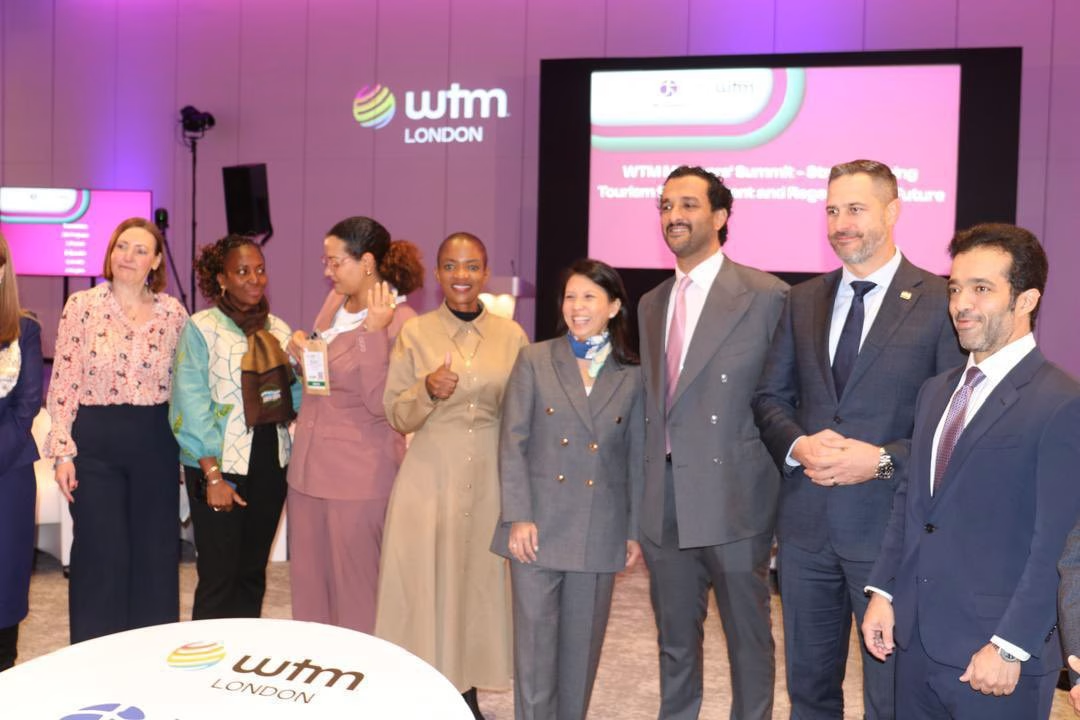
Zimbabwe took centre stage at the WTM Ministers’ Summit 2026, where the Minister of Tourism and Hospitality Industry, Hon. Barbara Rwodzi, joined global leaders in a high-level dialogue on building a tourism sector that is resilient, inclusive and regenerative.
Held in partnership with UN Tourism and the World Travel and Tourism Council, this year’s summit ran under the theme “Strengthening Tourism for a Resilient and Regenerative Future” – a theme Zimbabwe embraced fully.
Minister Rwodzi used the platform to reaffirm Zimbabwe’s push for climate-resilient tourism, pointing to the launch of the official logo for the 2027 International Year of Sustainable and Resilient Tourism at the 23rd UN Tourism Meeting in Victoria Falls in April 2026. She anchored her message in Zimbabwe’s foreign policy stance of being “a friend to all and an enemy to none,” arguing that peace, stability and cooperation remain the bedrock of tourism growth.
She was candid about the toll of climate change and drought on wildlife, biodiversity and tourism infrastructure, and called for united action and sustainable water solutions. In that regard, she singled out Government’s dam construction programme under President Cde. Dr E. D. Mnangagwa as vital for water security and for sustaining wildlife and conservancies.
At the heart of her message were people and communities, whom she described as Zimbabwe’s greatest tourism assets and custodians of its heritage. Tourism, she insisted, must translate into better livelihoods and real benefits for communities.
She also showed how Vision 2030 and Agenda 2063 are being driven through gastronomy tourism, rural industrialisation and the farm-to-market model. She paid tribute to the First Lady and Patron of Tourism, Dr Auxillia Mnangagwa, whose championing of traditional cuisine helped secure Zimbabwe as host of the inaugural UN Tourism continental gastronomy conference. She further pointed to Air Zimbabwe’s direct Harare-London service as a game-changer for connectivity and a showcase for Zimbabwean cuisine.
Minister Rwodzi reminded delegates that tourism contributes 10% of national GDP, noting that the sector held the economy steady in 2024 when minerals were hit by the global price crisis, agriculture suffered from climate change and industry was still finding its feet.
Her contribution was welcomed by UN Tourism’s Secretary-General, who stressed tourism intelligence, data sharing and standardised analytics as key to measuring tourism’s true economic and social impact across member states.