By Aldridge Dzvene
HARARE – More than 229,000 rural women have directly benefited from a climate-resilience programme introducing labour-saving technologies, strengthening access to finance and expanding women’s participation in Zimbabwe’s agricultural sector.
Implemented by the United Nations Development Programme (UNDP) in partnership with the Government of Zimbabwe and supported by the Green Climate Fund (GCF), the Climate Resilient Livelihoods project operates across 15 districts in Manicaland, Masvingo and Matabeleland South. It has reached more than 2.8 million people, 53 percent of them women.
One of its most significant outcomes is a reported 76 percent reduction in women’s agricultural workloads following the introduction of earth augers, multi-crop threshers and grinder-choppers.
Preparing Pfumvudza planting basins has fallen from 39.4 hours to 6.3 hours, while cereal threshing time has dropped from 58.2 hours to 5.2 hours.
The time saved can allow women to concentrate on crop management, livestock production and other income-generating activities. For smallholder farmers, reducing the physical demands of production can improve efficiency and create more room for other economic pursuits.
The project is also expanding access to community-based finance. By December 2025, 463 Village Savings and Lending groups involving 5,981 farmers had accumulated US$329,374 in savings, with women accounting for 77.7 percent of membership.
The groups offer members opportunities to finance agricultural inputs, livestock and small businesses while building financial buffers against unexpected expenses. Their effectiveness, however, depends on sustained participation and opportunities to invest savings in viable income-generating activities.
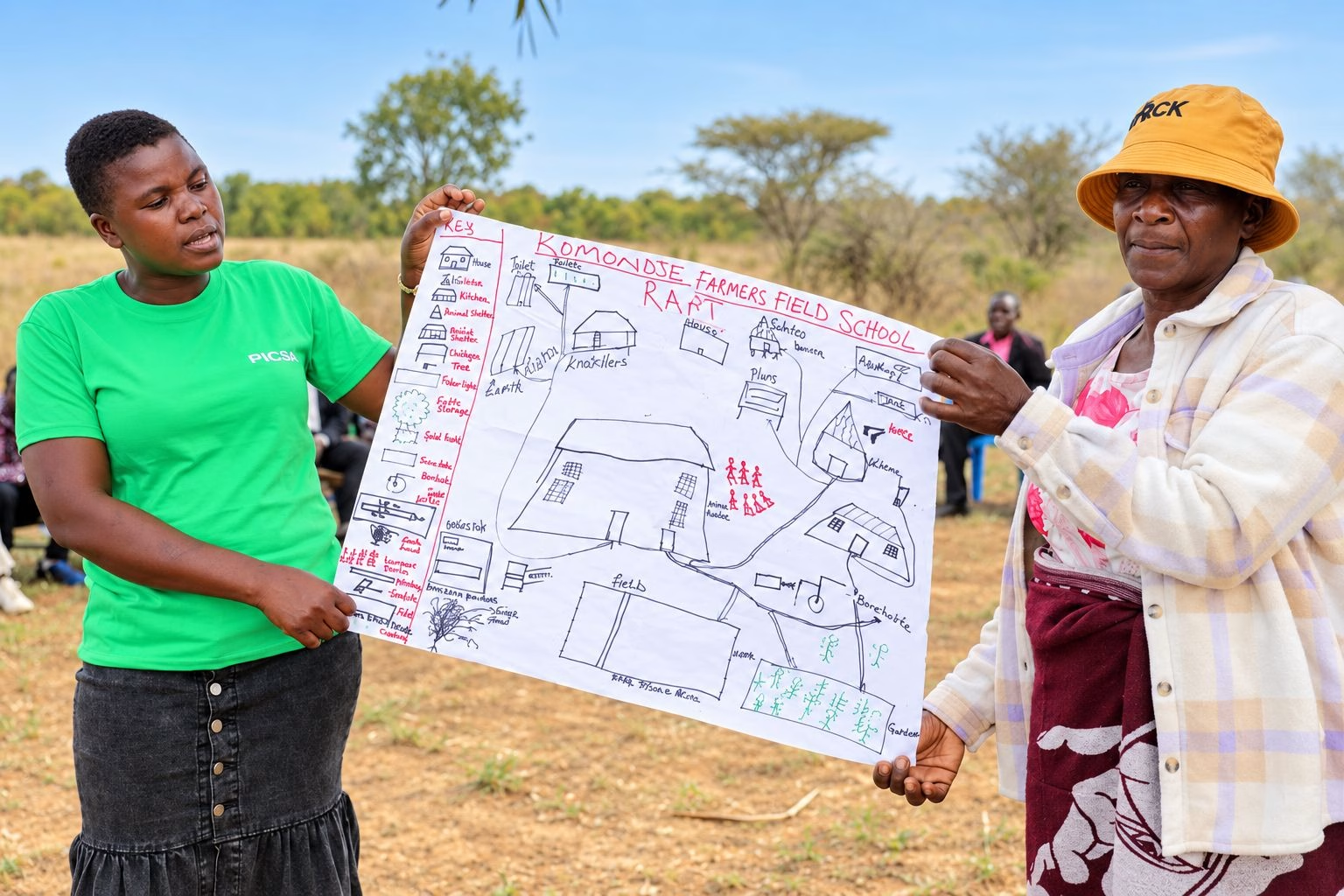
Agricultural training and climate information form another pillar of the programme. Through 230 Farmer Field Schools, 53,392 women have received training, while 199,062 women have accessed tailored weather and climate advisories.
With rainfall variability posing persistent risks to Zimbabwean agriculture, timely forecasts can help farmers make informed decisions on planting schedules, crop selection and water management. Combined with practical training, such information can reduce exposure to avoidable production losses.
Women are also gaining influence over agricultural resources. Their representation on irrigation management committees has risen from below 20 percent at baseline to approximately 49 percent.
The shift is significant as Zimbabwe seeks to strengthen irrigation-based production and reduce reliance on rainfall. Greater participation in water-management decisions gives women a stronger voice in determining how shared infrastructure is operated and maintained.
The programme illustrates how technology, financial inclusion and agricultural knowledge can reinforce one another. Yet sustaining the gains will require continued access to functional equipment, affordable finance, agricultural inputs, extension services and reliable markets. Irrigation infrastructure must also be maintained to deliver lasting benefits.
For Zimbabwe, the priority is to build on these interventions and extend effective approaches to more farming communities, linking climate adaptation with improved productivity and stronger rural incomes.
The results point to a clear conclusion: equipping rural women with technology, finance and agricultural knowledge strengthens their livelihoods while improving the resilience of the communities and farming systems on which Zimbabwe’s food security depends.