By Aldridge Dzvene
HARARE – Zimbabwe is increasingly positioning its diplomatic relations as instruments for economic expansion, with new ambassadors from Nigeria, Switzerland and the Dominican Republic identifying trade, investment and tourism as priority areas for deepening cooperation as they begin their tours of duty.
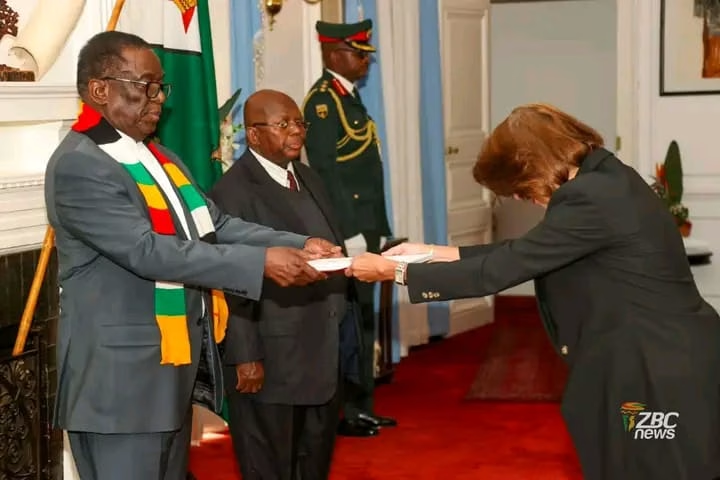
The three ambassadors presented their credentials to President Dr. Emmerson Dambudzo Mnangagwa at State House in Harare, opening a new phase of engagement in which diplomatic relations are being linked more directly to economic opportunities, investment flows, tourism development and skills and technology exchange.
Nigeria’s Ambassador, Mr Philip Ikurusi, said his priority would be to build on the longstanding relationship between Harare and Abuja while identifying new areas of cooperation capable of producing tangible benefits for citizens of both countries.
He identified trade and investment, agriculture, education, tourism, culture, youth development, security and technology as areas with potential for expanded cooperation.
The breadth of the proposed engagement is significant. It indicates that Zimbabwe’s economic diplomacy is increasingly looking beyond traditional political relations towards partnerships capable of strengthening productive sectors and widening access to external markets.
Switzerland’s incoming Ambassador, Her Excellency Christine Burgener, placed investment at the centre of her diplomatic agenda, highlighting the existing presence of Swiss companies in Zimbabwe and calling for more enterprises to explore opportunities in the country.
She also pointed to the double taxation agreement between Zimbabwe and Switzerland as an important instrument for facilitating stronger economic relations.
This provides a practical dimension to diplomatic engagement because investment decisions are influenced not only by political relations but also by the predictability of the regulatory and taxation environment.
For Zimbabwe, attracting additional investment is particularly important as the country seeks to expand productive capacity, create employment and increase exports. The diplomatic missions therefore have a potential role in connecting Zimbabwean opportunities with international capital, expertise and markets.
The Dominican Republic has identified tourism as another avenue for cooperation, with Ambassador-designate Ms Erika Rodriguez offering to share her country’s experience with Zimbabwe.
Rodriguez said the Dominican Republic received 11.6 million tourists last year and was prepared to cooperate with Zimbabwe in tourism while learning from the country’s experience in wildlife and conservation.
The proposed exchange highlights an important development opportunity. Zimbabwe possesses significant tourism assets, including wildlife, natural landscapes and heritage, but expanding the sector requires continued investment, stronger international marketing, improved connectivity and the development of competitive tourism products.
Learning from countries that have successfully built large tourism economies could therefore complement Zimbabwe’s own tourism strengths.
Meanwhile, outgoing Canadian Ambassador to Zimbabwe, H.E. Adler Aristilde, said he was leaving bilateral relations in a stronger position, citing increased economic engagement and growing interest from Canadian businesses.
He said 25 Canadian companies visited Zimbabwe in 2024 to explore business opportunities.
The Canadian experience demonstrates the potential economic value of sustained diplomatic engagement, where political relations can create platforms for business delegations, investment exploration and commercial partnerships.
Collectively, the engagements with Nigeria, Switzerland, the Dominican Republic and Canada point to an increasingly economic dimension to Zimbabwe’s foreign relations.
Rather than measuring diplomatic success solely through political solidarity and high-level exchanges, the emerging emphasis is on whether international partnerships can contribute to investment, exports, tourism receipts, technology transfer, skills development and employment creation.
This approach is consistent with Zimbabwe’s broader development strategy under NDS2, where international engagement is expected to complement domestic efforts to expand production, industrialisation and investment.
The strategic opportunity for Zimbabwe now lies in converting diplomatic goodwill into measurable economic outcomes. New agreements, business delegations and cooperation frameworks will need to translate into actual investments, expanded markets and productive partnerships.
The presentation of credentials by the three new ambassadors therefore carries significance beyond diplomatic protocol. It opens another channel through which Zimbabwe can pursue its development objectives by using international relations to attract capital, expand trade, strengthen tourism and deepen cooperation in productive sectors.
As the country advances towards Vision 2030, the effectiveness of this economic diplomacy will ultimately be judged by what it delivers on the ground, from new investments and markets to jobs, exports and stronger productive capacity.