By Aldridge Dzvene
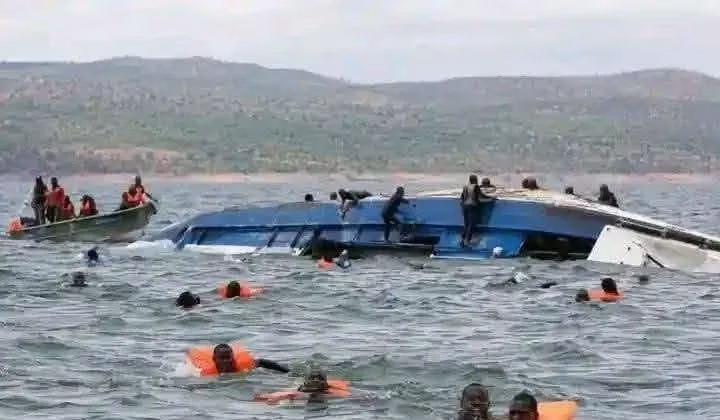
HARARE – President Dr. Emmerson Dambudzo Mnangagwa has declared the Lake Kariba boat tragedy a National Disaster and ordered immediate remedial measures to strengthen Zimbabwe’s maritime safety systems after 44 bodies were recovered following the capsizing of a Rural Infrastructure Development Agency (RIDA) boat.
In a condolence message issued following the tragedy, President Mnangagwa expressed concern over the loss of life and directed Government authorities to provide comprehensive assistance to affected families, survivors and those still unaccounted for.
The President commended security services and private citizens who responded to the incident, saying their swift intervention helped prevent further loss of life under difficult conditions on the lake.
The tragedy, however, has exposed a broader national development concern beyond the immediate loss of life, with the President acknowledging serious deficiencies in Zimbabwe’s maritime capabilities and directing relevant agencies to address them as a matter of urgency.
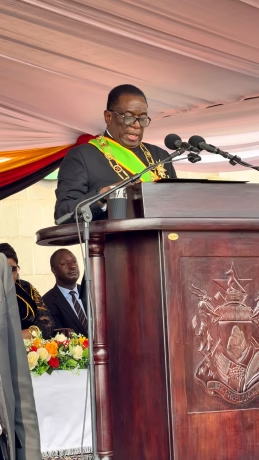
“This tragedy has exposed serious deficiencies in our maritime capabilities which we have to address immediately so that our places of recreation do not become death traps to the innocent,” President Mnangagwa said.
The directive places maritime safety within the broader national infrastructure and public safety agenda. Lake Kariba is not only a recreational destination but also an important economic and tourism asset, meaning weaknesses in safety systems have implications for public confidence, tourism activity and the sustainable utilisation of Zimbabwe’s inland water resources.
President Mnangagwa directed all agencies responsible for maritime safety, including specialised units within the security forces, to take an active role in implementing remedial interventions.
The declaration of the incident as a National Disaster also widens the Government response, allowing affected families to receive necessary medical, psychosocial and funeral support while search operations continue for missing persons.
The President further directed specialised health services to provide counselling to survivors, recognising the psychological impact of a disaster of this magnitude.
From a national development perspective, the tragedy presents an urgent need to strengthen the institutional and technical capacity responsible for safety on Zimbabwe’s inland waters. This includes not only emergency response but also the systems that prevent accidents, protect passengers and ensure that recreational and economic activities on the country’s water bodies operate within robust safety frameworks.
The President’s intervention therefore shifts the focus from responding to the immediate tragedy towards correcting the vulnerabilities exposed by the accident.
As search and recovery operations continue, the Government’s response will increasingly be measured not only by its support to bereaved families but also by whether the lessons from Kariba result in stronger maritime safety infrastructure, better emergency preparedness and more effective protection of citizens.
The tragedy has consequently become a national reminder that development infrastructure must be matched by safety infrastructure. As Zimbabwe seeks to expand tourism, recreation and economic activity around its water bodies, protecting human life must remain central to the utilisation of these national assets.