By Aldridge Dzvene
Zimbabwe’s election to the United Nations Security Council for the 2027-2028 term has emerged as one of the country’s most significant diplomatic achievements in recent years, presenting a compelling narrative of a nation increasingly asserting its place within the international community despite having endured sanctions and diplomatic challenges for more than two decades.
The Southern African nation secured 182 out of 191 votes cast during the election, representing an overwhelming 95.3 percent endorsement by UN member states. The result is remarkable not only because of the scale of support but also because it comes against a historical backdrop in which Zimbabwe has frequently been portrayed through the prism of sanctions and political contestation.
For many observers, the vote represents a strong indicator of growing international confidence in Zimbabwe’s role in global affairs. It demonstrates that an overwhelming majority of nations were willing to entrust Zimbabwe with responsibilities on one of the world’s most influential institutions responsible for maintaining international peace and security.
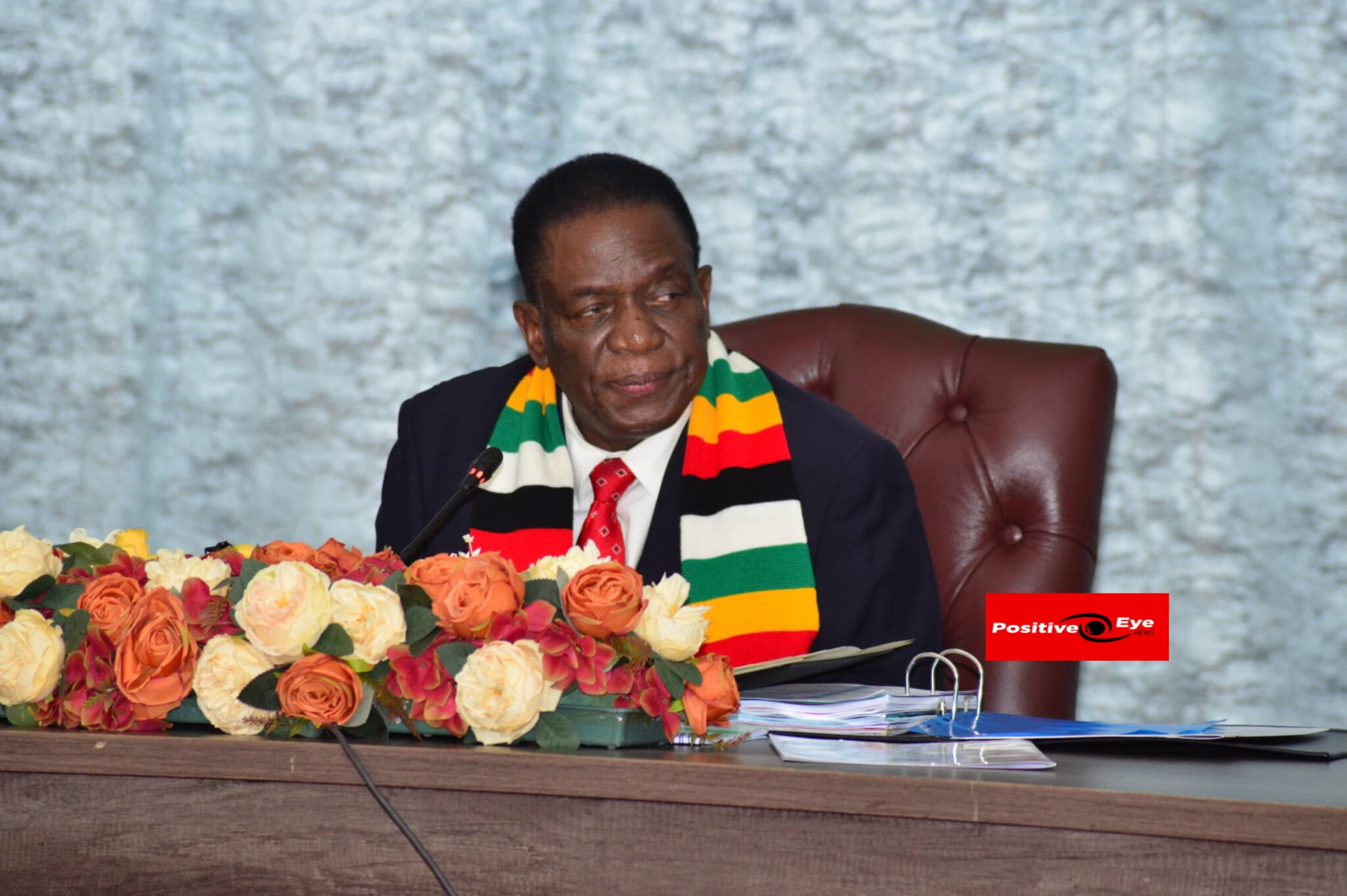
The achievement also provides a significant endorsement of President Emmerson Mnangagwa’s engagement and re-engagement policy, which has become a cornerstone of Zimbabwe’s foreign policy since he assumed office. The policy has focused on rebuilding diplomatic relations, strengthening bilateral and multilateral cooperation, expanding economic partnerships and repositioning Zimbabwe as an active participant in regional and international affairs.
While the country has continued to advocate for the removal of sanctions, its diplomatic strategy has increasingly centred on constructive engagement with the international community. The Security Council election appears to suggest that this approach is yielding tangible results.
The United Nations Security Council occupies a unique position within the global governance architecture. Charged with maintaining international peace and security, the Council deliberates on conflicts, peacekeeping operations, sanctions regimes and emerging security threats. Although non-permanent members do not possess veto powers, they actively participate in deliberations and vote on resolutions that shape international responses to major global developments.
Zimbabwe’s presence on the Council effectively elevates the country’s diplomatic profile. Rather than merely being the subject of international discussions, Zimbabwe will now sit among nations responsible for contributing to decisions on critical global security matters. This transition carries both symbolic and practical significance.
Politically, the election reinforces Zimbabwe’s standing within Africa and the broader Global South. It provides the country with a platform to articulate positions on issues affecting developing nations while contributing to international peace and security discussions. The development also strengthens Africa’s voice within the Council at a time when calls for greater representation of the continent in global institutions continue to gain momentum.
Beyond diplomacy, the election may have broader implications for Zimbabwe’s international image. In an increasingly interconnected world, perceptions matter. Nations viewed as credible and responsible international actors are often better positioned to attract investment, expand trade opportunities and forge strategic partnerships. While a Security Council seat does not directly translate into economic gains, it enhances visibility, credibility and confidence among international stakeholders.
The significance of the vote becomes even more pronounced when examined through the lens of Zimbabwe’s sanctions experience. For more than twenty years, sanctions have dominated international narratives surrounding the country. Yet the support of 95.3 percent of voting member states suggests a more nuanced reality within the international community. It indicates that many countries are willing to engage with Zimbabwe as a partner in addressing global challenges and advancing international cooperation.
The overwhelming endorsement can therefore be interpreted as more than an electoral victory. It reflects a growing recognition of Zimbabwe’s contribution to regional stability, its commitment to multilateralism and its determination to engage constructively with the international community.
As Zimbabwe prepares to assume its seat on the Security Council, the election stands as a diplomatic milestone and a testament to the country’s evolving international stature. For a nation that has spent much of the past two decades confronting sanctions and external pressures, securing the confidence of 182 nations represents a powerful statement of international acceptance and an opportunity to further advance national interests on the global stage.
In many respects, the journey from sanctions to a 95.3 percent endorsement for a seat on the world’s foremost security body encapsulates a broader story of diplomatic resilience, strategic engagement and the gradual repositioning of Zimbabwe within the international system.