Harare, The latest Main Tripartite Negotiating Forum meeting held by Tripartite Negotiating Forum Zimbabwe highlighted Zimbabwe’s growing emphasis on social dialogue, economic coordination, and institutional consultation as the country continues navigating complex socio economic transformation under Vision 2030 and the National Development Strategy framework.
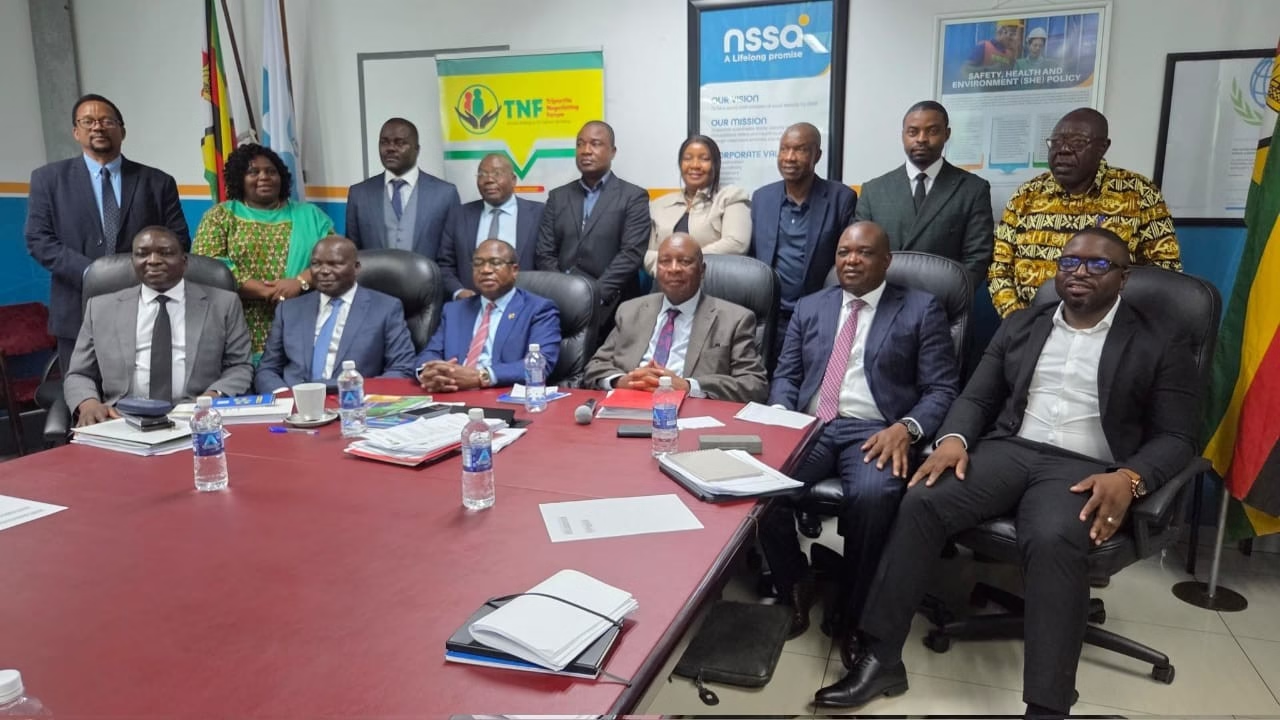
The meeting brought together representatives from Government, Organised Labour, and Organised Business, reinforcing the TNF’s strategic role as a national platform for consensus building around labour relations, economic policy, productivity, and social welfare.
Chaired by Edgar Moyo, the meeting was attended by senior Government officials including Mthuli Ncube, July Moyo, and Zhemu Soda.
Organised Labour was represented by Valentine Chikosi, First Vice President of the Zimbabwe Congress of Trade Unions, while Organised Business was led by Demos Mbauya, President of the Employers Confederation of Zimbabwe.
Analytically, the broad range of issues discussed during the meeting reflected the interconnected nature of Zimbabwe’s current economic and social challenges. Deliberations around workers’ welfare, minimum wages, labour compliance, transport infrastructure, corruption, food security, water and sanitation, informality, and de industrialisation demonstrate that economic transformation increasingly requires coordinated responses across multiple sectors rather than isolated policy interventions.
The TNF framework itself represents an important institutional mechanism within Zimbabwe’s governance architecture. In many economies undergoing economic restructuring and reform, tripartite dialogue platforms serve as stabilising instruments that help balance the interests of Government, labour, and business while reducing industrial conflict and strengthening policy legitimacy.
The discussions surrounding workers’ welfare and minimum wages were particularly significant given the broader pressures facing labour markets across the region. Inflationary pressures, currency volatility, and rising living costs continue affecting household purchasing power, placing increasing pressure on Governments and employers to balance economic sustainability with social protection measures.
Equally important was the focus on informality and employment creation. Zimbabwe’s economy continues witnessing significant expansion of informal economic activity, reflecting both entrepreneurial resilience and structural employment challenges within the formal sector. Addressing informality therefore requires not only regulation, but also broader economic reforms capable of stimulating industrial productivity, investment growth, and sustainable job creation.
The discussions on de industrialisation further highlighted concerns surrounding manufacturing competitiveness, production capacity, and industrial recovery. Zimbabwe’s industrial sector remains central to broader economic transformation goals, particularly in value addition, export growth, and employment generation. Revitalising industrial productivity is increasingly viewed as essential for long term economic sustainability and reduced import dependency.
Transport and infrastructure challenges raised during the meeting also underscore the relationship between infrastructure development and economic competitiveness. Efficient transport systems, reliable energy supply, and functional logistics networks remain critical in lowering production costs, improving productivity, and enhancing regional trade integration.
The inclusion of Water, Sanitation and Hygiene issues alongside food and nutrition security reflects an evolving understanding that socio economic development extends beyond macroeconomic indicators into broader human development outcomes. Public health, sanitation, and food systems increasingly form part of integrated national resilience and productivity strategies.
Importantly, the meeting’s emphasis on corruption and governance concerns highlighted the recognition that economic performance is closely linked to institutional credibility, transparency, and accountability. Investors, workers, and businesses alike increasingly depend on predictable governance systems and efficient institutions to sustain confidence and productivity.
The decision to submit resolutions from the Technical Meeting to Cabinet signals Government’s intention to institutionalise social dialogue outcomes within broader policy formulation processes. This reflects an effort to strengthen participatory governance and ensure that socio economic policies are informed by engagement with key national stakeholders.
From a broader developmental perspective, the TNF meeting illustrated Zimbabwe’s continued shift toward consultative governance models where economic reform, labour relations, and industrial policy are increasingly approached through dialogue and consensus building rather than unilateral decision making.
As Zimbabwe continues pursuing economic stabilisation, industrial recovery, and social transformation, platforms such as the TNF are expected to remain central in balancing economic growth objectives with social protection, labour stability, and inclusive development.