Zimbabwe’s industrialisation agenda under Vision 2030 is gaining tangible momentum, with the Shuntai Investments cement project in Chegutu emerging as a strategic anchor in the country’s push for self-sufficiency in construction materials.
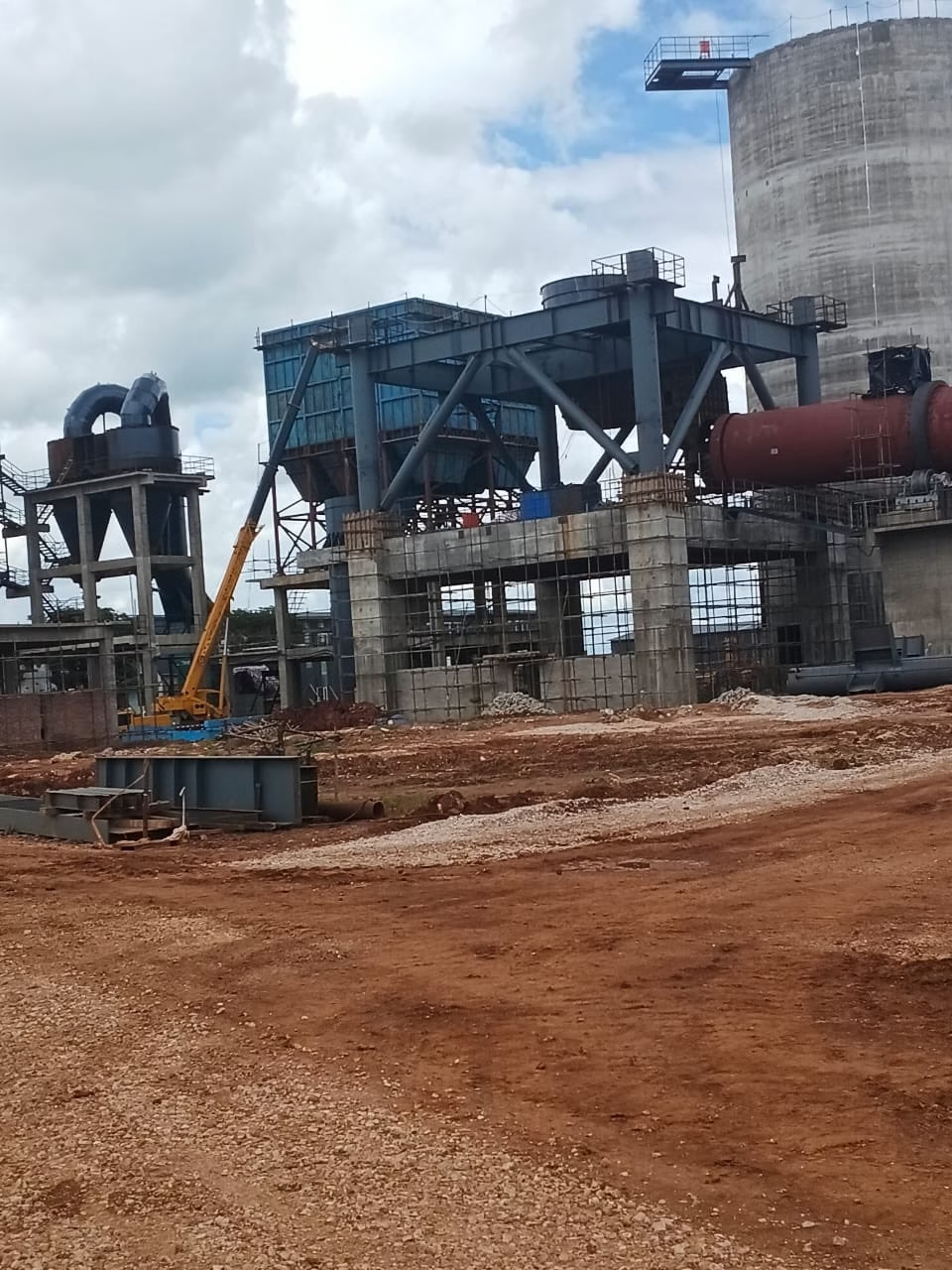
Valued at approximately US$120 million, the project has moved beyond early-stage constraints and is now advancing rapidly toward full operational status. Construction is well past the halfway mark, with key equipment installation nearing completion, placing the plant on course for commissioning around mid-June 2026 following final testing phases.
At the centre of the development is a fully integrated production system, combining clinker processing and high-capacity crushing infrastructure. This positions the facility not just as a manufacturing plant, but as a core industrial asset aligned with the objectives of the National Development Strategy 2, particularly in value addition, import substitution and industrial growth.
The economic implications are significant. With an annual production capacity of approximately 800,000 metric tonnes, the plant is expected to substantially close Zimbabwe’s cement supply gap, reducing reliance on imports that have historically strained foreign currency reserves. Increased domestic production is also anticipated to stabilise prices, as local sourcing of raw materials and modern production technologies drive down operational costs.
Employment creation forms another critical pillar of the project’s impact. While around 300 workers are currently engaged during the construction phase, the broader value chain is projected to support up to 4,000 jobs once operations are fully scaled. This includes direct employment at the plant as well as indirect opportunities in logistics, distribution and ancillary services.
Beyond economic metrics, the project signals a shift toward environmentally conscious industrialisation. The adoption of electric-powered machinery and supercharged transport systems reflects an effort to reduce carbon emissions, positioning the plant within emerging green industrial standards and aligning with global sustainability trends.
The Chegutu development also sits within a broader wave of industrial investments aimed at strengthening Zimbabwe’s manufacturing base. As capacity expands, the country is not only moving toward meeting domestic demand, but also positioning itself as a potential regional exporter of cement.
In the wider context of Zimbabwe’s development trajectory, the Shuntai Investments project represents more than a single industrial venture. It reflects a coordinated shift toward production-led growth, where infrastructure, employment, and sustainability converge to drive long-term economic transformation.