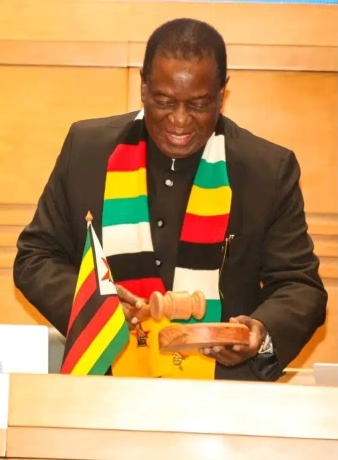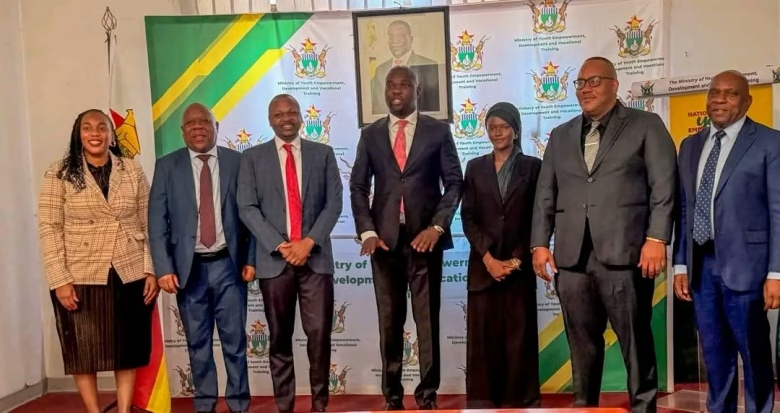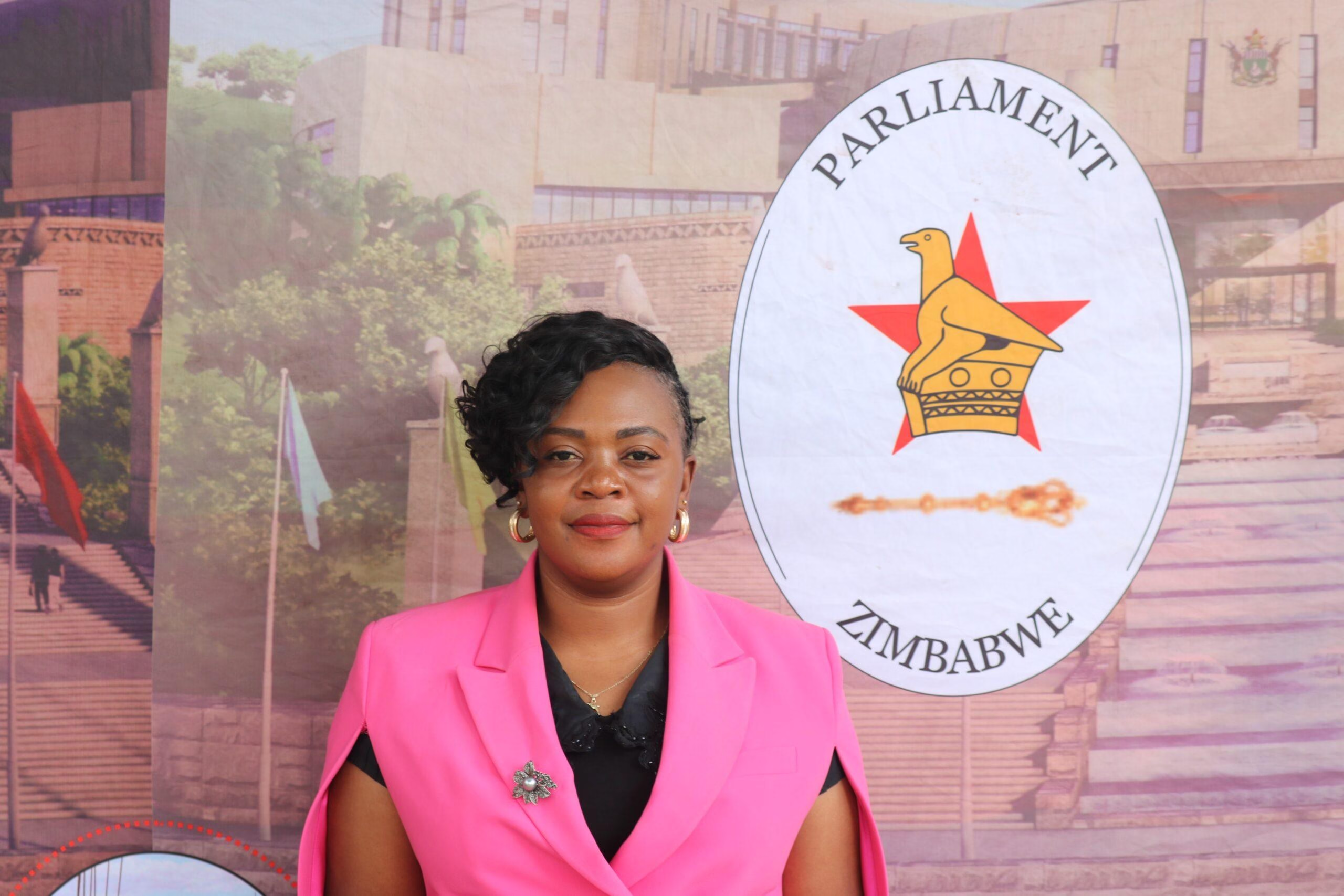
In a historic gathering at Victoria Falls City, where the thundering roar of Mosi-oa-Tunya symbolized the unstoppable force of progress, Minister Tatenda Annastacia Mavetera’s presentation on Artificial Intelligence (AI) ignited a transformative dialogue at the 57th Plenary Assembly of the SADC Parliamentary Forum, an assembly that signaled the dawn of a new digital chapter for Southern Africa, driven by unity, innovation, and inclusive growth.
Minister Mavetera’s address reverberated through the assembly hall like a clarion call to embrace technology not as a distant marvel but as an instrument of empowerment. Her words painted an inspiring portrait of a region poised to harness AI’s boundless potential, from revolutionizing agriculture and boosting food security to transforming classrooms with adaptive learning systems that cater to every learner’s unique journey. She envisioned a SADC where farmers deploy AI-powered drones to detect crop diseases, where young learners benefit from personalized education platforms, and where small businesses thrive through predictive analytics and intelligent customer service solutions.
Yet, her vision extended far beyond technological tools, it was deeply human, rooted in the belief that people must be at the heart of AI’s transformative power. Minister Mavetera championed a regional approach that marries executive action with parliamentary oversight, calling for SADC’s governments to draft regulations, establish sector-specific sandboxes, and forge strategic partnerships, while Parliament must legislate, scrutinize, and protect citizens’ rights. Her call for a dedicated SADC Parliamentary Committee on AI Ethics underscored the critical importance of transparency, trust, and accountability in the digital age.
Her presentation radiated optimism for youth and women, emphasizing the need for inclusive digital literacy programs, innovation hubs, and cross-border knowledge-sharing initiatives. She challenged the region to see AI as a bridge to job creation, entrepreneurship, and sustainable development, a bridge that must be accessible to every citizen, regardless of gender, age, or location. Her emphasis on reaching marginalized communities and addressing the urban-rural digital divide was a powerful reminder that technology’s true potential is realized only when it uplifts everyone.
Turning to the economic heartbeat of the region, Minister Mavetera highlighted how AI could revolutionize trade facilitation, logistics, and cross-border connectivity. She painted a compelling picture of smart customs processes, predictive logistics that reduce bottlenecks, and blockchain-based platforms that bring unprecedented transparency and trust to regional trade. Her vision of a seamless, interconnected SADC, where goods, services, and data flow freely across borders, was both bold and achievable, provided that investments in digital infrastructure and harmonized regulations remain at the forefront.
But she did not shy away from the challenges. Minister Mavetera issued a sober warning about the dangers of relying solely on externally developed AI systems, which risk reinforcing inequalities and compromising national sovereignty. Her solution: build domestic capacity, empower universities and local talent to create context-driven solutions, and foster home-grown innovation ecosystems that reflect the region’s unique realities and aspirations. Her call for public-private partnerships to unlock funding and expertise underscored the collaborative spirit essential for success.
Her roadmap for SADC’s future was ambitious yet practical. She championed the establishment of a SADC AI Governance Council, co-chaired by rotating Ministers and Speakers, to coordinate regulation, monitor risks, and advise the SADC Summit and Parliament. She envisioned an annual SADC AI Review Summit that would unite executive leaders and parliamentarians to report on progress, table oversight findings, and incorporate citizen feedback. Her proposal for a Pan-SADC AI project, focused on food security, exemplified the region’s potential to pool data, deploy sensors, and invest in technology that serves real needs on the ground.
Minister Mavetera’s presentation was more than a speech; it was a manifesto for a region determined to seize its digital destiny. As the 57th Plenary Assembly of the SADC Parliamentary Forum convened at Victoria Falls, a place where nature’s raw power inspires awe, her voice rose as a symbol of the unstoppable force of unity, innovation, and transformation. With AI as both a tool and a partner, Southern Africa stands ready to write a new chapter, one of shared prosperity, resilient communities, and a future where no one is left behind.