THE Reserve Bank of Zimbabwe has enough reserves to satisfy the foreign currency requirements of all legitimate businesses and no business needs to go to the black market to pay for imports, RBZ Governor Dr John Mushyavanhu said yesterday.
Dr Mushyavanhu said businesses should approach their banks to buy ZiGs or US dollars, instead of promoting the black market which is now charging up to ZiG18 when it sells US$1, although paying a lot less to buy that US dollar, something much closer to what the banks pay because of the very high margins between buy and sell rates on the black market.
The Reserve Bank has adopted a market-determined system for setting exchange rates, with the auction system being replaced by a refined interbank foreign exchange market through which the commercial banks buy foreign currency from willing sellers and sell it to willing buyers, with the margins far lower than in the black market. The weighted average of the rates at each bank form the interbank rates.
In an interview with Zimpapers Television network (ZTN) yesterday, Dr Mushayavanhu was confident that the ZiG would turn the tables against the black market, as the new local currency would not budge to the United States dollar.
He allayed fears that the ZiG is now taking a battering from the US dollar, saying it is a matter of time before those with ZiG will start controlling the prices.
“I do not understand why anyone would go to the black market when we have said . . . if you have a legitimate foreign currency obligation to pay be it a service, be it school fees, be it import of goods, you will be able to get your money at your bank on a willing seller-willing buyer,” he said.
He discouraged people from trading at the parallel market when they knew the true value of the ZiG. “Very soon the opposite is going to happen as I told you,” said Dr Mushayavanhu. “People who are holding ZiG are the ones who are going to be controlling the price.”
The Reserve Bank would itself help feed the market with the 25 percent surrender export earnings. Now there is adequate foreign currency reserves to cover all import requirements, so legitimate businesses did not have to turn to the black market.
When asked why the bank did not put measures for ZiGs to be able to buy fuel and pay rentals among other huge services that are demanding foreign currency, Dr Mushayavanhu said it was not necessary considering the amount of the local currency in the economy.
“The economy is 80 percent dollarised and I have said this before. Right now if I search the pockets of the people who are the audience here, I am likely to find for every US$100, $80 will be in real US and $20 equivalent in local currency,” he said.
“That is the nature of things. Unless you are saying the 80 percent that you have is not enough to pay for your rent and only the 20 percent that is ZiG is the one that should pay for rent and nothing else.”
Dr Mushayavanhu also urged banks to finalise currency conversion by the end of this week.
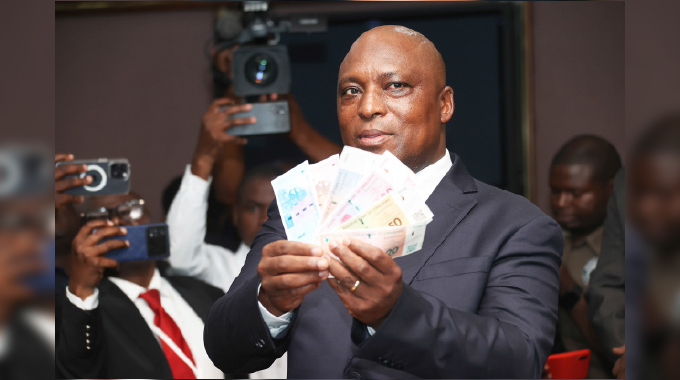
This comes at a time when the country has introduced a new currency, with new notes expected in circulation on April 30.
“We are urging our banks to speed up the processes of conversion, but banks are using core-banking systems that have been provided by different vendors,” he said.
“Some vendors were quick to convert while others did not even get their conversions until Saturday evening. So, we have allowed banks to continue the conversion processes, but obviously we need to ensure that before the end of this week every bank is online and customers are able to make transactions.”
Chronicles