Africa must be food secure first as part of measures to address socio-political stability and ensure sustained economic growth and prosperity, President Mnangagwa has said.
He was addressing world leaders here attending the Italy-Africa summit meant to forge a strategic alliance between Rome and the African continent.
“In order to attain a food secure world, it is imperative that Africa must be food secure first. Addressing food insecurity, particularly on the African continent, is key to unlocking socio-political stability and ensuring sustainable economic growth and prosperity,” said President Mnangagwa during a food and security session.
“Equally important is the need to empower communal and smallholder farmers as well as women and youths who form the backbone of agriculture in countries such as Zimbabwe.”
He said issues related to access to affordable agriculture financing, extension support and mechanisation could significantly enhance agriculture productivity and overall food security.
“May I emphasise that tackling food security in Africa requires a comprehensive approach that combines sustainable agriculture, global collaboration and support.
“Africa must be capacitated to be able to feed itself for sustainable food security and livelihoods as well as enter the agriculture export market,” he said.
“By collectively addressing these challenges we can strive towards a future where everyone has access to sufficient, safe and nutritious food.
He said Zimbabwe continued to make notable milestones towards the realisation of food security and sovereignty and had invested US$2 billion in the construction of water reservoirs while the rehabilitation of irrigation infrastructure was ongoing.
“The challenges of climate change, with the associated erratic rainfall patterns coupled with my country’s quest to build greater resilience, mitigation and adaptation, has seen my Government implementing practical policies and programmes,” he said.
“The people-centred transformative agriculture strategies are guaranteeing sustainable agriculture production and productivity.
“Fundamentally, this is ensuring food security right at the household level. These robust agriculture policies include the Climate Proofed Agriculture (Pfumvudza/Intwasa) Programme,” he said.
Zimbabwe was modernising and scaling up the deployment of mechanisation and smart agriculture technologies.
Additionally, there was deliberate support for the growing of drought-tolerant and organic traditional cereal crops which were in turn, positively impacting on the nutrition and health of the people.
Various interventions have been introduced to attain food security both at the household and national level.
The use of climate-proof interventions such as irrigation development and the drilling of boreholes was being increased and as a result, Zimbabwe had now attained both household and national food security and nutrition.
“Our recorded successes include wheat self-sufficiency. We are one of the few countries on the African continent that are self-sufficient in wheat. Exponential growth has also been realised across all agriculture sub-sectors, with greater participation of communal and small-holder farmers in the export markets.
“In view of the ever-looming threats of the El Nino phenomenon, Zimbabwe continues to strengthen early warning systems and drought preparedness.
“Our strategy is expanding climate resilient infrastructure development and sustainable water resources development and management.
“This has led to my Government constructing dams across all our provinces as well as drilling boreholes in each of our country’s villages.
“Since 2020, my Government has invested over US$2 billion in water infrastructure, such as dams and reservoirs. Irrigation development and rehabilitation is ongoing.”
President Mnangagwa said agriculture extension work had been enhanced and that included providing information to farmers tailor-made to their situation and areas.
“Agro-ecological tailoring of crop production is being promoted. This entails emphasising drought-resistant crop varieties, implementing water-efficient irrigation systems and providing farmers with timely information and resources to adapt their practices to changing weather patterns,” he said.
“Public and community awareness campaigns are ongoing to educate communities on the importance of climate-smart agriculture given climate change and the need for robust mitigation and adaptation mechanisms.”
The Italy-Africa Summit, which is being held under the theme “A bridge for common growth”, has drawn leaders from the African continent and the European Union.
Earlier on, Italian Prime Minister Giorgia Meloni presented a strategic plan for partnership with Africa in different areas such as energy, agriculture, training and research among other areas.
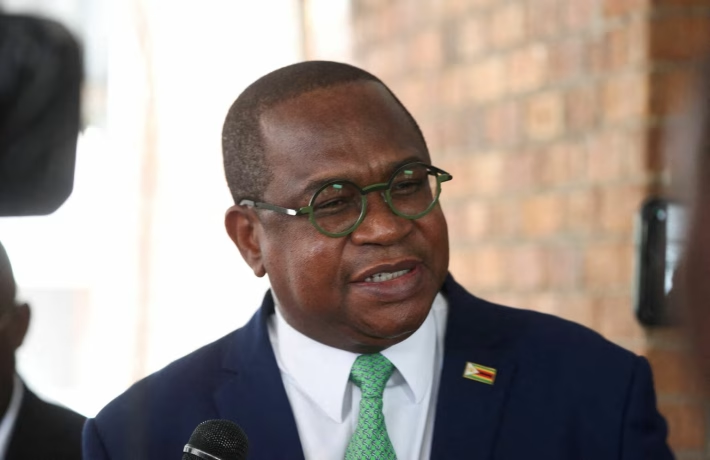
President Mnangagwa is being accompanied by Finance, Economic Development and Investment Promotion Minister Professor Mthuli Ncube, Lands, Agriculture, Fisheries, Water and Rural Development Minister Dr Anxious Masuka, Foreign Affairs and International Trade Minister Frederick Shava, Deputy Chief Secretary (Presidential Communications) in the Office of the President and Cabinet Mr George Charamba and senior Government officials.
Herald