THE Zimbabwe School Examinations Council (Zimsec) will next year introduce video examinations for candidates with hearing impairment who will be sitting for their final Grade Seven examinations in an effort to consolidate gains of Government’s inclusive learning policy.
The Second Republic has made great strides towards creation of an inclusive society that recognises the rights of all people including those living with disabilities.
In an interview, through the assistance of an interpreter, Zimsec board member and education specialist for learners with disabilities, Mr Sindile Mhlanga said the videos initiative is aimed at aiding learners with hearing impairment
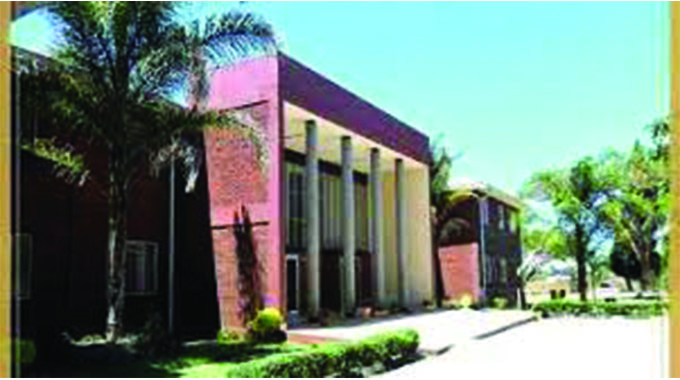
Zimsec HQs
He said the project is in its final stages and will be piloted during the first quarter of 2024.
“Students with hearing impairment are subjected to the same learning and examinations environment as their counterparts who are not living with disabilities which is a disadvantage to them. These students with hearing impairment need feedback hence the introduction of videos,” said Mr Mhlanga.
He said students with hearing impairment need to boost their self-esteem for them to realise their full potential.
“Students with hearing impairment are facing challenges when writing examinations and it is hoped the introduction of the videos will address some of the challenges,”said Mr Mhlanga.
He said it has been observed that learners with hearing impairment usually perform below their expected threshold due to the challenges they are facing.
“Hearing impairment does not mean one is incapable of performing well academically hence this project meant to address some of their challenges,” said Mr Mhlanga.
Mr Mhlanga, who is also hearing impaired, said he experienced the challenges that students are facing.
“I was born in Luveve suburb in 1972 and my sense of hearing was fully functional. I attended Imbizo Primary School until the time I fell ill with meningitis,” he said.
Mr Mhlanga said he was about 12 years old at the time and became totally deaf.
“My condition is known as nerve deafness whereby the brain does not receive or interpret sound,” said Mr Mhlanga.
He said he had to be transferred from Imbizo to King George and the teachers and other students there helped him to accept his new condition.
Mr Mhlanga said after completing his A-Levels he tried to enrol at the National University of Science and Technology (Nust) but failed as the university did not have a department for the hearing-impaired.

“It was then that I was noticed by a Japanese institution that offered me a five-year scholarship to study in America. I did Management of Information Systems and upon my return I taught computers at diferent schools,” said Mr Mhlanga.
He said while he was abroad he realised how deaf students excelled because of equal educational opportunities and this was why he influenced Zimsec to introduce video examinations.
Mr Mhlanga has also launched a sign language programme aimed at equipping caregivers with basic communication skills. “Through this, we developed and assisted people to get and appreciate sign language. I also helped in the crafting of the first deaf dictionary in Zimbabwe,” he said.
Mr Mhlanga who is married to a woman who is also hearing impaired, has two children.
“Our children’s first language is sign language since both of us are deaf,” he said.
Chronicle