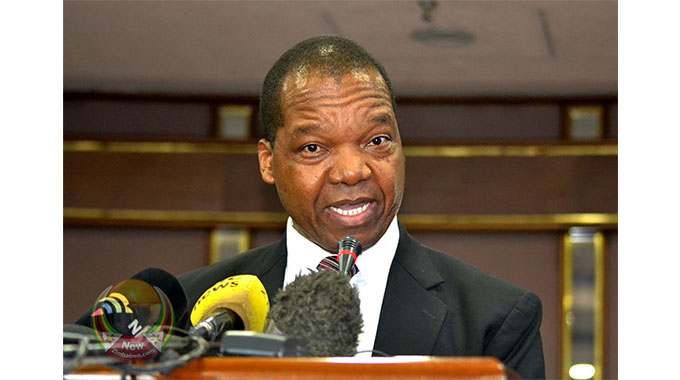
THE Reserve Bank of Zimbabwe (RBZ) is finalising the modalities of rolling out the gold-backed digital tokens as a medium of exchange for domestic transactions to complement the US dollars, Governor Dr John Mangudya has said.
Presenting the Mid-Term Monetary Policy Statement yesterday, Dr Mangudya also projected inflation to ease this year, with the annual rate expected to end the year at between 60 and 70 percent, while maintaining the key bank policy rate at 150 percent, that is the minimum rate of interest on loans by commercial banks.
To stabilise the economy after price increases, the central bank first introduced the gold coins as an alternative store of value and they have proven to be a critical monetary policy instrument for mopping up excess liquidity.
Over $35 billion has been mopped up from the sale of 36 059 coins. The first batch matured in January and only 2 percent were redeemed, indicating a strong risk aversion among investors.
To complement the sale of physical gold coins and expand the value-preserving instruments available in the economy, enhance the divisibility of the investment instruments and widen their access and usage by the public, the RBZ introduced gold-backed digital tokens in May this year. They are fully backed by bars physical gold held by the RBZ.
As of July 2023, the RBZ had issued 325,02 kg worth of gold-backed digital tokens, valued at $50,5 billion and US$7,794 million.
“The bank is at an advanced stage in the preparations for the eventual rolling out of the gold-backed digital tokens for transactional purposes in phase two of the project under the code or name ZiG, which stands for Zimbabwe Gold,” said Dr Mangudya.
“It is envisaged that the transactional phase will see gold-backed digital tokens complementing the use of the US dollar in domestic transactions.”
Dr Mangudya said the bank will conduct awareness campaigns countrywide to educate the public on the use and benefits of the gold-backed digital tokens.
“The gold-backed digital tokens are envisaged to form the basis for the development of the country’s central bank digital currency since ZiG in its current form and design exhibits most of the characteristics of a cetnral bank digital currency,” said Dr Mangudya.
Dr Mangudya recently said the gold-backed digital tokens were an investment product, which Zimbabweans would use for transacting alongside Zimbabwe dollars and US dollars. They are in units of milligrams, that is around a 30 000th of an ounce.

A gram of gold, which has a current average international spot price of US$63, is equivalent to 1 000 milligrams, so a token is worth around 63US cents. Zimbabwe uses the London Bullion Market Association, one of the biggest and most widely used global gold markets, for gold price reference.
Dr Mangudya earlier said the RBZ was working with all stakeholders, chiefly banks and retailers, on the integration of systems to be used for transacting using the gold-backed digital tokens.
Individuals will be able to open bank accounts for purposes of holding the gold-backed tockens, whose units they can buy using either Zimbabwe dollars or US dollars in line with the prevailing global price of bullion.
The central bank chief also said the trend of month-on-month inflation, which sharply reversed in July 2023 to minus 15,3 percent is expected to continue declining in this month.
The bank would continue to enhance the efficiency and operations of the foreign exchange market by strengthening the willing-buyer willing-seller trading arrangement.
Dr Mangudya noted that the introduction of the wholesale foreign exchange auction to address the supply side issues in the interbank foreign exchange market on the back of the recent liberalisation of the exchange rate had seen the parallel market exchange rate premium declining from more than 100 percent in May to below 20 percent.
The interventions supported by tight monetary policy, have resulted in the elimination of foreign exchange distortions and arbitrage opportunities in the economy, said Dr Mangudya.
Chronicle