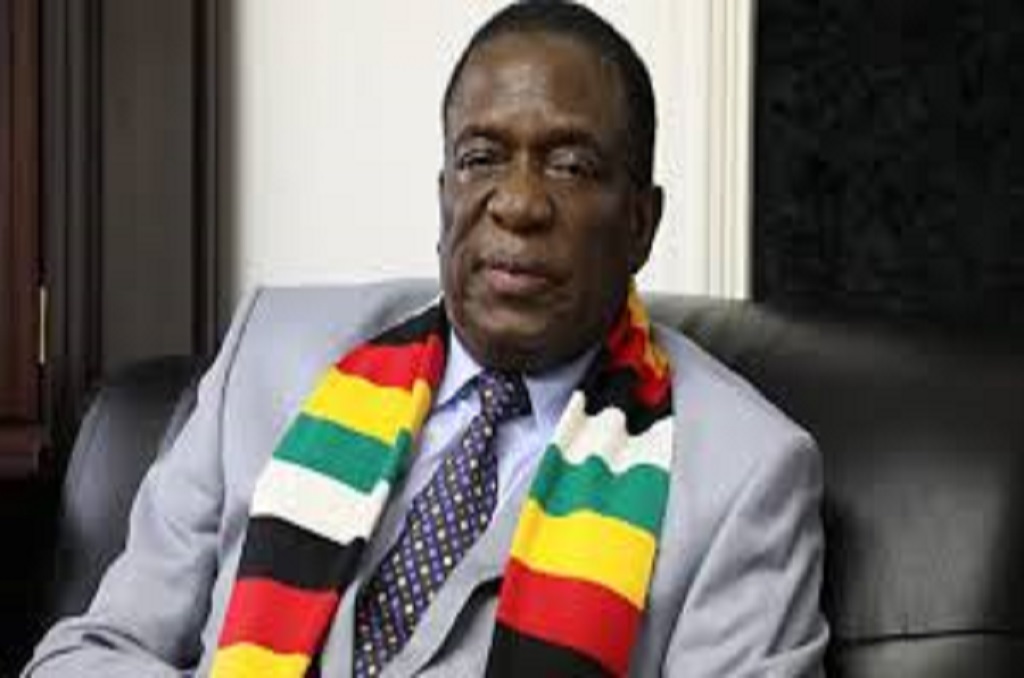
OPPOSITION political party leaders should feel free to approach the Head of State for dialogue directly as opposed to using proxies, the media, and third parties, President Mnangagwa has said.
President Mnangagwa, who has kept an open door policy to all Zimbabweans, has established the Political Actors Dialogue Polad platform where he regularly interacts with all opposition political parties.
While many parties have embraced Polad — some like CCC leader Mr Nelson Chamisa — have chosen not to, instead expressing their willingness to dialogue on the wrong platforms.
In an interview with the Third Eye and Brick By Brick magazines this week, President Mnangagwa said all opposition leaders should not seek dialogue outside conventional means as that was not the hallmark of true leadership.
“He goes to the press to want to talk to me, if you want to talk to me, come to me, not the press. I will not reply to statements in the press. A solid leader knows what to do if you want to talk to a colleague.”
Turning to the use of the Zimbabwe dollar, President Mnangagwa said there was no turning back as using other countries’ currencies had crippled the economy before in the early 2000s.
He said Government would put in place measures that would see increased confidence and strengthening of the local currency.
“The sanctions succeeded in destroying our Zimbabwean currency. You needed to carry $2 billion to buy bread, and that was not feasible so that’s when we abandoned our currency and allowed multiple currencies to apply and that stabilised our situation but there is no country that can develop without its own currency.
“So we’ve reached a stage where we must have our own currency that is under serious attack but we will never abandon it. What we might do is to legislate against foreign currency to make sure we use our own currency,” he said.
President Mnangagwa said the use of the Zimbabwe dollar as legal tender was irreversible adding that the country was not only politically independent but also economically independent.
“Our people must know that our currency is there to stay but foreign currencies of other countries are not there to stay. Initially, we got political independence in 1980 but thereafter 1990 we assumed full independence because the Lancaster constitution expired and we are independent both in terms of politics and our resources, no one gives us directions in terms of what we must do with our resources,” he said.
Meanwhile, Zanu-PF along with several other global political parties have rallied behind Russia in its quest to end the United States Dollar’s hegemony.
Speaking during a virtual meeting of the Organising Committee of the Forum of Supporters Against Modern Practices of Neo-colonialism, the ruling party’s Secretary for External Relations, Cde Simbarashe Mumbengegwi, who was representing the national Chairman Cde Oppah Muchinguri-Kashiri, said the stance had been necessitated by the need to put an end to imperialism.
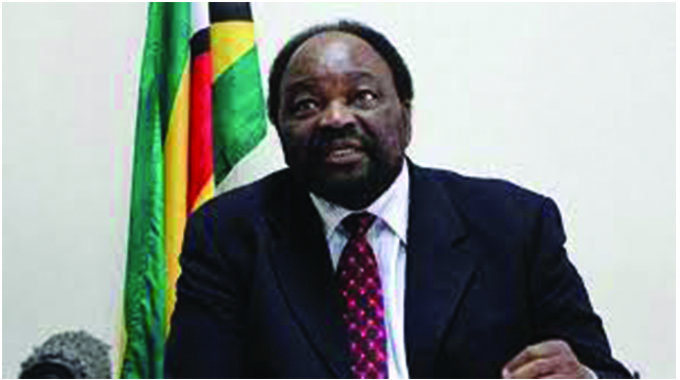
Cde Simbarashe Mumbengegwi
“When we gathered not so long ago in our inaugural constituent session, we set out on a journey, seeking to checkmate contemporary forms of imperialism and colonialism which are threatening international security including that of the Russian Federation.
“I am confident that the issues we are addressing in the forthcoming constituent Forum of Supporters Against Modern Practices scheduled for October cover a wide range of challenges confronting the rest of the world due to the nefarious activities and machinations of imperial forces.
“We must therefore make a deliberate and strategic decision as members of the international community to ensure that we will play a larger and long-term role in shaping international affairs, now and in the future in close partnership. After all, all our countries have a profound interest in the emergence of a peaceful and prosperous international community,” said Cde Mumbengegwi.
Speaking at the same meeting, the Chairman of the United Russia Party, Cde Dmitry Medvedev, said there was need to counter colonial forces.
“Colonialism in its new form is becoming a challenge for many countries and the false rhetoric about human rights by the United States of America is causing great harm,” he said.
Cde Henrique Fontana of the Labour Party of Brazil said it was imperative that nations join and unite against neo-colonialism.
“Society now understands the neo-liberal consequences and so there is a need for a real productive engagement,” he said.
Representatives from Indonesia, Venezuela, South Africa, Mozambique, Myanmar, Pakistan and Nicaragua, among others, called for a world balance of power and reaffirmed their support to Russia.
Chronicle