In the wake of a dire state of national disaster declared on April 3, Zimbabwe finds itself grappling with the harsh realities of a crippling drought sweeping across much of southern Africa.
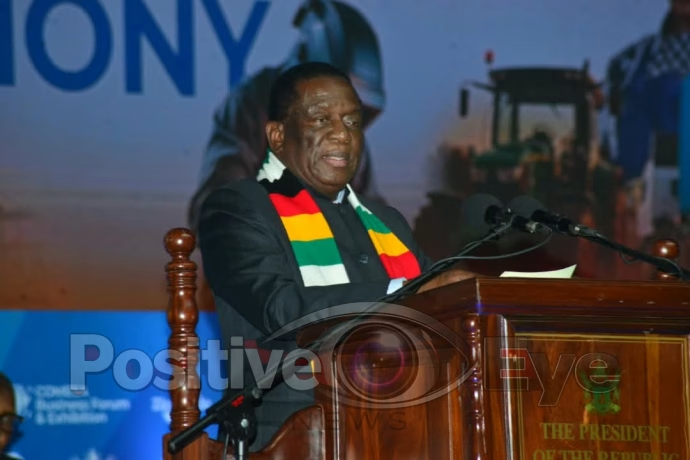
President Dr E.D Mnangagwa’s recent call for US$2 billion in humanitarian aid underscores the urgent need for assistance in the face of this relentless natural calamity.
Among the sectors significantly impacted by this crisis is education. Schools, teachers, and students alike are feeling the reverberations of the drought, highlighting the imperative need for the education sector to fortify its resilience against such environmental adversities to ensure uninterrupted learning.
Recognizing the gravity of the situation, the Zimbabwean government is taking proactive steps to address the intersection of climate change and education. The Climate Smart Education Systems Initiative (CSESI), a collaborative effort funded by the Global Partnership for Education (GPE) and spearheaded by partners such as UNESCO, IIEP, and Save the Children, emerges as a beacon of hope in this endeavor.
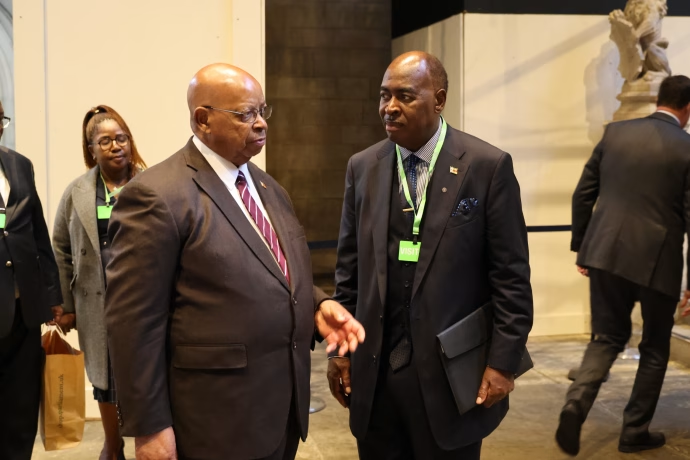
During a recent workshop, attended by key stakeholders including Ministry of Environment representatives and provincial education authorities, Director Nyambuya articulated a strategic vision for climate-resilient education policies and planning processes. The workshop aimed to identify schools most vulnerable to climate risks, assess the specific impacts on education, and devise pragmatic strategies to mitigate these challenges.
Director Nyambuya emphasized the importance of leveraging scarce resources efficiently by targeting interventions where they are most needed. By harnessing the collective expertise of participants and bolstering capacities to analyze climate and education data, the workshop aspires to lay the groundwork for evidence-based, climate-resilient educational planning.
Moreover, the collaborative nature of the initiative underscores the interconnectedness of sectors in addressing climate change. Director Nyambuya reiterated the necessity of cross-sectoral cooperation, acknowledging that the education sector cannot tackle this issue alone.
At the heart of these efforts lies a commitment to safeguarding the future of Zimbabwe’s youth and ensuring equitable access to quality education, even in the face of formidable environmental challenges.
As Zimbabwe navigates the complexities of an ever-changing climate landscape, the resolute dedication of its education sector to fostering climate resilience stands as a testament to the nation’s unwavering spirit and resilience in the face of adversity.