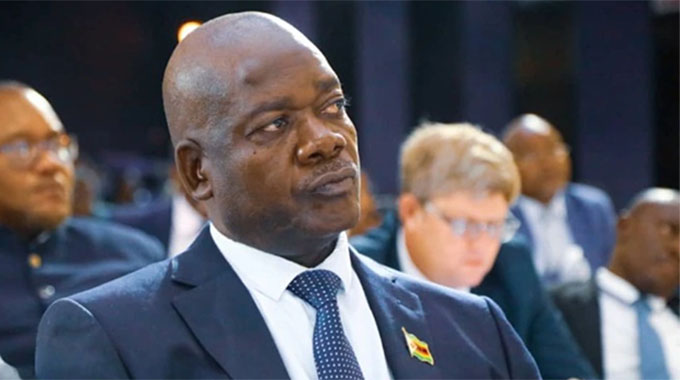
ZIMBABWE is ahead of its African peers in the provision of quality education with the Second Republic under President Mnangagwa committing a huge chunk of its budget towards the sector and currently building new schools to ensure every child, regardless of location or financial background, acquires basic education, Primary and Secondary Education Minister Torerayi Moyo said yesterday.
For perspective, while on average a child in Africa has to walk for more than 15km to access the nearest school, in Zimbabwe the average distance is 5km.
Apart from that, while on the continent it is estimated that 9 out of 10 children under the age of nine find it hard to read or write, in Zimbabwe only 1 out of 10 children under 9 years can neither read nor write.
Speaking on the sidelines of the 37th Ordinary Session of the Assembly of the African Union (AU), which was held under the theme, “Educate an African fit for the 21st Century: Building resilient education systems for increased access to inclusive, lifelong, quality and relevant learning in Africa”, Minister Moyo said Zimbabwe is one of the best countries on the continent in the provision of education.
“The theme of the AU Assembly this year is Educating an African fit for the 21st century. That theme has been designed because of a plethora of challenges affecting African countries especially as far as education delivery is concerned. It has been observed that when children get to the age of 10, nine out of 10 of those children are unable to read and write, and that presents African countries with a big challenge on how we are going to improve the situation. However, that is not the situation in Zimbabwe. Zimbabwe is one of the best-rated countries in as far as educating our learners,” said Minister Moyo.
On the African continent, Zimbabwe is one of the best with a literacy rate of around 98 percent.
The Second Republic under President Mnangagwa continues to commit resources towards the education sector focusing on quality and inclusive education, in tandem with the mantra “leaving no one and no place behind”.
While in some African countries, the average student walks at least 15km to the nearest school, in Zimbabwe the distance is far less with the Second Republic currently constructing more schools, especially in new settlements to further shorten the distance travelled by learners.
On the continent, access to classrooms and other learning enablers is still a major challenge but Zimbabwe fares better than its regional peers, even as it carries the albatross of illegal economic sanctions.
“Our learners do not walk long distances to school, there is an international convention which stipulates that learners should not walk for more than 5 kilometres to school, in the majority of cases in our country, we have built schools and the Government is doing a lot in the provision of quality education. However, we have some areas where we need to do more to provide new schools and the Government has allocated funds towards the construction of new schools,” said the Minister.
He said ultimately Government wants to ensure that there is provision of quality education to every Zimbabwean child with the requisite learning infrastructure.
Government also provides school grants and pays tuition for millions of children under the Basic Education Access Model (Beam) to ensure every child accesses education regardless of background.
This year’s AU summit theme resonates with Zimbabwe’s thrust through the Education 5.0 model which is a holistic shift from traditional educational models to a dynamic, experiential, and collaborative learning framework that prepares students for real-world challenges and opportunities.
In Zimbabwe, the main objective of Education 5.0 is to shift the African economy from one of mass consumption to mass production, and that has now found expression on the African continent which is seeking to harness education, particularly science and technology to leapfrog the continent’s growth.
From the kindergarten stage, Minister Moyo said, there is continuous assessment of children with policies that make it compulsory for every child to have nine years of primary school education.
This is in tandem with Sustainable Development Goal 4, which aims to ensure inclusive and equitable quality education and promote lifelong learning opportunities for all.
This goal supports the reduction of disparities and inequities in education, both in terms of access and quality.
Herald