
By Aldridge Dzvene
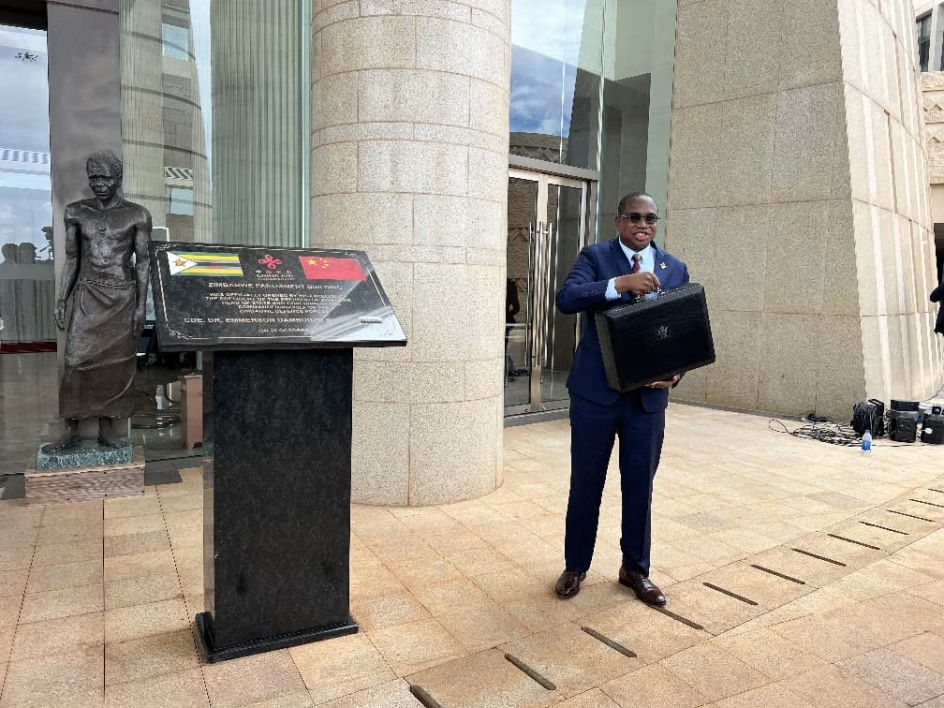
Zimbabwe’s 2027 National Budget is advancing an economic proposition that could have consequences far beyond the immediate allocation of public funds: the deliberate use of domestic purchasing power to build a stronger national manufacturing industry, deepen value chains and retain more economic value within the country. At the centre of this proposition is a new requirement compelling Government, mining companies and large entities to procure at least 15 percent of their input requirements locally, where domestic production capacity exists, effective January 1, 2027. While the announcement may appear to be another local-content measure, its significance becomes considerably greater when examined alongside the wider fiscal architecture presented by Finance Minister Hon. Prof. Mthuli Ncube in Parliament on November 19.
The policy represents an important development in the economic transformation direction being pursued under the leadership of His Excellency Dr Emmerson Dambudzo Mnangagwa, President and First Secretary of ZANU PF. There is merit in recognising the Government’s growing emphasis on connecting national resources, infrastructure investment, industrial production and domestic enterprise rather than treating them as independent development objectives. The 2027 Budget, in particular, demonstrates an appreciation that sustainable economic transformation requires more than increased production in individual sectors; it requires an economic environment in which the output of one sector becomes an input into another, creating successive layers of investment, employment and value addition.
The distinction is important because a manufacturing company does not necessarily expand simply because it has access to machinery, tax incentives or financing. It also needs customers, predictable orders, reliable inputs and sufficient demand to justify investment in production capacity. Zimbabwe’s new procurement requirement attempts to address part of that equation by connecting the purchasing power of Government and major economic players to domestic industrial capacity. If effectively implemented, expenditure that would otherwise leave the country through imports could increasingly circulate through local manufacturing, employment, supplier development and taxation, creating a multiplier effect across the wider economy.
The potential implications become clearer when the policy is considered against the scale of industrial investment identified in the expanded 2027 Budget Statement. Treasury identifies an industrial investment pipeline exceeding US$3.6 billion, with approximately US$2.56 billion concentrated in metals and electricals, US$363.4 million in fertiliser and chemicals, and approximately US$298 million in mineral beneficiation. These are not simply investment categories; they represent the foundations of an interconnected productive economy. Metals and electricals support mining equipment, electricity infrastructure, construction and engineering, while fertiliser and chemicals connect manufacturing directly to agricultural productivity. Mineral beneficiation, meanwhile, creates opportunities for Zimbabwe to move beyond extracting resources towards processing them into products with higher economic value.
This is where the 15 percent procurement requirement becomes particularly significant. Mining companies purchase engineering components, chemicals, protective clothing, construction materials, transport equipment and numerous other industrial inputs. Government infrastructure programmes require steel, cement, furniture, electrical equipment and engineering services, while hospitals and educational institutions generate demand for medicines, medical consumables, furniture and learning materials. A structured domestic procurement market could therefore provide Zimbabwean manufacturers with a more predictable customer base, encouraging investment in production capacity and allowing smaller enterprises to enter supply chains previously dominated by established international suppliers. Treasury’s projection that manufacturing capacity utilisation will increase from 58 percent in 2026 to above 60 percent in 2027, alongside projected manufacturing growth of 5.2 percent, provides an important measure against which this ambition can be assessed.
The mining industry could become one of the most important anchors of this transformation. Zimbabwe’s mineral sector is a major source of export earnings, foreign currency and investment, but the developmental impact of mining should not be measured exclusively by mineral output or export receipts. It must also be assessed by the extent to which mining activity stimulates domestic engineering, manufacturing, transport, technical services and other supporting industries. The 2027 Budget reinforces this thinking through its commitment to restrict exports of unprocessed minerals, promote beneficiation, prioritise mineral exploration and operationalise the Mining Cadastre Information Management System. The combination of local procurement and domestic mineral processing could progressively expand the number of Zimbabwean businesses participating in the mineral economy, allowing the country to capture more value from its natural resources.
Another important dimension of the budget is the relationship between agricultural resilience and industrial development. The Ministry of Agriculture, Mechanisation and Water Resources Development receives approximately ZiG27.6 billion, while ZiG4.8 billion is allocated towards water and sanitation projects and programmes. These allocations should not be interpreted as isolated interventions because agricultural production requires reliable water, irrigation equipment, fertilisers, mechanisation, storage and transport, while manufacturing requires agricultural raw materials and functioning supply chains. The Government’s emphasis on irrigation rehabilitation, dam construction, climate-smart agriculture and agricultural value addition consequently carries implications for agro-processing, food manufacturing, packaging, chemicals and rural enterprise development.
The proposed Dam as an Economy concept is particularly noteworthy because it expands the traditional understanding of water infrastructure as a public utility investment. Under this approach, dams are envisaged as integrated economic hubs supporting irrigation, fisheries, aquaculture, tourism, renewable energy and agro-processing. This presents an opportunity to turn water infrastructure into a foundation for regional economic activity, where agricultural production can support processing facilities, transport businesses, storage enterprises and other downstream industries. The Government’s focus on irrigation development, including a target of 65,000 hectares for 2027, demonstrates the importance being attached to productive water utilisation at a time when climate-related risks are increasingly influencing national economic performance.
The projected El Niño-related drought makes this approach even more relevant. Zimbabwe’s economic growth is projected to moderate to 3.5 percent in 2027, compared with the projected 5 percent in 2026, largely reflecting anticipated drought-related pressures. Government has consequently incorporated a ZiG10.9 billion contingency provision, equivalent to approximately US$400 million, to cushion the economy against more severe shocks. The Grain Marketing Board had procured 365,000 tonnes of grain by the end of October 2026 towards a strategic grain reserve target of 600,000 tonnes by August 2027, while Government has also subscribed to sovereign drought insurance through the African Risk Capacity at a premium of US$3.4 million. These interventions reflect an increasingly important understanding that climate resilience is not simply an environmental responsibility but an economic investment, given the consequences drought can have on household incomes, industrial raw materials, food prices, electricity generation and the country’s import requirements.
The longer-term industrialisation opportunity could also change the economic geography of Zimbabwe. The expanded budget statement proposes Integrated Provincial Special Economic Zones and Spatial Development Initiatives, with investment guided by the availability of raw materials, access to markets, infrastructure feasibility and credible anchor investors. This creates an opportunity for provinces to develop productive identities around their comparative advantages rather than relying exclusively on the distribution of administrative resources and basic infrastructure. Agricultural regions could deepen agro-processing and food manufacturing, mineral-rich areas could attract beneficiation and engineering enterprises, while other regions could develop logistics, tourism, renewable energy and specialised manufacturing. Such an approach would allow provincial development to become more closely associated with the creation of productive enterprises, employment opportunities and regional supply chains.
The connection between industrial investment and human capital development is equally important. The budget allocates ZiG1.9 billion to Youth Empowerment, Development and Vocational Training and ZiG330 million to Skills Audit and Development, with an emphasis on strengthening the country’s skills base. These allocations should be considered alongside the industrial investment pipeline because the expansion of manufacturing requires technicians, engineers, machine operators, artisans, researchers and other specialised professionals. Training programmes become considerably more meaningful when they respond to identifiable vacancies and the actual production requirements of participating companies. The opportunity is therefore to establish a stronger relationship between educational institutions, technical training centres, industrial employers and emerging enterprises, ensuring that skills development translates into productive employment.
The Government’s direction deserves recognition for attempting to connect these different economic priorities within a broader transformation framework. However, the ambition of the 2027 Budget must ultimately be measured against implementation capacity and the availability of resources. Ministries, departments and agencies submitted expenditure bids amounting to ZiG974 billion, almost three times the ZiG358.3 billion expenditure ceiling, highlighting the scale of competing national development requirements. The success of the proposed industrialisation agenda will consequently depend on prioritisation, timely disbursement, project execution and the ability of public institutions to translate budgetary commitments into functioning infrastructure and productive investments.
The local procurement framework, expected by March 31, 2027, will be particularly important. Its effectiveness will depend on transparent certification of manufacturers, clear product standards, competitive pricing, reliable delivery schedules and mechanisms that prevent the policy from becoming a source of inefficiency or preferential treatment. Domestic manufacturers must also have access to adequate working capital and technology to meet the orders that the policy is intended to generate. Local procurement should not simply compel companies to purchase locally; it should progressively make local production competitive enough that businesses choose Zimbabwean suppliers because they offer quality, reliability and value.
Ultimately, the 2027 National Budget presents an opportunity to change the relationship between natural resources, public expenditure and domestic enterprise. Zimbabwe’s minerals, agricultural potential, infrastructure investments and expanding manufacturing base need not operate as separate economic achievements. They can become mutually reinforcing components of a productive national economy in which mining creates markets for factories, agriculture supplies processors, infrastructure supports new industries and young people acquire skills that translate into employment. The most important measure of the 2027 Budget may therefore not be how much Government allocates to individual ministries, but how much economic activity each dollar of expenditure generates across the country. If the procurement requirement, industrial financing, provincial investment zones, agricultural infrastructure and skills development are implemented as a coordinated programme, Zimbabwe could make meaningful progress towards an economy that increasingly produces, processes, supplies and exports rather than relying disproportionately on extraction and imported finished goods.