
The Ministry of Environment, Climate and Wildlife has issued an urgent public notice reminding the public that the exploitation of forest produce from Communal Land is regulated by law, and that anyone involved in the activity must regularise their operations within 30 days.
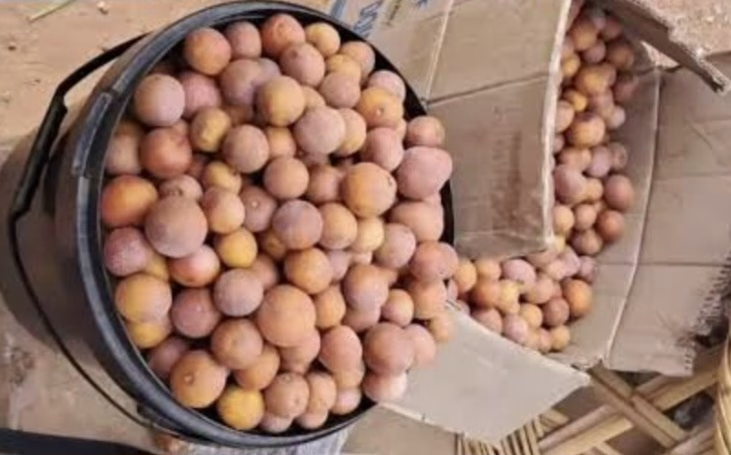
Mazhanje (Sugar plum)
In a notice issued by the Minister of Environment, Climate and Wildlife, the Ministry drew attention to the Communal Land Forest Produce Act [Chapter 19:04], which governs the exploitation and use of forest produce from Communal Land. Under Section 4 of the Act, inhabitants of Communal Land may exploit forest produce for their own use only, and such produce must not be sold or supplied to anyone who does not reside in that Communal Land. Under Section 5, no person may exploit forest produce for commercial purposes in a natural forest on public land, or in a State-controlled plantation within Communal Land, without a written, paid-up licence issued by the Minister and compliance with its terms and conditions.
The Ministry expressed concern that valuable indigenous non-timber forest resources, such as wild plants, fruits, barks, seeds, oils and other produce, are being commercialised at sub-economic levels, inconsistent with their true value, with local communities and local authorities receiving an unfair share of the proceeds. It warned that this illicit, unregulated and unreported bioprospecting is unsustainable, as it outpaces natural regeneration, threatens indigenous and reserved species, degrades forests and woodlands, deprives communities of long-term benefits, and denies the State revenue for sustainable forest management. Only regulated and licensed exploitation, the Ministry said, will keep these resources available for present and future generations.
The notice further explained that as the Ministry is coordinating the implementation of the Zimbabwe Biodiversity Economy Initiative under the National Development Strategy 2 (NDS2), the regularisation process is meant to strengthen and implement that important programme.
Accordingly, any person collecting, commercially exploiting, manufacturing, processing or selling forest produce from Communal Land without complying with Sections 4 and 5 of the Act is in breach of the law and has thirty (30) days from the date of the notice to contact the Director-General of the Forestry Commission and regularise their operations as the Act requires. After this period, the law will be enforced in full against anyone who has not complied.
Those affected can contact the Forestry Commission.
This notice is important because it seeks to protect Zimbabwe’s forests, its communities, and its future economic opportunities all at once.
For many years, valuable indigenous forest resources such as wild fruits, barks, seeds, medicinal plants and oils have been harvested and sold, often at very low prices, without licences and without any benefit going back to the communities who live with and protect those resources. This unregulated exploitation is unsustainable. When harvesting outpaces natural regeneration, trees are damaged, species disappear, and forests and woodlands are degraded, leaving communities poorer in the long run.
By enforcing the Communal Land Forest Produce Act, the Government is ensuring that local communities are not exploited, that they receive a fair share of the value of resources found in their own areas, and that harvesting is done in a planned and sustainable way that allows forests to recover. It also ensures that the State can collect revenue needed to manage, protect and rehabilitate forests for future generations.
The notice is also important for the national economy. Through the Zimbabwe Biodiversity Economy Initiative under NDS2, Government wants to turn biodiversity into a legitimate, regulated and value-adding industry, where local processing, manufacturing and fair trade create jobs and wealth for communities, rather than raw materials being taken cheaply and exported without benefit to Zimbabwe. Regularisation will bring order, accountability and traceability to the sector, protect indigenous knowledge, and position Zimbabwe to benefit from the growing global demand for natural, organic and sustainably sourced products.
The notice is not meant to stop people from using forest resources, but to ensure that they are used lawfully, sustainably, fairly and for the benefit of the communities, the country and future generations.