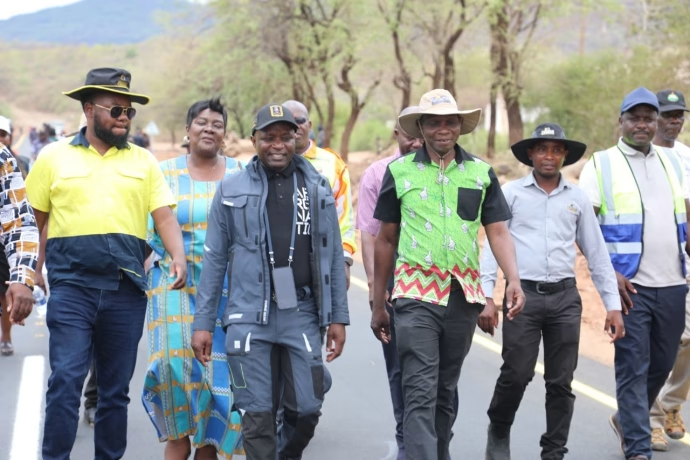
The ZANU PF Harare Metropolitan Province leadership has continued its programme of taking resolutions from the party’s 23rd National People’s Conference in Chinhoyi to grassroots structures, with an inter-district feedback meeting in Hatcliffe, Zone 4, drawing a strong turnout from party members.
The engagement provided an opportunity for provincial leaders to explain the resolutions, outline the party’s strategic direction and reinforce the role of grassroots structures in carrying forward decisions made at the national conference.
Central Committee Member Cde Nyasha Chikwinya, who was the guest of honour, commended His Excellency Dr Emmerson Dambudzo Mnangagwa, President and First Secretary of ZANU PF, for his leadership and contribution to the national development agenda under Vision 2030.
She described ZANU PF as a party with a clear sense of direction and expressed confidence in its continued political relevance, while emphasising the importance of national development and the leadership role of President Mnangagwa.
Providing an overview of the conference deliberations, Politburo Member Cde Chirau highlighted the President’s description of ZANU PF as a futuristic party, pointing to the importance of long-term planning, organisational continuity and a shared vision for the country’s development.
ZANU PF Harare Metropolitan Province Chairman Senator Cde Adv. Godwills Masimirembwa also addressed the gathering, emphasising President Mnangagwa’s dual responsibilities as Head of State and First Secretary of the ruling party.
On the party’s leadership direction, Senator Masimirembwa said President Mnangagwa was the sole candidate for the forthcoming party Congress, in line with the position adopted at the Chinhoyi conference.
The feedback programme reflects the party’s effort to maintain communication between its national leadership and grassroots membership. It also provides a platform for members to understand resolutions covering economic development, food security, infrastructure, investment promotion, provincial economies and social services.
A key message emerging from the conference theme, From Resolutions to Results: Consolidating Economic Development and Deepening Empowerment Towards Vision 2030, is the need to translate policy commitments and organisational decisions into tangible outcomes.
For provincial structures, this places emphasis on effective communication, member participation and the capacity to connect national priorities with the concerns and development aspirations of local communities.
The Hatcliffe meeting was therefore part of a wider process of strengthening organisational coordination and ensuring that the resolutions adopted in Chinhoyi are understood beyond the national conference platform, reaching the party’s district and grassroots structures.