By Aldridge Dzvene
The Night of Turn Around hosted by Prophet Walter Magaya, founder and leader of Prophetic Healing and Deliverance (PHD) Ministries, has brought into focus an often underexplored dimension of Zimbabwe’s tourism economy, the intersection of religious influence, international travel and destination marketing.
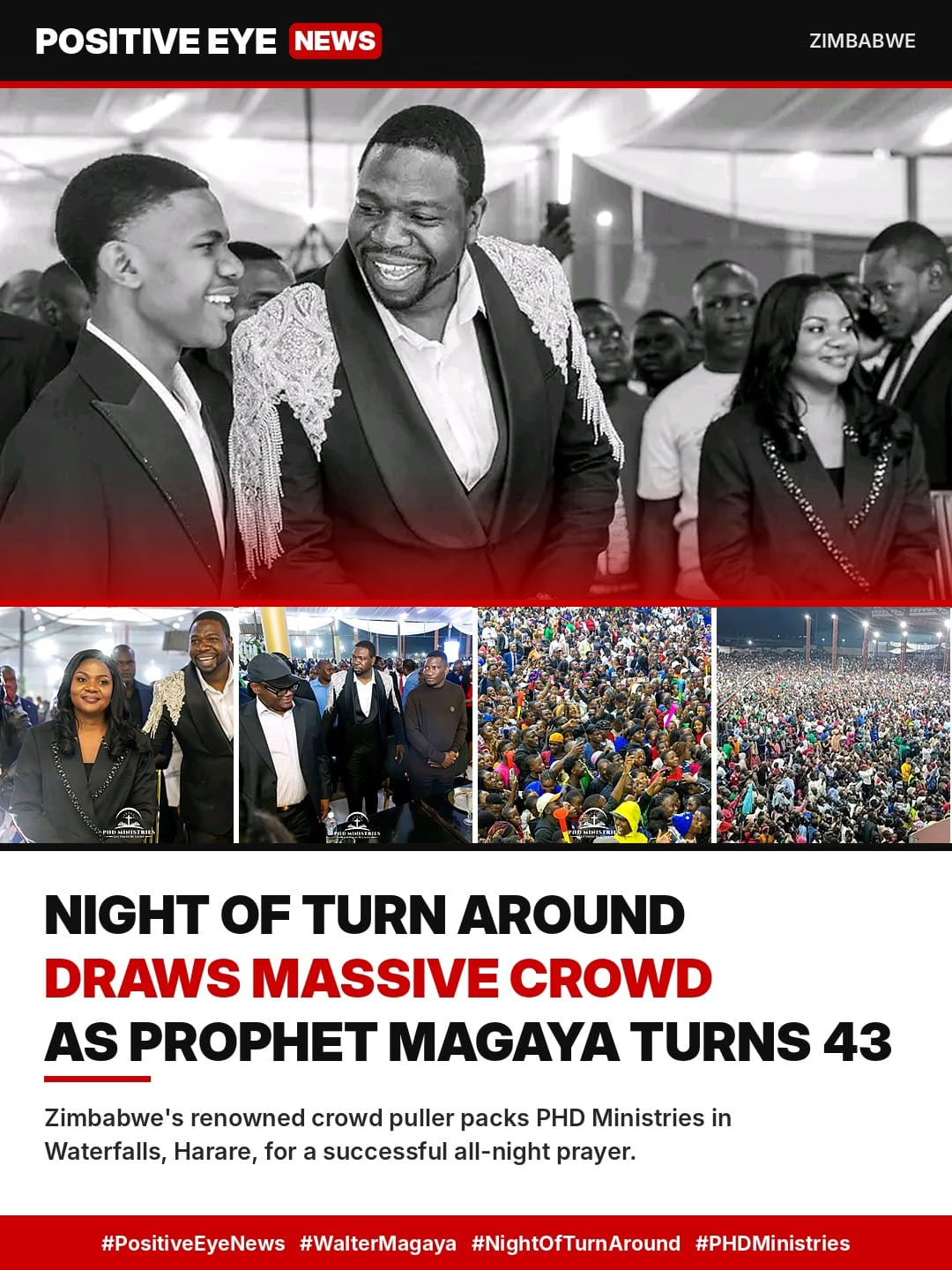
Held at PHD Ministries Church in Waterfalls, Harare, on Friday night, the annual all-night prayer gathering brought together worshippers, including international visitors, for a programme centred on prayer, spiritual renewal and the Christian message of transformation. The occasion also coincided with Prophet Magaya’s 43rd birthday celebrations, giving the gathering an additional significance within the ministry’s calendar.
Yet, beyond the spiritual significance attached to the Night of Turn Around, the gathering presents an interesting case study of how religious institutions can become important channels through which countries attract international visitors and generate economic activity.
For Zimbabwe, the presence of foreign delegates at the gathering was particularly significant. Interviews conducted by Positive Eye News with some of the international visitors revealed an appreciation of Zimbabwe that went beyond the religious purpose of their visit, with visitors expressing admiration for the country’s beauty and their experience of being in the country.
Their impressions offer an important perspective on destination marketing. International visitors who arrive through religious platforms are not only participants in church programmes; they also become temporary ambassadors of the destinations they experience. Their interactions with local communities, exposure to Zimbabwean hospitality and encounters with the country’s urban environment can shape perceptions that travel beyond the duration of the event.
This is where the economic significance of religious tourism becomes apparent.
Unlike conventional tourism, which is often driven by leisure, wildlife and cultural attractions, religious tourism is anchored in faith, pilgrimage, spiritual conferences and the desire to participate in religious experiences. Its distinguishing feature is the ability to mobilise people around a shared spiritual interest, creating travel demand that can be sustained through annual gatherings and international church networks.
The Night of Turn Around demonstrates the potential of this model. Visitors travelling to Harare require accommodation, transport, food and other services, creating opportunities for businesses operating within the hospitality and tourism value chain. Hotels, restaurants, transport operators, retail outlets and informal traders can all benefit from the movement of people associated with major religious events.
The economic opportunity, therefore, extends beyond the church premises in Waterfalls. It touches the wider urban economy and raises questions about how Zimbabwe can deliberately integrate religious gatherings into its tourism development strategy.
Zimbabwe already possesses a strong foundation for this market through its established religious institutions, international church networks and the ability of prominent religious leaders to attract congregations across national boundaries.
Prophet Magaya’s ministry has, over the years, developed an international following, with the Night of Turn Around becoming one of its most recognisable annual gatherings. The ministry’s own visitor arrangements, including accommodation facilities associated with Yadah Hotel, demonstrate the relationship between religious activities and hospitality services.
Interestingly, Prophet Magaya was previously reported to have been appointed a religious tourism ambassador by the Harare Metropolitan Province in 2016, a development that recognised the potential of his ministry to attract international visitors and contribute to tourism activity.
That historical dimension makes the current gathering particularly relevant to discussions about the country’s tourism diversification agenda. Religious tourism is not an entirely new concept within Zimbabwe’s development conversation; rather, the question is how to expand and organise its contribution to the national economy.
There is also an important national branding opportunity. Zimbabwe’s tourism identity has traditionally been associated with destinations such as Victoria Falls, Hwange National Park, Great Zimbabwe and the country’s natural landscapes. However, international religious gatherings introduce another reason for people to travel to the country, particularly those whose interests are connected to faith and spiritual experiences.
The positive impressions expressed by foreign visitors interviewed by Positive Eye News reinforce the importance of the visitor experience in shaping the country’s image. A successful religious event can create an opportunity for visitors to discover Zimbabwe beyond the immediate purpose of their journey, potentially encouraging extended stays, return visits and recommendations to others.
This requires a coordinated approach involving tourism authorities, hospitality operators, airlines, transport providers and religious institutions. Church gatherings with international participation can be incorporated into tourism calendars, supported by visitor information, accommodation partnerships and opportunities for delegates to experience the country’s wider attractions.
At the centre of the occasion was the message of turnaround, a theme that speaks to restoration, renewed hope and transformation in the lives of believers. These themes have historically formed an important part of Prophet Magaya’s ministry and the spiritual appeal of the annual gathering. The emphasis on personal renewal also explains the event’s ability to bring together people whose circumstances and expectations differ, but who share an interest in faith and spiritual encouragement.
The gathering was also preceded by preparations involving fasting and prayer, with the ministry announcing plans to introduce an initiative called Water of Life during the programme. The initiative was presented as one of the anticipated highlights, although its full significance and details require further clarification before its implications can be assessed.
At 43, Prophet Magaya remains one of Zimbabwe’s most recognisable religious personalities and a notable crowd puller whose ministry has developed a substantial presence within the country’s Pentecostal landscape.
His birthday celebrations, coinciding with the Night of Turn Around, have therefore provided more than a moment for personal celebration. They have also offered an opportunity to examine the wider institutional, social and economic influence that major religious gatherings can generate.
For Zimbabwe, the challenge is to recognise that tourism opportunities do not emerge exclusively from traditional leisure destinations. They can also be created by institutions and events that bring international communities together, generate travel demand and expose visitors to the country’s hospitality and cultural identity.
The Night of Turn Around has demonstrated that faith can become a bridge between communities across borders. Whether that international movement can be translated into a more structured and sustainable religious tourism sector is a question that deserves greater attention from the country’s tourism and investment stakeholders.
Ultimately, Zimbabwe’s tourism proposition can be strengthened by recognising every credible platform that brings international visitors into the country. Religious tourism is one such platform, and gatherings of the scale associated with Prophet Magaya’s ministry demonstrate why it should not remain on the margins of the national tourism conversation.