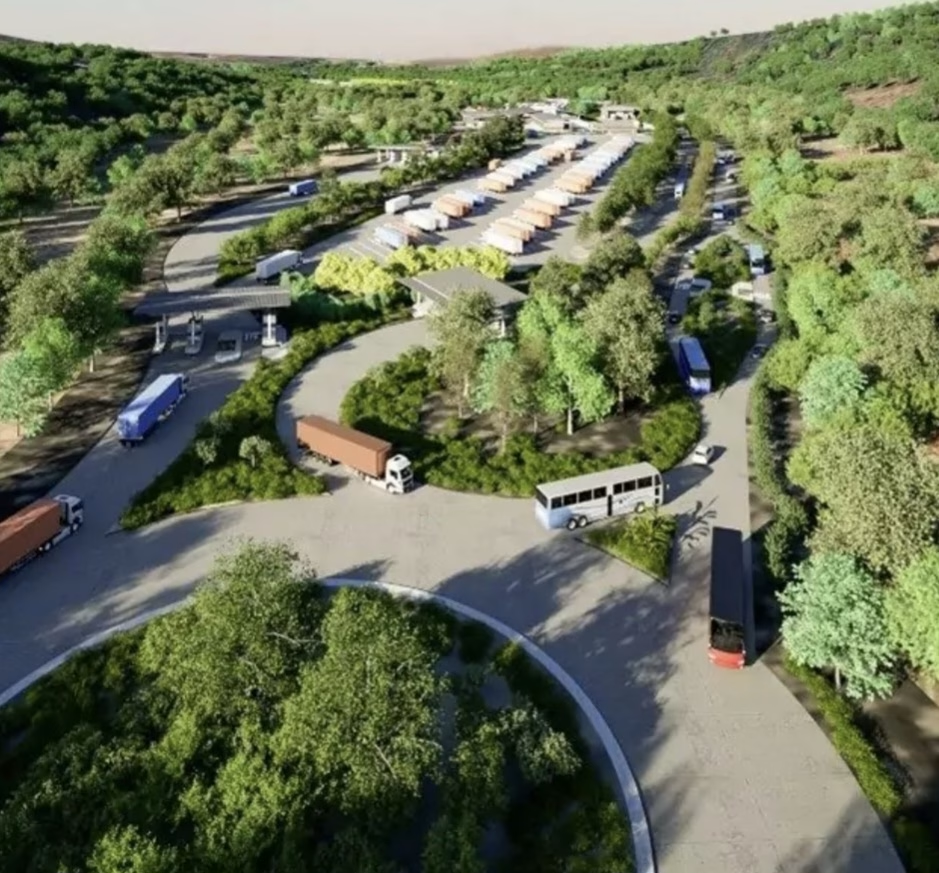
The government has gazetted a new set of tolls and parking charges that will apply once the modernised Forbes Border Post begins operating, marking a key step in the financing and management of the border upgrade.
The new framework is set out in Statutory Instrument 179 of 2026, issued under the Toll Roads Act by the Minister of Transport and Infrastructural Development and published in a supplement to the Zimbabwean Government Gazette dated 6 November 2026. It designates the roads within the project area as a toll road and gives the project concessionaire, Forbes Border Consortium, the authority to collect charges from vehicles using the border customs area. All payments will be made in United States dollars.
The regulations will not take effect immediately. They will come into force on a date to be announced by the Minister, coinciding with the day the upgraded border post starts operations.
Under the new system, the obligation to pay rests with the person in charge of a vehicle that is subject to a toll, and payment must be made at the designated office within the Forbes Border Post customs area. The concessionaire is named as the body authorised to levy and collect the project toll from commercial vehicles passing through that area, with the toll itself defined as the charge levied for the modernisation project under the regulations.
The charges are described more broadly as vehicle fees, covering not only the toll itself but also related services at the project, such as transit charges and weighbridge charges. These fees are calculated at a rate per vehicle in United States dollars, as set out in the schedule to the regulations. The regulations also explain that where two or more vehicles are coupled together, including a vehicle drawing another vehicle, they are treated together as a train of vehicles for the purposes of the rules.
Charges will vary according to the type and size of vehicle. Motorcycles will pay five dollars, with no parking fee applicable. Passenger vehicles will pay twenty dollars, excluding value-added tax, for the toll and ten dollars per day or part of a day for parking. Light goods vehicles will pay thirty dollars, excluding value-added tax, for the toll and ten dollars per day or part of a day for parking. Minibuses will also pay thirty dollars, excluding value-added tax, for the toll and ten dollars per day or part of a day for parking. Coaches will pay one hundred dollars, excluding value-added tax, for the toll and ten dollars per day or part of a day for parking. Goods vehicles will pay one hundred and twenty dollars, excluding value-added tax, for the toll and forty dollars per day or part of a day for parking. Heavy vehicles will pay one hundred and seventy dollars, excluding value-added tax, for the toll and forty dollars per day or part of a day for parking. Abnormal load vehicles will pay the highest toll at three hundred dollars, excluding value-added tax, with parking charged at eighty dollars per day or part of a day.
Certain official traffic will not be required to pay. The exemption covers border officials from Zimbabwe and Mozambique, as well as government vehicles travelling on official business.
The regulations also set out how different vehicles are to be categorised. Classification is based largely on a vehicle’s purpose, its seating capacity in the case of passenger transport, and its weight and carrying capacity in the case of goods transport. For example, smaller passenger cars are distinguished from larger minibuses and coaches by the number of passengers they can carry, while goods vehicles are distinguished by their net mass and overall carrying capacity, including trailers where applicable. The rules also make specific provision for articulated vehicles and for vehicles whose axle load exceeds prescribed thresholds, which helps determine whether a vehicle is treated as commercial for tolling purposes. A separate definition is provided for parking charges, linking them to the parking areas developed as part of the modernisation project.
The Forbes Border Post Modernisation Project involves the upgrading of the border post itself together with all related works, services and activities carried out in connection with that upgrade, whether inside or outside the customs area. The project is therefore positioned as more than a border facility upgrade, as it speaks directly to the infrastructure, trade facilitation and regional integration priorities at the centre of Vision 2030 and the National Development Strategy 2. By reducing congestion and delays, improving clearance systems and creating modern parking, transit and weighbridge facilities, the upgraded border is expected to lower the cost of doing business, speed up the movement of goods and people between Zimbabwe and Mozambique and onward to regional ports, and strengthen Zimbabwe’s role as a transit and trade corridor in southern Africa. In that way, the modernisation supports the broader national goals of building a competitive, upper-middle-income economy driven by efficient infrastructure, private-sector participation, increased exports and deeper regional integration.