By Aldridge Dzvene
Zimbabwe’s effort to revive its commercial State enterprises is entering a defining phase, with the Mutapa Investment Fund (MIF) seeking to move more than 30 companies beyond institutional restructuring towards sustained production, stronger financial performance and measurable returns to the national economy.
The Fund’s latest update points to a reform programme built around capital injections, governance changes and operational restructuring. But beneath the reported progress lies a much larger economic question: can Zimbabwe restore the commercial value of public enterprises that have, for years, struggled with underinvestment, ageing infrastructure, weak balance sheets and operational inefficiencies?
With a gross asset value exceeding US$16 billion, Mutapa occupies an important position in the country’s economic architecture. Its portfolio spans energy, mining, transport, telecommunications, agriculture, banking and industry, placing it at the centre of sectors that determine the performance of the wider economy. The scale of those holdings means that the success or failure of the restructuring programme will have implications beyond the Fund’s own financial statements.
Speaking at the Zimbabwe National Defence University, MIF chief executive officer Dr John Mangudya said the Fund was pursuing an aggressive approach to unlocking value from the companies under its control, with the objective of generating reliable and sustainable returns. The latest figures reported by the Fund indicate a 406 percent increase in total income and a 502 percent rise in surplus during the 2025 financial year, alongside a 139 percent increase in comprehensive income and 10.7 percent growth in assets. Cumulative dividends paid to the Fund reportedly reached US$93 million, while US$152 million had been disbursed to portfolio companies.
These figures provide an indication of improving financial activity, but they also raise an important distinction between the performance of the holding fund and the operational health of the individual companies. A sovereign investment fund can report higher income through dividends, investment gains and management fees, yet the deeper measure of reform is whether the enterprises themselves are becoming more productive, commercially competitive and capable of financing their operations without repeatedly depending on public support.
That distinction is particularly important because the companies inherited by Mutapa did not all enter the new structure from a position of financial strength. Some carry legacy debts, infrastructure deficiencies and governance problems that cannot be resolved through administrative consolidation alone. Mutapa’s own earlier disclosures identified the scale of the recapitalisation challenge, estimating that more than US$10 billion would be required to modernise and restore the productive capacity of its portfolio companies.
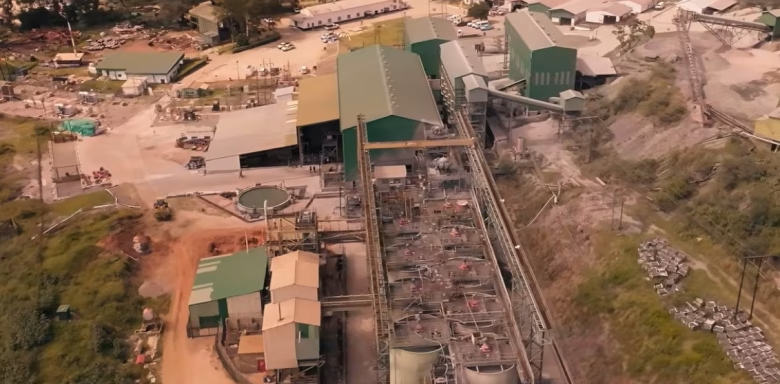
The interventions now being reported illustrate the economic logic behind the restructuring. At Sable Chemicals, Mutapa injected US$13.6 million towards refurbishment of the fertiliser plant, which was reported to be 97 percent complete, with the first phase targeting annual production of 240,000 tonnes of ammonium nitrate. At Dorowa Mine, a US$5.3 million investment in plant refurbishment has been completed, with production capacity expected to rise from 15,000 tonnes to 80,000 tonnes. These are not merely corporate recovery exercises. They touch directly on agricultural input supply, industrial production, import dependence and the cost structure of the wider economy.
The expansion of the National Oil Company of Zimbabwe’s fuel pipeline capacity from three billion to five billion litres annually similarly demonstrates how investment in a single State-linked enterprise can influence national logistics and regional trade. If supported by efficient operations and sufficient demand, expanded infrastructure could strengthen Zimbabwe’s position in the movement and distribution of petroleum products. The economic value, however, will ultimately depend on utilisation, cost efficiency and the ability to generate returns from the additional capacity.
Mutapa is also pursuing structural changes across sectors where fragmented operations may have increased costs and weakened coordination. Plans to consolidate telecommunications companies into a single entity and reorganise insurance businesses through a hub-and-spoke model point to a broader attempt to reduce duplication and improve capital allocation. The proposed reorganisation of the Industrial Development Corporation of Zimbabwe is intended to strengthen corporate governance, financial discipline and investment advisory capacity across the portfolio.
Yet restructuring must not become an end in itself. Consolidating companies, appointing boards, changing reporting structures and injecting capital are important steps, but they do not automatically produce commercially sustainable institutions. The real test will be whether the reforms lead to improved service delivery, reliable production, competitive pricing, stronger exports, job security and consistent contributions to the Treasury.
This is especially significant in sectors such as electricity, rail transport and telecommunications, where the performance of State enterprises has consequences for private businesses and the cost of doing business. Manufacturers cannot expand production if power supplies remain unreliable. Agricultural producers cannot fully exploit markets if transport infrastructure is inefficient. Investors cannot plan confidently where essential services are unpredictable. The recovery of these enterprises therefore has the potential to improve conditions across the productive economy, provided that operational improvements translate into dependable services.
There is also a public accountability dimension to the Fund’s expanding role. Mutapa manages assets that ultimately belong to the people of Zimbabwe. Its mandate to preserve and grow national wealth must therefore be matched by transparent reporting on how capital is deployed, how companies perform and what returns accrue to the State. The reported US$93 million in cumulative dividends is an important indicator, but the public also needs a clearer picture of the financial position of individual portfolio companies, their debt exposure, investment commitments and progress against measurable turnaround targets.
The challenge is to balance commercial discipline with the strategic responsibilities of enterprises operating in essential sectors. Profitability matters, but so does the quality and affordability of services, the protection of productive capacity and the contribution these companies make to national development. A commercially viable railway, energy utility or fertiliser producer can support wider economic activity in ways that may not be fully captured by its immediate financial returns.
For Mutapa, the next phase must therefore be defined by evidence of delivery rather than the scale of its portfolio or the number of restructuring initiatives announced. The Fund has the responsibility to demonstrate that centralising ownership and professionalising management can produce better outcomes than the fragmented arrangements that preceded it.
Zimbabwe does not lack strategic public assets. The more difficult task has been converting those assets into efficient, productive and financially sustainable institutions. Mutapa’s restructuring programme is an attempt to address that long-standing challenge. Its significance will ultimately be measured not by the value of the companies it controls, but by how much more they produce, how reliably they serve the economy and how consistently they create wealth for the country.