By Aldridge Dzvene
The commissioning of new pilots into the Air Force of Zimbabwe (AFZ) by His Excellency Dr Emmerson Dambudzo Mnangagwa, President and First Secretary of ZANU PF, brings into focus a dimension of national security that is often less visible than military hardware, but no less consequential: the capacity of a country to develop and sustain the specialised human expertise upon which its defence institutions depend.
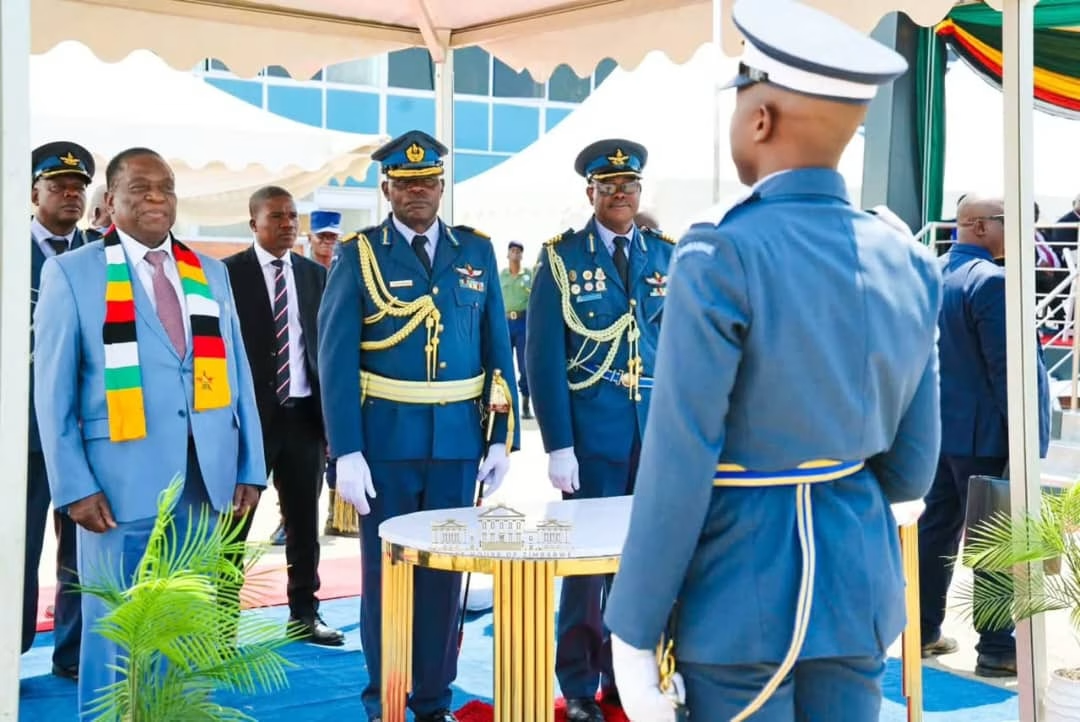
At Josiah Tungamirai Air Force Base in Gweru, the Number 70 Pilot Training Course wings presentation and commissioning parade was more than the culmination of an arduous training process. It represented the renewal of a highly specialised national capability, one whose value is measured not simply by the number of officers receiving their wings, but by the knowledge, judgement, discipline and technical competence they bring into an institution operating in an increasingly sophisticated aviation environment.
The significance of this development becomes clearer when military aviation is considered as a complete system rather than an activity centred on pilots and aircraft. An air force’s operational strength rests on the relationship between trained aircrew, instructors, engineers, maintenance personnel, command structures, technical infrastructure and the ability to continually update operational knowledge. Aircraft may constitute the visible expression of air power, but the institutional capacity to operate and sustain them is built over years through training, experience and the preservation of technical expertise.
This is why the President’s emphasis on the systematic upgrading of the AFZ pilot training programme deserves attention. The incorporation of modern flying methods reflects the reality that aviation is not a static discipline. Changes in aircraft technology, navigation, avionics, surveillance and operational systems continually reshape the demands placed on military aviators. Training that does not evolve with these developments risks producing personnel equipped for yesterday’s operational environment. The challenge for Zimbabwe, therefore, is not merely to produce qualified pilots, but to maintain a training architecture capable of anticipating and responding to the changing character of military aviation.
There is a strategic distinction between acquiring capability and sustaining it. The former can involve the procurement of equipment, while the latter requires a continuous investment in people, technical knowledge, maintenance systems and institutional learning. A country may acquire sophisticated aviation assets, but their effective utilisation depends on the availability of trained personnel and the technical systems required to keep them operational. The commissioning of new pilots consequently speaks to a broader question of national preparedness: how consistently can Zimbabwe renew the specialised expertise required by its defence institutions?
The five-year journey of the training course also illustrates the demands of developing this expertise. Military flying is not acquired through theoretical instruction alone. It requires the progressive development of technical understanding, operational judgement, composure and the ability to make decisions within demanding conditions. These qualities are cultivated through structured instruction, practical exposure and the transfer of experience from one generation of military aviators to another. The training institution is therefore not simply preparing individuals for their first assignments; it is reproducing the professional knowledge on which the future of the service depends.
The ceremony was also marked by the tragic deaths of an Officer Cadet and an Instructor Pilot during training. Their loss places the achievements of the newly commissioned officers within a more profound context of service and sacrifice. Military aviation carries risks that cannot be separated from the demands of the profession, making safety culture, professional supervision and the continuous evaluation of training procedures essential institutional responsibilities. The President’s condolences to the bereaved families and comrades recognised the human cost behind the development of military capability. Their contribution must remain part of the Air Force’s institutional memory.
The emphasis on patriotism, discipline and unyielding loyalty in the President’s address also touches on a critical distinction in military professionalism. Technical skill without institutional discipline is insufficient for an organisation entrusted with national defence responsibilities. Aviation depends on precision, procedural consistency, trust and coordinated action. The pilot operates within a much wider chain of command and technical support, meaning that individual competence must be reinforced by collective professionalism. The effectiveness of the institution is ultimately shaped by the quality of the entire system.
Zimbabwe’s defence modernisation must also be understood within the changing regional security environment. The AFZ’s participation in the Standing Aviation Community of the Southern African Development Community and its engagement through Air Diplomacy demonstrate that military aviation has a regional dimension extending beyond the protection of national airspace. Professional exchanges, cooperation and shared aviation experience contribute to relationships between defence institutions and create opportunities to strengthen regional coordination.
This engagement is particularly relevant as regional security challenges increasingly require cooperation between countries. Air capabilities can support a range of national and regional responsibilities, but their contribution depends on interoperability, professional standards and the ability of institutions to coordinate effectively. The President’s reference to the forthcoming Exercise Runde and the Africa Aerospace and Defence exhibition in South Africa places the newly commissioned officers within this wider environment of professional engagement and exposure to developments in the defence and aerospace sectors.
Yet the more important question is what Zimbabwe does with the opportunities such engagements create. Participation in regional exercises and international exhibitions has value when it contributes to institutional learning, technical awareness and the development of professional capacity. Exposure to new technologies must inform training; cooperation must strengthen operational knowledge; and engagement must translate into improvements that can be sustained within national institutions.
There is also a national development dimension to this investment. The specialised disciplines associated with military aviation, including engineering, electronics, aviation science, systems management and technical maintenance, form part of the wider knowledge economy. Developing expertise in these areas strengthens the country’s pool of technical skills and supports the broader objective of building institutions capable of operating in technologically demanding environments. This is the connection between the President’s emphasis on defence human capital and Vision 2030: national development requires not only physical infrastructure and investment, but people capable of managing increasingly complex systems.
The commissioning therefore raises an important consideration about continuity. The development of military aviation expertise cannot be treated as a once-off achievement attached to an annual parade. It requires successive generations of trained personnel, continuous professional development, experienced instructors, modern training methods and the institutional capacity to retain and transfer knowledge. The newly commissioned pilots are entering a profession in which their initial qualification marks the beginning of a much longer process of professional growth.
For the Air Force of Zimbabwe, the task ahead is to ensure that the investment represented by this training course is supported by the wider institutional environment necessary to translate individual qualifications into enduring national capability. The measure of modernisation will ultimately lie in the strength of the systems surrounding the personnel, the standards they maintain and the institution’s ability to adapt as aviation technology and security requirements evolve.
The wings presented at Josiah Tungamirai Air Force Base are thus more than symbols of personal achievement. They represent the transfer of responsibility to a new generation of officers and the continued development of a national institution whose effectiveness depends on knowledge, discipline and the ability to sustain specialised expertise. In that sense, the commissioning is not simply a celebration of pilots produced; it is a statement about the human foundations upon which Zimbabwe’s military aviation future must be built.