By Aldridge Dzvene
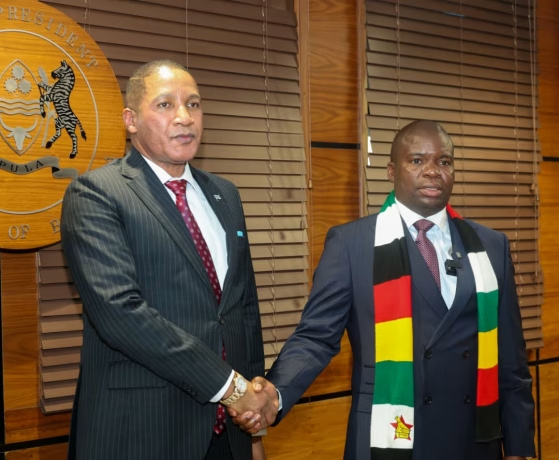
Zimbabwe’s forthcoming parliamentary engagement with the United Kingdom’s House of Commons presents an opportunity to move bilateral relations beyond ceremonial diplomacy and towards practical cooperation in legislative oversight, institutional capacity-building, trade facilitation and the strengthening of parliamentary engagement between the two countries.
The delegation, led by Speaker of the National Assembly of Zimbabwe, Hon. Advocate Jacob Francis Nzwidamilimo Mudenda, is scheduled to undertake the bilateral visit from 18 to 24 October 2026, with a programme that includes meetings with British parliamentary leadership, engagements with inter-parliamentary organisations and an opportunity to observe Prime Minister’s Questions, one of the United Kingdom’s most prominent parliamentary accountability proceedings.
However, an examination of the programme reveals a more consequential story than the diplomatic significance of the visit alone. The real measure of its value will be whether the engagements establish practical channels for cooperation, generate institutional lessons that can be applied within Zimbabwe’s own parliamentary processes and create a framework for sustained dialogue on issues of mutual interest.
Parliamentary diplomacy is often conducted away from the public attention that accompanies presidential summits, ministerial negotiations and high-level state visits. Yet it can provide an important avenue for countries to maintain dialogue, exchange legislative experience and build relationships between institutions that perform distinct but complementary roles in governance.
For Zimbabwe, the visit comes with the responsibility of ensuring that engagement with Westminster is not reduced to an exchange of courtesies, official photographs and speeches. It presents an opportunity to examine how a legislature with a long-established committee system, extensive parliamentary records and highly visible scrutiny procedures organises its work, while identifying practices that could strengthen Zimbabwe’s own institutional effectiveness.
The distinction is important. A parliamentary visit is not, in itself, evidence of institutional reform or improved bilateral relations. Its significance must ultimately be judged by what the participating institutions learn, the relationships they sustain and the concrete initiatives that emerge from their engagement.
BEYOND CEREMONIAL DIPLOMACY
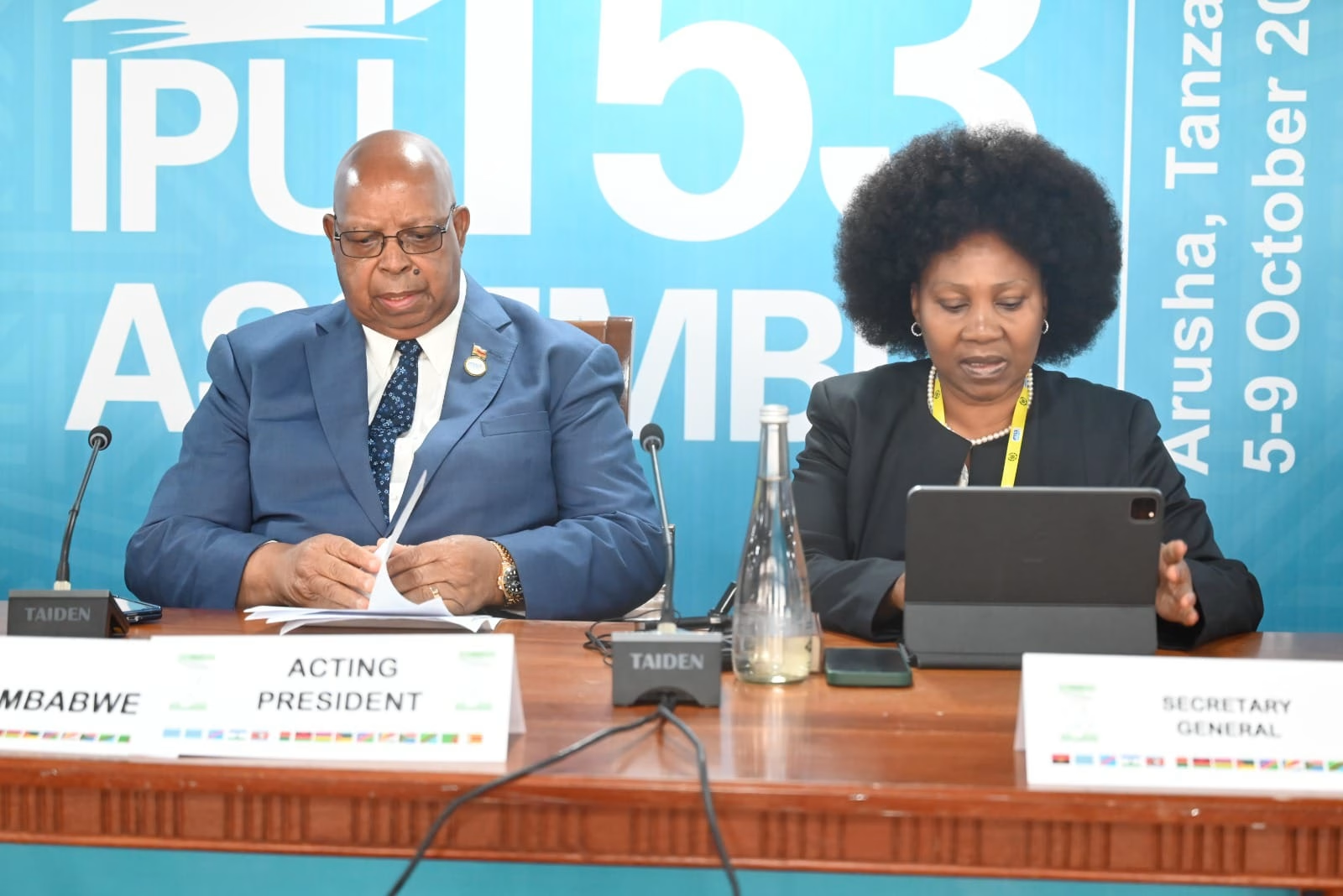
The proposed programme places Speaker Mudenda at the centre of a series of engagements with British parliamentary leadership, including a meeting with the Speaker of the House of Commons, Rt Hon Sir Lindsay Hoyle MP, and discussions involving the British Group of the Inter-Parliamentary Union and the United Kingdom branch of the Commonwealth Parliamentary Association.
These engagements provide an institutional setting in which the two legislatures can explore areas of common interest, exchange experiences and consider how parliamentary cooperation can be maintained beyond individual visits.
The inclusion of the British Group of the Inter-Parliamentary Union and the Commonwealth Parliamentary Association is particularly relevant because parliamentary diplomacy is not confined to bilateral exchanges between Speakers. It also operates through networks that connect legislators, committee leaders and parliamentary officials across national boundaries.
Such networks can support dialogue on parliamentary procedure, representation, legislative scrutiny, public participation and the development of institutional capacity. Their practical value, however, depends on whether relationships established at formal meetings are followed by continued communication, technical exchanges and agreed areas of cooperation.
Zimbabwe’s delegation includes legislators from both ZANU PF and CCC, reflecting representation from the country’s principal political formations in the National Assembly delegation identified in the arrangements document. Hon. Webster Kotiwani Shamu, Hon. Mercy Mugomo and Hon. Noah Mangondo are listed alongside Hon. Vivian Chitimbe and Hon. Consillia Chinanzvavana.
That composition gives the visit a parliamentary character extending beyond a delegation of executive officials. It brings together elected representatives who participate in Zimbabwe’s legislative institution, alongside senior parliamentary administrators and diplomatic representatives.
The inclusion of different political formations also underlines an important institutional principle: parliamentary diplomacy is most useful when it creates space for legislators to engage with their counterparts on the basis of their parliamentary responsibilities, even where their domestic political positions differ.
The presence of parliamentary officials responsible for public relations, external relations and the Speaker’s Office further indicates that the engagement has an administrative and institutional dimension. The lasting value of international parliamentary cooperation depends not only on the political leadership that initiates it, but also on the officials who preserve records, coordinate follow-up activities and convert agreements into workable institutional programmes.
THE WESTMINSTER MODEL AND THE QUESTION OF ACCOUNTABILITY
One of the most significant elements of the proposed visit is the scheduled observation of Prime Minister’s Questions on Wednesday, 21 October.
The proceeding offers the Zimbabwean delegation an opportunity to observe the relationship between the executive and legislature in a setting where government leadership faces direct questioning from elected representatives.
According to the UK Parliament, Prime Minister’s Questions takes place at midday on sitting Wednesdays and allows Members of Parliament to question the Prime Minister on matters of public importance. The wider parliamentary scrutiny system also includes departmental select committees, which can request information, question ministers and investigate government policy and expenditure. These mechanisms are central features of the British parliamentary system, although their operation and effectiveness must be understood within the United Kingdom’s own constitutional and political context.
The observation of such proceedings should therefore be approached as an opportunity for institutional learning rather than an assumption that one parliamentary system can simply be transplanted into another.
The central question for Zimbabwe is how parliamentary procedures can continue to strengthen the capacity of elected representatives to scrutinise legislation, examine public expenditure, question government policy and assess the implementation of national programmes.
Parliamentary accountability is not exhausted by the passage of legislation or the number of sittings held. It also involves the quality of deliberation, the accessibility of information, the effectiveness of committee investigations and the extent to which recommendations receive serious consideration after they are made.
For a legislature operating within a national development agenda, oversight and development should not be treated as mutually exclusive responsibilities. Effective scrutiny can help identify implementation weaknesses, improve the use of public resources and strengthen confidence in the institutions responsible for delivering public services.
The relevance of Westminster, therefore, lies not in the prestige of its chambers or the international visibility of its proceedings, but in the opportunity to examine the procedures, institutional safeguards and working practices that support its parliamentary functions.
The UK Parliament itself distinguishes between proceedings in the Chamber and scrutiny undertaken by select committees. Committees can investigate issues within their remits, seek evidence and question ministers and officials, while their recommendations are not automatically binding on government. This illustrates an important distinction between the power to scrutinise and the separate question of how recommendations influence executive decisions.
For Zimbabwe’s delegation, the useful exercise will be to identify which procedures, committee practices and administrative systems offer relevant lessons, while considering how any lessons could be adapted to Zimbabwe’s legal framework, parliamentary traditions and development priorities.
THE COMMITTEE ENGAGEMENTS THAT MATTER
The arrangements document identifies proposed meetings with the Foreign Affairs Committee, the Science, Innovation and Technology Committee, the Education Committee, the Energy Security and Net Zero Committee and the All-Party Parliamentary Group on Africa as engagements that could not be confirmed at the time the programme was prepared.
This is a significant qualification in the programme because these proposed meetings represent opportunities to engage beyond parliamentary protocol and into areas of policy that can affect bilateral cooperation.
Foreign affairs engagement could provide a forum for exchanging perspectives on international relations and the role of parliamentary institutions in maintaining dialogue between countries. Discussions involving science and technology could open avenues for examining innovation policy and the relationship between research, public institutions and economic development.
Education is another potentially important area, particularly where parliamentary engagement can facilitate the exchange of experience on skills development, institutional capacity and the contribution of education to national development. Energy security and the transition towards more sustainable energy systems also offer a policy field in which countries can compare regulatory approaches, investment priorities and the challenges associated with balancing energy access, affordability and environmental considerations.
These are potential areas for discussion, not confirmed outcomes of the forthcoming visit.
The distinction matters because the programme, as documented, does not establish that the relevant committee meetings will take place. Their confirmation would broaden the visit’s policy content, while their absence would leave a greater proportion of the programme centred on parliamentary leadership, institutional networks and formal engagement.
The proposed meeting with the All-Party Parliamentary Group on Africa also warrants attention because it could provide an avenue for discussion of African affairs within a cross-party parliamentary setting. Nevertheless, the existence of a proposed meeting should not be confused with a commitment to a particular policy position or outcome.
The practical priority is to ensure that any confirmed policy engagements are supported by clearly defined objectives. Delegates would benefit from arriving with specific questions, relevant institutional experiences and a clear understanding of the subjects on which Zimbabwe seeks dialogue.
Equally important is the need for a record of the issues discussed, the commitments made by participating institutions and the areas requiring further consultation. Without that follow-up, even a well-attended meeting can remain an isolated diplomatic event.
ZIMBABWE AND THE UNITED KINGDOM: THE VALUE OF INSTITUTIONAL DIALOGUE
The visit also has significance within the wider relationship between Zimbabwe and the United Kingdom, whose historical connections have shaped a complex diplomatic relationship over several decades.
That history makes sustained engagement important, but it also means that bilateral relations should not be understood through ceremonial exchanges alone. Diplomatic relations encompass political dialogue, economic interests, trade, investment, development priorities and differing perspectives on international affairs.
Parliamentary engagement offers one channel through which these issues can be discussed without treating every area of disagreement as an obstacle to communication.
Legislatures are not substitutes for governments in negotiating foreign policy or concluding executive agreements. They nevertheless have a distinct role in examining policy, facilitating dialogue among elected representatives and contributing to the wider institutional relationship between countries.
The participation of representatives from Zimbabwe’s embassy in the United Kingdom adds a diplomatic and economic dimension to the proposed programme. Ambassador Col. (Rtd) C.M. Katsande is listed alongside embassy officials responsible for ministerial, trade and investment, and political affairs.
Their involvement creates an opportunity to connect parliamentary engagement with the broader work of diplomatic representation. However, the arrangements document does not specify any trade agreements, investment commitments or new bilateral programmes arising from the visit, and such outcomes should not be presumed before the meetings take place.
The opportunity is to identify areas where parliamentary dialogue can complement existing diplomatic channels, improve mutual understanding and encourage sustained institutional contact.
For Zimbabwe, the value of such engagement should be assessed against practical national interests, including the development of productive economic relationships, access to knowledge and expertise, and the maintenance of constructive international dialogue. These objectives require clarity about what the country hopes to achieve and how progress will be evaluated after the delegation returns.
THE IMPORTANCE OF WHAT HAPPENS AFTER THE VISIT
A substantial portion of the success of parliamentary diplomacy is determined after the formal programme has ended.
The delegation is scheduled to attend a luncheon in honour of Speaker Mudenda, hosted within the House of Commons programme, with a guest list that includes senior parliamentary officeholders, committee chairs and representatives of parliamentary organisations. Such gatherings can facilitate introductions and establish relationships that may prove useful in subsequent engagement.
But access to influential individuals is only the beginning of institutional cooperation. The more important question is whether the relationships established during the visit develop into regular communication, reciprocal exchanges and clearly defined areas of collaboration.
A structured follow-up process would help distinguish between immediate diplomatic visibility and long-term institutional value. It could include a report to Parliament outlining the principal lessons from the visit, recommendations for possible procedural improvements, a record of proposed areas of cooperation and a timetable for following up on matters raised with British counterparts.
Where relevant, parliamentary committees could consider the lessons arising from the engagement and identify practices that warrant further examination. Parliamentary administrators could also assess whether exchanges on research, public communication, committee support and external relations would be useful.
Such measures would make the visit more than a temporary event on the parliamentary calendar. They would also create a basis for evaluating whether the resources devoted to international engagement have produced identifiable institutional benefits.
This is particularly important because international visits carry organisational and financial costs. Their justification rests not simply on the seniority of the participants or the prominence of the host institution, but on the value they generate for the institutions and citizens they represent.
Accountability for outcomes does not diminish the importance of diplomacy. It strengthens it by establishing a clear connection between engagement, institutional learning and measurable progress.
A TEST OF PURPOSE, NOT JUST PRESENCE
The bilateral visit led by Speaker Mudenda provides Zimbabwe’s Parliament with an opportunity to deepen its engagement with one of the world’s most recognisable legislative institutions.
Its programme brings together parliamentary leadership, inter-parliamentary organisations, senior officials and diplomatic representatives, while the planned observation of Prime Minister’s Questions offers a window into the workings of executive scrutiny at Westminster.
Yet the most consequential test will be whether the delegation returns with more than an account of meetings attended and personalities encountered.
The visit’s lasting contribution will depend on the quality of the exchanges, the relevance of the institutional lessons identified, the extent to which proposed policy engagements are confirmed and the discipline with which follow-up actions are pursued.
The unconfirmed committee meetings are a reminder that a programme’s breadth on paper does not automatically translate into substantive engagement. They also underline the importance of ensuring that the time available is directed towards clearly articulated objectives and that opportunities for policy dialogue are pursued where possible.
Ultimately, parliamentary diplomacy earns its value through continuity. A meeting can establish contact, an observation can generate an idea and an exchange can expose an institution to a different way of working. But only deliberate follow-up can turn those opportunities into sustained cooperation.
For Zimbabwe and the United Kingdom, the forthcoming engagement should therefore be understood as an opportunity to strengthen institutional dialogue while testing how effectively parliamentary relations can serve wider national interests.
The measure of success will not be how prominently the delegation appears at Westminster, but what the engagement enables Zimbabwe’s Parliament to learn, what avenues of cooperation it opens and what tangible institutional value remains after the delegation has returned home.