Practical skills training is opening new pathways into employment and entrepreneurship for young people in Zimbabwe’s South-East Lowveld, with 240 youths already benefiting from vocational and enterprise development programmes under the Zimbabwe Resilience Building Fund Phase II (ZRBF II).
The programme, managed and coordinated by the United Nations Development Programme (UNDP) with guidance from the Government of Zimbabwe and financial support from the European Union and the Government of Ireland, is targeting skills development as a practical route towards improving livelihoods and strengthening community resilience.
More than 1,000 additional young people have been identified for similar opportunities, expanding the potential reach of the initiative beyond the initial beneficiaries. Training areas include welding, climate-smart agriculture, confectionery and entrepreneurship, combining technical skills with the business knowledge required to turn those skills into sustainable sources of income.
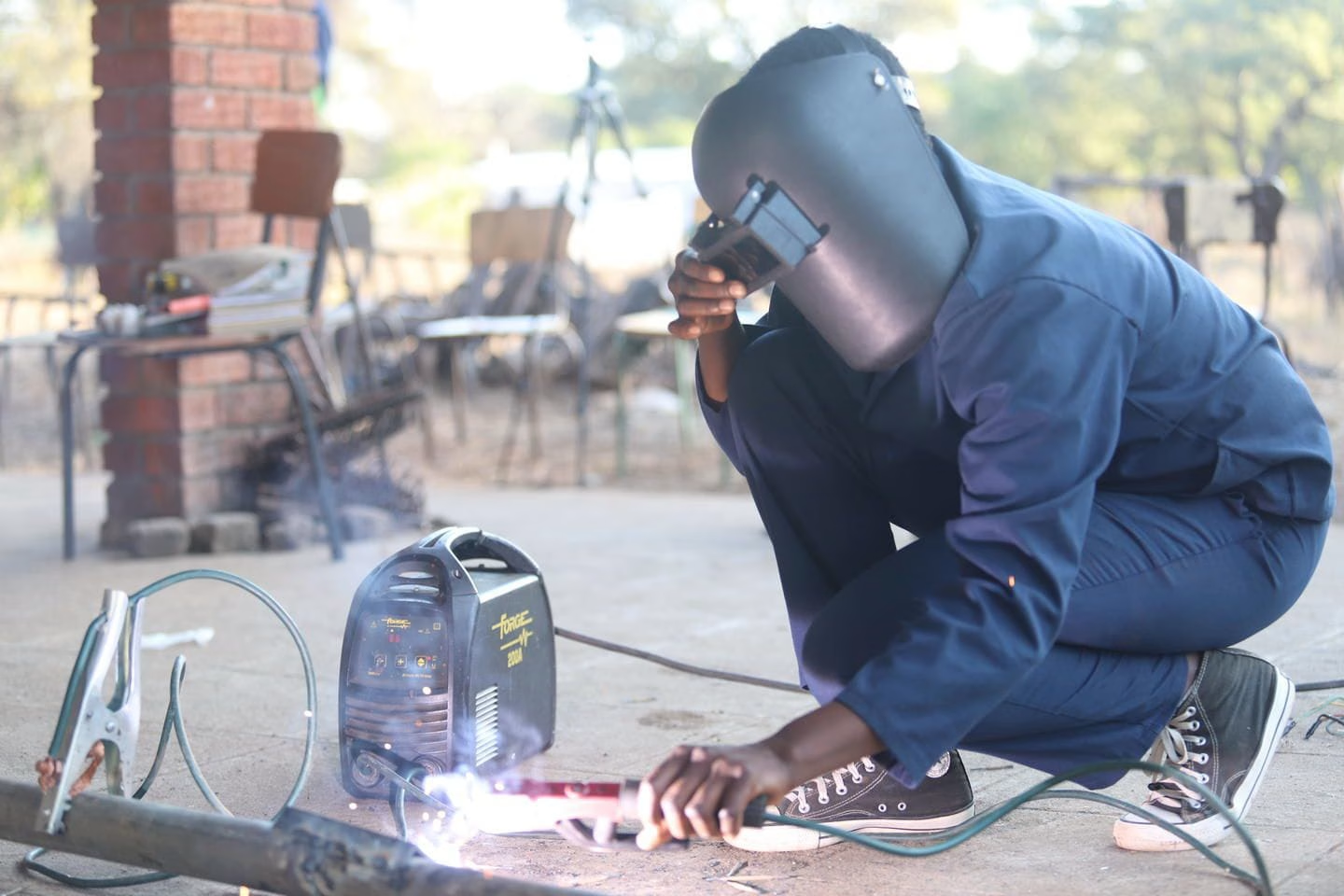
Among the beneficiaries is 25-year-old Evelyn Mundauya, who is undergoing welding training with the ambition of using her new skills to establish a business, support her family and provide services within her community.
The significance of the programme extends beyond vocational training itself. By equipping young people with practical skills that can be converted into businesses and income-generating activities, the initiative addresses one of the central challenges facing rural and semi-rural communities, the gap between young people’s potential and access to sustainable economic opportunities.
The inclusion of climate-smart agriculture also gives the programme a broader resilience dimension, particularly in communities where livelihoods remain closely connected to agriculture and are increasingly exposed to changing climatic conditions.
The expansion of training opportunities under ZRBF II therefore places skills development at the intersection of employment, entrepreneurship, climate resilience and community development. For beneficiaries such as Mundauya, the value of the intervention is ultimately measured not by training certificates alone, but by whether newly acquired skills can translate into viable enterprises, household income and services within local communities.
With more than 1,000 young people already identified for future training, the programme presents an opportunity to move skills development from short-term intervention towards a wider pipeline of youth entrepreneurship and local economic participation in Zimbabwe’s South-East Lowveld.