MHONDORO-NGEZI — More than US$500 million is being invested to complete the Karo Platinum Resources project, positioning the Mhondoro-Ngezi operation as a significant new contributor to Zimbabwe’s platinum group metals industry, mineral beneficiation and employment creation.
The project, whose investment is estimated at US$540 million, is expected to produce about 226,000 ounces of PGMs annually in its first phase and create approximately 1,200 direct jobs once fully operational. First ore production is targeted for the second half of 2027.
The significance of Karo, however, extends beyond the size of the investment. Its emergence adds production capacity to Zimbabwe’s platinum industry at a time when the country is seeking to expand mineral output while extracting greater value from its natural resources.
Karo Platinum Head of Processing Mr Qhubekani Moyo said Phase One production would place the operation alongside established producers such as Mimosa and Unki, although below the production levels of the country’s largest platinum producer, Zimplats. The additional output is nevertheless expected to lift Zimbabwe’s overall PGM production and reinforce the country’s position within global platinum supply chains.
Perhaps more importantly, the project demonstrates the economic value of processing minerals before they leave the country. According to Moyo, Karo will mine ore at approximately three grams per tonne and concentrate it to about 100 grams per tonne. He put the indicative value of a tonne of mined ore at about US$200, compared with almost US$7,000 for a tonne of concentrate at current prices.
That processing equation goes directly to Zimbabwe’s beneficiation ambitions. Rather than measuring the success of mining simply by tonnes extracted or minerals exported, the greater strategic question is how much economic value the country retains through processing, employment, technology, services and downstream industries.
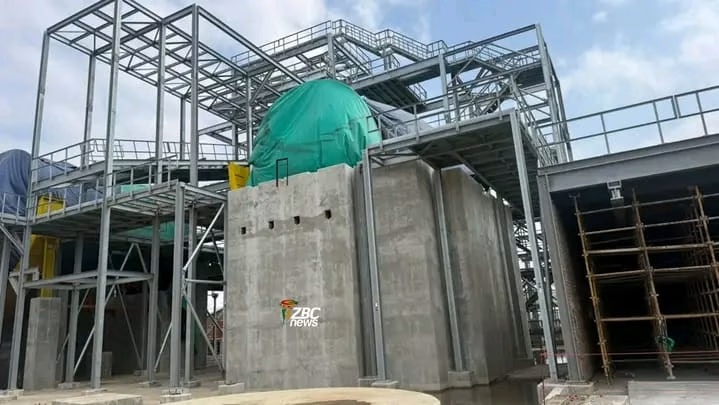
The project is also moving from planning into physical development. Earlier reporting indicated that the project is constructing a 220,000-tonne-per-month concentrator, with earthworks completed and civil construction progressing, while the wider development includes infrastructure and preparations for future underground mining.
The timing is particularly important for Zimbabwe’s platinum sector. PGMs remain among the country’s most valuable mineral exports, with first-half 2026 PGM exports reported at US$1.206 billion, including US$859.1 million from PGM matte and US$347.6 million from concentrates.
Karo therefore enters a sector where production growth can have implications well beyond the mine gate. Increased platinum output can generate foreign currency, create demand for local suppliers, support infrastructure development and strengthen government revenues, while beneficiation can potentially increase the value captured domestically.
The project’s development also gained an important institutional milestone in August when Karo Platinum signed a Special Mining Lease Agreement with the Government, providing a 25-year initial mining tenure and the fiscal and operational framework for the project. The agreement was signed in Harare on 24 August 2026 in the presence of President Dr Emmerson Dambudzo Mnangagwa.
For Mashonaland West, the investment carries an additional regional-development dimension. Mining currently contributes about 16.7 percent of the province’s GDP, according to the latest reporting on the project, meaning an expansion of platinum production has potential implications for employment, procurement, infrastructure and broader economic activity in the province.
The real measure of Karo’s success, however, will be determined by what happens beyond the 1,200 direct jobs. A major mining project of this scale can create a wider ecosystem of contractors, transporters, engineering companies, suppliers, accommodation providers and small businesses if local participation is deliberately built into the value chain.
That makes beneficiation and local content critical to the project’s national significance. Zimbabwe’s ambition is increasingly moving from being a producer of minerals to becoming a country that processes, manufactures and captures greater value from its mineral endowment.
Karo’s planned production also comes as Zimbabwe seeks to strengthen the long-term sustainability of its PGM industry. Mining industry analysis has pointed to the need for new projects to complement established operations and protect the country’s position in global PGM markets. Karo is consequently not simply another mine coming onto the Great Dyke; it represents part of the succession of Zimbabwe’s platinum production base.
For Government, the project therefore sits at the intersection of investment, employment, foreign-currency generation, beneficiation and industrialisation. For communities, the expectation is that the investment should translate into tangible economic opportunities and improved local participation.
With first ore targeted for the second half of 2027, attention will now shift from investment announcements to execution: completing the processing infrastructure, securing supporting utilities, bringing production online and ensuring that the value created by the resource is increasingly retained within Zimbabwe.
Karo’s US$540 million development thus presents Zimbabwe with an opportunity to demonstrate that mineral wealth can become more than an export commodity. Properly integrated into the country’s industrialisation strategy, the project can become a platform for higher PGM production, deeper beneficiation, stronger local supply chains and a new generation of mining-related economic opportunities.