HARARE — As Zimbabwe joins the world in commemorating World Habitat Day, the country’s rapidly changing urban landscape is placing renewed focus on the need for housing models that can accommodate population growth while delivering sustainable infrastructure and better quality of life. With the national housing backlog estimated at 1.5 million units, the challenge is no longer simply about constructing houses, but about designing urban communities capable of integrating housing, employment, commerce, transport, recreation and essential services.
WestProp Holdings is positioning its growing portfolio of mixed-use developments, including Pomona City, Chivhu Eco City, Swanville City, Millennium City, Pokugara, Millennium Heights and Mall of Zimbabwe, within this broader urbanisation challenge. The developments reflect a shift from conventional housing estates towards planned urban environments where residents can live, work, shop and access recreational facilities within integrated communities.
The approach comes as Zimbabwe prepares for a significantly more urban future. According to the material provided by WestProp, 50 percent of Zimbabwe’s population is expected to be living in urban centres by 2030, placing increasing pressure on existing cities, housing stocks and public infrastructure. If population growth is not matched by planned housing, roads, water, sanitation, energy and commercial infrastructure, urban expansion could reproduce the challenges of congestion and informal settlements on a much larger scale.
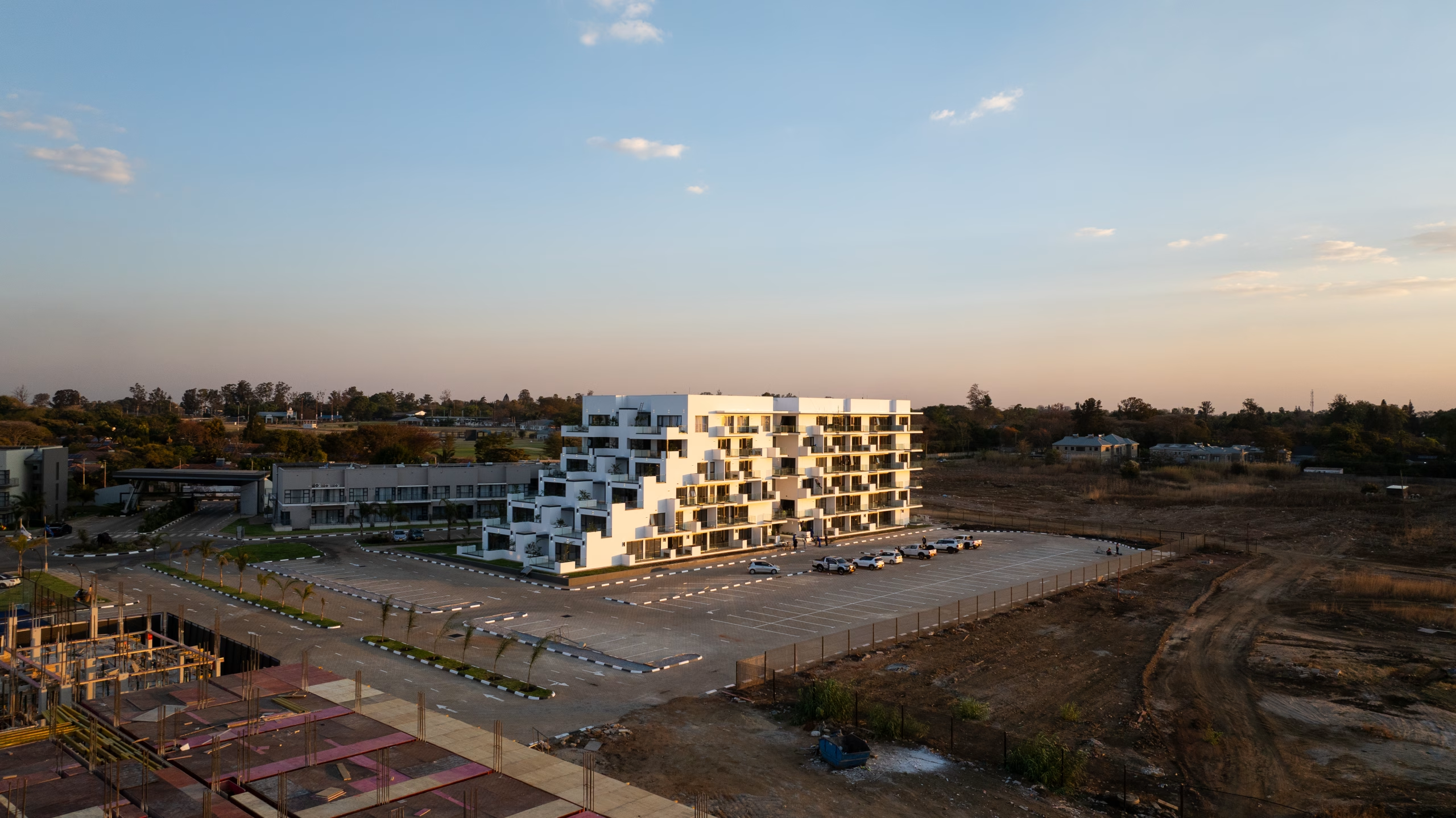
WestProp’s strategy seeks to respond by developing new urban nodes beyond the traditional concentration of investment in Harare. Pomona City and Chivhu Eco City, according to the company, have combined capacity to reduce the housing waiting list by about 40,000 units and accommodate more than 160,000 people, while Millennium Heights is expected to provide more than 1,000 units and Swanville another 500 units upon completion.
These developments therefore raise a broader question for Zimbabwe’s development agenda: how can the country accommodate rapid urban population growth while ensuring that new communities remain economically productive, environmentally sustainable and socially inclusive? The answer will require more than the construction of residential units, because new settlements must be supported by water, sewerage, electricity, roads, schools, healthcare, transport, commercial activity and employment.
Affordability is consequently central to the success of the emerging model. WestProp says it pioneered a 10-year mortgage model at Pomona City and has extended the concept in Chivhu through a 30-year mortgage, seeking to reduce the immediate financial burden associated with home ownership. Such financing mechanisms could widen access to property, although their long-term impact will ultimately depend on household incomes, financing costs and the ability of buyers to sustain repayments.
The environmental dimension is another defining feature of the developments. Chivhu Eco City is planned with more than 80 percent green space, including a Big Five game reserve and renewable energy integration, while Pomona City is designed around approximately 50 percent green space. The model points to an increasingly important balance between urban density and environmental sustainability as Zimbabwe confronts climate pressures, population growth and growing competition for land.
WestProp Chief Executive Officer Mr Ken Sharpe has linked the company’s “One Billion Bricks by 2050” vision to the broader national ambition under Vision 2030. The proposition extends beyond property development, presenting housing construction as an economic multiplier capable of stimulating demand for construction materials, engineering, transport, financial services, retail and other industries while creating employment.
Sharpe has described smart cities such as Chivhu Eco City and Pomona City as potential testbeds for sustainable urbanisation, arguing that they can absorb population growth, provide alternative housing models and incorporate green infrastructure. For Zimbabwe, this approach speaks directly to the challenge of moving away from unplanned urban expansion towards communities that are deliberately designed around infrastructure, environmental resilience and economic activity.
The company’s “live, work, shop and play” concept also seeks to address one of the less visible costs of urbanisation, long-distance commuting. By placing residential, commercial and recreational facilities within integrated developments, the model has the potential to reduce pressure on existing transport networks while improving convenience for residents. Its success, however, will depend on whether employment and essential services develop alongside the housing itself.
For Zimbabwe, World Habitat Day therefore provides an opportunity to place private-sector developments within the wider national conversation about the future of cities. The Government’s Vision 2030 agenda requires economic growth to be accompanied by infrastructure development, improved living standards and greater access to modern services, making urban planning an increasingly important component of national development.
Sharpe said World Habitat Day should be viewed not merely as a commemoration but as a call to action, arguing that the country needs sustainable and modern communities that affirm the right to adequate shelter. He further stressed that WestProp’s vision is not confined to Harare, with the company seeking to establish new towns and cities where sustainable urban development forms the foundation.
The real test of Zimbabwe’s emerging smart-city model will ultimately be whether these developments can move beyond impressive physical infrastructure to become genuinely inclusive and economically functional communities. Housing without jobs, transport, water, healthcare, education and affordable services would simply shift the urbanisation problem from one location to another.
As Zimbabwe approaches 2030, the housing debate is therefore becoming broader than the number of houses constructed. It is increasingly about the type of cities being created, the infrastructure supporting them, the affordability of their homes and whether they can provide residents with the opportunity to live productive and dignified lives.
World Habitat Day, commemorated under the theme “Adequate Housing for All,” brings that challenge into sharper focus. For Zimbabwe, the emerging generation of planned developments could become important components of the country’s urban transformation, provided their growth remains aligned with national infrastructure planning, affordability and the wider objective of creating resilient communities that can support Zimbabwe’s next phase of economic development.