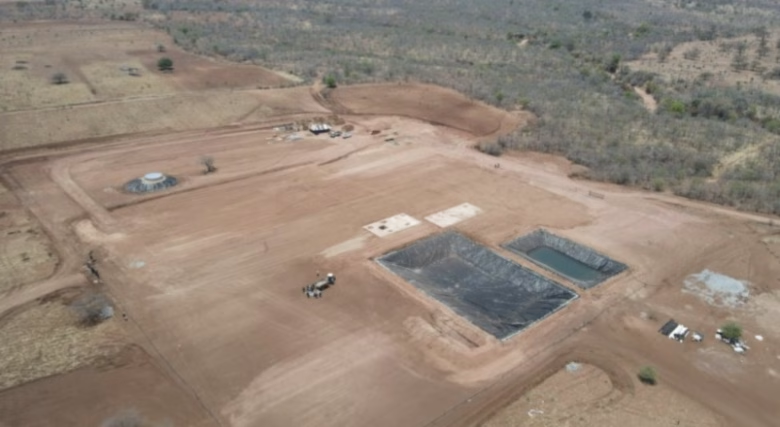
Golden Valley Mine intends to raise US$13 million through a private placement to build a 7MW solar plant at its gold mine in Kadoma, according to an investor prospectus seen by this publication.
The company has already signed an agreement with Okavango GVM Power, a special purpose vehicle (SPV) comprising three local shareholders as the main contractor of the solar project.
Under the agreement, Okavango GVM Power was awarded a 15-year (initial term) power use agreement by Golden Valley Mine.
Of the US$13 million, as much as US$ 9,1 million will be a 10-year amortizing loan, with a 10 percent interest rate per annum.
It was granted a Prescribed Asset Status.
About US$ 3,9 million is being raised as equity finance for a consideration of a 78 percent ownership stake in the project and the offers can consider ordinary shares and or redeemable cumulative preference shares.
The solar plant will ensure the mine has a more reliable and uninterrupted power supply, according to the prospectus.
Zimbabwe has for the past five years been reeling under severe power shortages due to recurring stoppages at Hwange thermal station.
This was compounded by low production at the Kariba hydroelectricity plant which suffered low water levels during the past two years, subdued imports and shortages of coal small thermal plants.
“Golden Valley Mine earnings average US$34 million per year and net profit of around US$5 million per year. The solar system is designed to power the mine from 6 am to 6 pm as ZETDC (Zimbabwe Electricity Transmission and Distribution Company) power is rarely available during these daylight hours, and the mine currently relies more on Gensets thereby incurring approximately US$600 000 per month on power including Genset-related expenses,” the prospectus said.
New Sahara Ventures will be responsible for technical development, turnkey engineering, procurement, construction, commissioning, and maintenance of the plant, said the prospectors.
The electricity shortages in the country have increased the need for companies to invest in solar energy to mitigate the impact of load shedding.
Some mining companies that have already invested in solar energy are gold miner Caledonia and Zimplats.
Other corporates investing in solar energy are Varun Beverages, which has signed a deal to install a 2,5MW rooftop solar plant at the Pepsi bottler’s Harare factory.
It agreed to a 25-year power lease agreement for the system, which is projected to give Varun annual energy production of 4,1GW with Distributed Power Company. It will be the largest roof-mounted solar system installed in Zimbabwe to date.
Agri Value Chain, a subsidiary of ETG Parrogate Group says it will construct an 8.3 megawatt power station in Chegutu to power the revived David Whitehead operations.
Sun Exchange, the global solar leasing platform, installed a 1MW solar plant at Nhimbe Fresh, a horticultural company in Marondera at a cost of US$1,4 million raised through crowdfunding.
Sun Exchange completed the crowd sale for the project, with approximately US$1.4 million of solar cells bought by more than 1,905 individuals across 98 countries, making it the biggest crowdsourced project of any kind in Africa.
The Sun Exchange model enables Nhimbe Fresh to cut energy-related costs by roughly 60 percent and with solar power replacing coal and diesel generation/backup, its emissions will be reduced by more than 1,000 tonnes per year.
Other solar projects recently completed by local companies include a 1MW plant by Schweppes; a 118kW plant by Surrey Meats and a 600kW facility by Kefalos.
The investments in solar energy by private companies will go a long way in helping Zimbabwe meet its renewable energy target of 1000 MW by 2030.
Zimbabwe’s drive towards generating 1 100MW from renewable energy sources by 2025 has been slowed by lack of investment by independent power producers (IPPs) due to currency volatility and uneconomic tariffs.
To address the concern, the Government is giving guarantees to independent power producers, with projects of a combined 1 000MW.
The Government agreed to a Government Implementation Agreement (GIA) for all solar IPPs projects.
Under a GIA, IPPs will be guaranteed an economic tariff, while the Reserve Bank of Zimbabwe will ensure that they can convert their earnings to foreign currency and be able to transfer it.
The GIA also carries a power purchase agreement with ZESA.
Herald